
Western vs Chinese Beauty Standards | Main Differences Explained
Chinese beauty standards prize pale skin, an ultra-slim body, a small V-shaped face (瓜子脸 or 鹅蛋脸), large eyes with double-fold eyelids (双眼皮), and a high nose bridge, while Western ideals lean toward tanned skin, curvier figures, and toned fitness looks. The two traditions share some ground (slimness, full lips, height in men) but diverge sharply on skin tone, body shape, and the cultural weight given to face shape and face reading.
Although there are some similarities, it may surprise you just how different some of the Chinese perceptions of beauty are compared to those in the West.
A Chinese woman considered beautiful in the West won’t necessarily be viewed that way in China, and the reverse goes for those women viewed as beautiful in China.
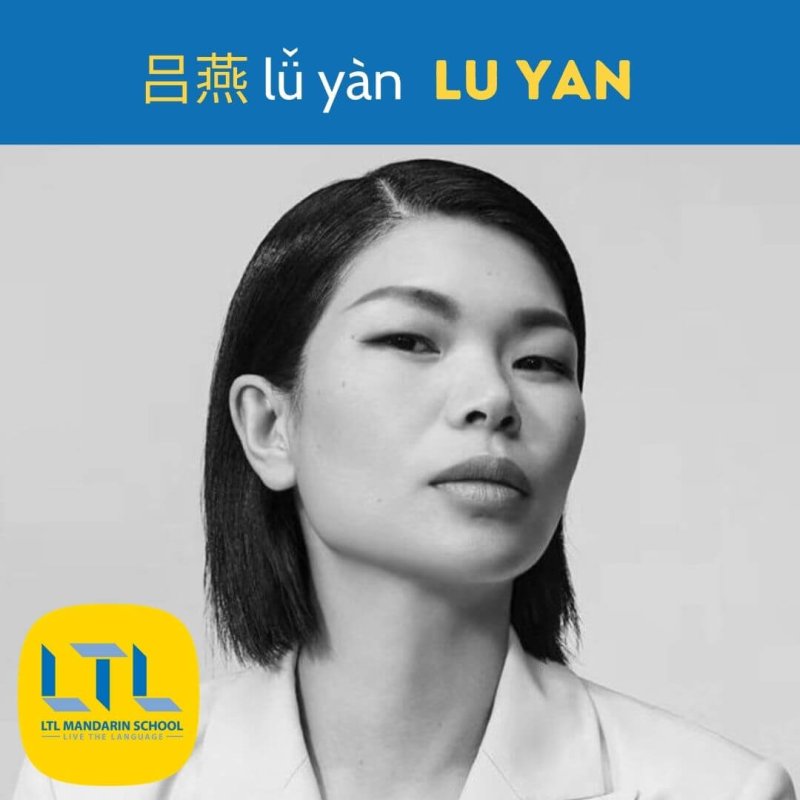
Take famous Chinese model Lu Yan (吕燕 lǚ yàn), who is renowned for her stunning features in the West but is regarded in China as rather unusual looking and certainly not a perfect example of Chinese beauty.
So what are the key differences, and are there any similarities?
Chinese Beauty Standards || Skin Tone
Chinese Beauty Standards || Body Shape
Chinese Beauty Standards || Face Shape
Chinese Beauty Standards || Facial Features
Chinese Beauty Standards || Plastic Surgery
Chinese Beauty Standards || Beauty “Challenge” Trends
Chinese Beauty Standards || For Men
Chinese Beauty Standards || A Brief History
Chinese Beauty Standards || Skincare and Xiaohongshu
Chinese Beauty Standards || The Four Great Beauties
Chinese Beauty Standards || Vocabulary
Chinese Beauty Standards || Evolving Trends
Chinese Beauty Standards || FAQs

Chinese Beauty Standards | Skin Tone
One of the biggest differences between Chinese beauty standards and the West is skin tone.
In China, pale skin is the beauty ideal, in stark contrast to the West, where a year-round tan is sought after by most.

You may be familiar with the internet Chinese slang for “Ms. Perfect”: 白富美 (bái fù měi), which literally means white, rich and beautiful. That phrase alone tells you how central fair skin is to Chinese beauty ideals.
Anyone who has lived in China during summer will be familiar with the sight of Chinese women sheltering under umbrellas to avoid the sun.
Go to a Chinese beach and you won’t be struck with the sight of sunbathers trying to catch a tan.
In fact, a “facekini” (a mask that covers your entire head to protect you from the sun) became a Chinese fashion trend a few years ago.
In China, whitening products are hugely popular, with everything from whitening moisturiser and face masks to whitening deodorant (yes, really). Big brands such as Nivea subscribe to this pale-skin beauty ideal, with entire product lines dedicated to whitening.
It can actually be hard sometimes to find beauty products in China that don’t contain some kind of whitening agent, so if you’re buying cosmetics in China, watch out!
In the same way many girls in the West use bronzer or fake tan, many girls in China apply makeup to make themselves look paler.
Chinese Beauty Standards | A Brief History
Chinese beauty ideals haven’t stayed the same. They’ve shifted dramatically across dynasties and political eras.
Tang Dynasty (618–907 AD): possibly the most surprising chapter in Chinese beauty history. Rounder, fuller-figured women were considered the height of beauty during the Tang dynasty, the complete opposite of today’s ultra-slim ideal. The imperial court favoured women with soft curves, and the legendary beauty Yang Guifei (杨贵妃 Yáng Guìfēi), consort of Emperor Xuanzong, became the ultimate symbol of Tang-era attractiveness.
Imperial era: foot binding (缠足 chánzú), the practice of tightly wrapping young girls’ feet to keep them small, was practiced from roughly the 10th century until the early 20th century. Tiny feet (called “lotus feet”) were considered a mark of elegance and femininity. The practice caused severe pain and disability but persisted because small, delicate physicality was deeply prized.
Communist era (1949–1978): Mao Zedong’s People’s Republic deliberately suppressed beauty culture. The “Iron Women” (铁娘子 tiě niángzi) ideal promoted physical strength and androgynous, utilitarian appearance. Makeup and ornamentation were seen as bourgeois. Beauty essentially went underground.
Post-Open Door Policy (1978 onwards): Deng Xiaoping’s economic reforms opened China to foreign media, brands, and ideas. Western beauty ideals, pale skin as aspiration, large eyes, high nose bridge, entered popular culture via advertising and later social media. The rise of the Chinese middle class also fuelled a booming domestic beauty industry worth hundreds of billions of yuan.
💡 TIP: The shift from Tang-era curviness to modern ultra-thin ideals shows how strongly economic and political forces shape beauty, not just individual taste.
But where does this obsession with the palest skin come from?
The desire for pale skin dates back to Ancient China, when only wealthy people had fair skin, because they weren’t working in the fields under the sun like peasants. That social signal still carries weight today, with white, smooth skin serving as a marker of class.
During Victorian times in the West, pale skin was also sought after for the same reason, but once the rich started going abroad on holiday, having a tan to prove you could afford to travel became the beauty norm.
Chinese tourism is growing fast, so it’ll be interesting to see if a similar shift happens over time. For now, though, pale skin remains firmly set as one of the core Chinese beauty standards.
Chinese Beauty Standards | Body Shape
Next up, differences in Chinese beauty standards around body shape. Currently in Chinese society, the most desirable body shape is to be as slim or thin (瘦 shòu) as possible.

In the West, being slim is also an ideal beauty standard, however the “perfect” figure is more curvy, with a small waist and larger hips and breasts (think Barbie’s odd proportions).
In recent years there has also been a rise of body positivity in the West, with more curvy figures being embraced by the beauty industry.
With butt implants now becoming one of the most popular plastic surgery procedures, the difference with Chinese beauty standards has become more pronounced.
In the West there is also more of a focus on fitness, with women often expected to be skinny and toned. In China, the emphasis is really just on being thin. Most Chinese women are naturally quite slim, so even a little extra weight can be viewed very negatively.
The majority of Chinese women are under immense pressure to conform to the skinny stereotype, and those labelled “chubby” are deemed unattractive.
For instance on the popular Chinese dating show If You Are the One some of the curvier contestants have been rejected on these grounds.
Throughout Chinese history, small, dainty women have often been valued in Chinese culture. Watch pretty much any Chinese drama or Chinese film and you can guarantee that almost all female leads and characters are going to be very thin.
If there are any TV shows or films featuring an “overweight” character, this is normally used as a plot device, with the character losing weight in order to get the guy etc.
Chinese Beauty Standards | Face Shape
Following on from Chinese ideals of body shape, it probably won’t come as a surprise that a thinner face is viewed as the most beautiful face shape.
Face shape (脸型 liǎnxíng) actually holds a lot of importance in Chinese beauty standards. This dates back to face reading, which has been commonplace in China since ancient times.
In the West there are really just a few main face shapes: square, round, oval and triangle. In China there are many more:
| Chinese | Pinyin | English | Regarded as |
|---|---|---|---|
| 瓜子脸 | guāzǐ liǎn | Melon seed face | ✅ Most desirable |
| 鹅蛋脸 | é dàn liǎn | Goose egg face | ✅ Most desirable |
| 初恋脸 | chūliàn liǎn | First love face | ✅ Desirable, soft, innocent features |
| 狐狸脸 | húlí liǎn | Fox face | 🔄 Trendy, sharp, seductive features |
| 鲶鱼脸 | niányú liǎn | Catfish face | 🔄 Neutral / emerging |
| 菱形脸 | língxíng liǎn | Diamond-shaped face | 🔄 Neutral |
| 圆脸 / 包子脸 | yuán liǎn / bāozi liǎn | Round / Bun face | ⚠️ Cute but not ideal |
| 国字脸 / 方脸 | guózì liǎn / fāng liǎn | Square face | ❌ Considered masculine |
| 长脸 | cháng liǎn | Long face | ❌ Less desirable |
| 青蛙脸 | qīngwā liǎn | Frog face | ❌ Flat, wide features |
| 鞋拔子脸 | xiébázi liǎn | Shoe horn face | ❌ Long, narrow, angular |
| 三角形脸 | sānjiǎoxíng liǎn | Triangular face | ❌ Wide forehead, narrow chin |
| 倒三角型脸 | dào sānjiǎoxíng liǎn | Inverted triangle face | ❌ Narrow forehead, wide jaw |
The two most desirable face shapes are melon seed face (瓜子脸) and goose egg face (鹅蛋脸). Both feature a slim chin and jawline, giving a soft V-shaped face.
The First Love Face (初恋脸 chūliànliǎn) has become increasingly popular on Chinese social media. It describes soft, innocent-looking features that evoke nostalgia, and has been popularised by celebrities and Xiaohongshu (小红书) influencers.
The Fox Face (狐狸脸 húlíliǎn) sits at the trendier end of the spectrum: sharp cheekbones, upturned eyes, and a more seductive aesthetic. Think of it as the edgier alternative to the sweet melon seed face. The Catfish Face (鲶鱼脸 niányúliǎn) is another emerging descriptor used on Chinese social media for a more unique, characterful look.
Having a square face is viewed as the least attractive face shape in Chinese beauty standards, as it’s considered very manly. In fact, most selfie cameras on Chinese smartphones have a “slender” beautify setting that gives you a more oval-shaped face.
Chinese Beauty Standards | Facial Features
Eyes
In China, having big eyes (大眼睛 dà yǎnjīng) with a double-fold eyelid (双眼皮 shuāng yǎnpí) is the most desirable eye shape. Many Chinese people don’t have the double-fold eyelid that Westerners have, and instead have single-fold eyelids (单眼皮 dān yǎnpí).
Single-fold eyelids and slim eyes (细长眼睛 xì cháng yǎnjing) are not typically viewed as attractive in China.
Many people believe this stems from the idea that Chinese people want to look more Western, however some sources say it’s simply part of Chinese culture, where bigger eyes are viewed as more womanly, innocent, and doll-like.
Nose
If you’ve ever lived or travelled in China as a Westerner, you may have been complimented on your “big nose” by Chinese people. That’s because a more prominent nose, with a high bridge, is seen as attractive.
Many Chinese people have a flatter, broader nose, so pronounced Western noses often draw admiring comments.
Mouth
Like in modern Western beauty, full lips are the sought-after mouth shape in China. However, although full, luscious lips are desirable, a more narrow mouth is preferred rather than one that is super wide.
This again dates back to the tradition of face reading in China, where fuller lips are thought to bring good luck and indicate a warm, fun-loving, expressive personality. Thinner lips, on the other hand, indicate a more cold, calculating and determined personality.
Chinese Beauty Standards | Skincare and Xiaohongshu
Skin isn’t just about tone in China, it’s about texture. The Chinese concept of 皮肤好 (pífū hǎo, “good skin”) goes beyond being pale. It means poreless, luminous, glass-smooth skin.
The Xiaohongshu Effect
Xiaohongshu (小红书 Xiǎo Hóngshū, literally “Little Red Book”) is China’s dominant beauty platform, a hybrid of Instagram and Pinterest with hundreds of millions of users. It’s where Chinese women discover skincare routines, beauty hacks, and new product launches. If a skincare trend is going viral in China, it almost certainly started on Xiaohongshu.
The platform has amplified demand for:
- Whitening / brightening serums (美白精华 měibái jīnghuá)
- SPF products, applied daily, not just at the beach
- Sheet masks (面膜 miànmó), used several times a week by many Chinese women
- Multi-step routines, closer to Korean skincare (K-beauty) in complexity than typical Western routines
Fan Bingbing, the Gold Standard
If you want one name to anchor Chinese skin ideals, it’s Fan Bingbing (范冰冰 Fàn Bīngbīng). The Chinese actress and former global L’Oréal ambassador is famous for her near-porcelain complexion and egg-shaped face, the living embodiment of 鹅蛋脸 and 皮肤好. Her “white jade” skin tone is a benchmark that Chinese beauty influencers regularly reference.
💡 TIP: If you’re buying skincare in China, look for 美白 (měibái) on the label. It means “whitening”. Almost every major brand, from local Chinese labels to international giants like Nivea and SK-II, sells a dedicated whitening line in the Chinese market.
Why Whitening?
It’s not purely aesthetic. As covered in the history section above, pale skin signals class and a life lived indoors, away from manual labour. SPF and brightening products aren’t just beauty choices, they’re social statements.
🎓 Fascinated by Chinese culture and want to experience it first-hand? Whether you’re a complete beginner or already have some Mandarin under your belt, living and studying in China is the fastest way to go deeper. Find your perfect Mandarin program with LTL.
Chinese Beauty Standards | Plastic Surgery
In recent years there has been a huge boom in plastic surgery in China, with many Chinese women (and some men) opting to go under the knife in order to conform to Chinese beauty standards.
You can see from the chart below which plastic surgeries are most popular in China:

With 50% of all plastic surgery being eye surgery, it’s clear that this is the most common and popular plastic surgery to have in China. This flows directly from Chinese beauty standards around eyes: wanting bigger eyes and the all-important double-fold eyelid.
The second most popular is nose surgery, which given how the ideal nose has a more pronounced bridge, isn’t too surprising.
Although face shape in China is very important, only 5% of plastic surgeries are facial sculpting. This is a very painful procedure which can take months to heal from, so generally most Chinese women will opt to just edit their faces in selfie mode instead 😂.
K-pop and the South Korean Influence
You can’t talk about cosmetic surgery in China without mentioning South Korea and K-pop.
South Korea has the highest per-capita rate of cosmetic surgery in the world, and Korean pop culture, music (K-pop), dramas (K-dramas), and beauty brands (K-beauty), has had an enormous influence on Chinese beauty ideals over the past two decades.
K-pop idols from groups like BTS, EXO, and BLACKPINK project a very specific aesthetic: flawless pale skin, large expressive eyes, high nose bridges, and slim V-shaped faces. This look has become aspirational across East Asia, including China.
The knock-on effects in China:
- “Korean-style” double eyelid surgery became the most requested procedure at Chinese cosmetic clinics
- Rhinoplasty (nose jobs) to achieve a higher bridge, the “Korean nose”, surged in popularity
- Jaw reduction surgery (V-line surgery) arrived via South Korean techniques and clinics
- A rise in medical beauty tourism (医美旅游 yīměi lǚyóu), with Chinese patients flying to Seoul for surgery
💡 TIP: The term 医美 (yīměi), short for 医疗美容 (yīliáo měiróng, “medical beauty”), has exploded in usage on Chinese social media. It covers everything from full surgery to fillers and skin treatments. It’s a key term to know if you’re reading about beauty culture in China.
Chinese Beauty Standards | Beauty “Challenge” Trends
Over the past few years there have been quite a few beauty “challenge” trends that have gone viral across China.
In the West, most trends or “challenges” that have gone viral have revolved around TikTok and are often a mixture of humour, dancing and a chance to show off your body.
In China, things have taken a different turn, with the main focus being Chinese women showing off how thin they are in a number of rather unique ways. Here are some of the biggest ones to have swept over China in recent times.
A4 Waist Challenge
Women were challenged to share photos of themselves holding up an A4 piece of paper in front of their waist, to show that they were thinner than the width of the paper.
Understandably this sparked a lot of controversy, with the challenge accused of promoting unhealthy lifestyles.
However, some women took a more humorous twist on the challenge and posted photos of themselves with their degrees held up in front of their waists instead.
100 Yuan Wrist Challenge
Another challenge involving paper was a viral trend where women wrapped 100 yuan notes around their wrists to show how skinny they were. Some women took the trend even further by wrapping even smaller banknotes around their wrists.
Belly Button Challenge
Now this is definitely one of the weirder challenges to have taken China by storm. Participants were asked to reach their belly button by wrapping their arm behind themselves around their waist.
This was supposed to be proof of a slim waist, however it soon became apparent that this challenge really came down to the length and flexibility of your arms.
Language Challenge || Find out here how to say beautiful in Japanese!
iPhone 6 Knees Challenge
This is another challenge that may leave you asking, why?
In this one, Chinese women posted pictures of their knees with an iPhone 6 balanced on top, to show how “pencil thin” they were. Women who could successfully hide their knees behind the phone were deemed to have the ideal standard of leg.
Collarbone Challenge (锁骨挑战 suǒgǔ tiǎozhàn)
Lastly, we have a challenge that also involved coins. To prove one’s slim figure, women balanced stacks of coins standing upright on their collarbones. The more coins you could balance, supposedly the better figure you had.
Some people balanced as many as 20 coins, which says very little about how you look, but a lot about your patience and steady hands!
The challenge spread rapidly on Weibo and was picked up internationally. Like the others, it sparked debate about whether viral “thinness proof” trends promote unhealthy body image among young Chinese women.
No matter what you think of these bizarre challenges, they certainly show that a real obsession with being thin exists among Chinese netizens.
Chinese Beauty Standards | For Men
We’ve looked at the different Chinese beauty standards for women, but what about men?
For Chinese men, paler skin is also the desired skin tone. Like women, there are tonnes of whitening skincare products targeted directly at men.
That said, there’s not as much pressure on men to have pale skin, and a tan is more acceptable. Lighter skin is still preferred, but in modern China men can also have tanned skin and still be deemed attractive.
There is also much less pressure for men in Chinese society to be as thin as women, however men with a slim build are preferred.
Unlike the West, being very muscly and masculine is a lot less important when it comes to male body shape.
In recent years, a more androgynous aesthetic has taken hold with the rise of 小鲜肉 (xiǎo xiān ròu), literally “little fresh meat”. This term describes a generation of young male celebrities (think Chinese pop idols and actors like Xiao Zhan or Wang Yibo) known for their smooth skin, slim builds, and soft features rather than muscular masculinity.
The trend isn’t just about looks, it’s economic. China’s men’s skincare market has grown dramatically, with younger Chinese men now among the biggest consumers of toners, serums, and BB creams. Chinese men’s beauty spending grew by double digits annually through the early 2020s, driven largely by K-pop influence and homegrown idol culture.
This doesn’t mean traditional masculinity has disappeared. The 高富帅 (gāo fù shuài) ideal of “tall, rich, handsome” still dominates dating app profiles. But there’s now a dual standard: the clean, put-together 小鲜肉 look and the more traditionally masculine ideal can coexist, depending on context.
One similarity with the West is height: taller men are viewed as more attractive.
The equivalent slang phrase to “Ms Perfect” (白富美 bái fù měi) for men is 高富帅 (gāo fù shuài), which literally means: tall, rich, handsome. Pretty similar to the English phrase “tall, dark and handsome” if you think about it.
In the same way that a more narrow, oval face is viewed as more feminine and therefore a more desirable face shape for women, for men, a strong, defined jawline is seen as more masculine and so the male beauty ideal.
When it comes to eyes, bigger eyes are preferred, the same as with women. That said, single-fold eyelids are much more acceptable for men, which means far fewer Chinese men have plastic surgery on their eyes.
One definite similarity between Chinese and Western beauty standards is that women are under much more pressure than men, in both societies, to conform to “beauty ideals”.
Chinese Beauty Standards | The Four Great Beauties of China
One of the most common questions about Chinese beauty is: who are the Four Great Beauties of China (四大美人 Sì Dà Měirén)?
These four legendary women from Chinese history have been celebrated for centuries as the ultimate standard of female beauty:
| Name | Chinese | Pinyin | Era | Famous for |
|---|---|---|---|---|
| Xi Shi | 西施 | Xī Shī | Spring & Autumn period (~7th–5th century BC) | So beautiful that fish forgot to swim and sank when they saw her reflection |
| Wang Zhaojun | 王昭君 | Wáng Zhāojūn | Han dynasty (1st century BC) | So beautiful that geese forgot to fly and fell from the sky |
| Diaochan | 貂蝉 | Diāochán | Late Eastern Han dynasty | So beautiful that the moon hid behind clouds in shame |
| Yang Guifei | 杨贵妃 | Yáng Guìfēi | Tang dynasty (8th century AD) | So beautiful that flowers bowed their heads |
Each is associated with a poetic phrase in Chinese:
- 沉鱼 (chén yú), sinking fish (Xi Shi)
- 落雁 (luò yàn), falling geese (Wang Zhaojun)
- 闭月 (bì yuè), hiding moon (Diaochan)
- 羞花 (xiū huā), bashful flowers (Yang Guifei)
Together they’re described as 沉鱼落雁,闭月羞花 (chén yú luò yàn, bì yuè xiū huā), a classical Chinese idiom still used today to describe extraordinary female beauty.
Interestingly, Yang Guifei was celebrated during the Tang dynasty precisely for her fuller figure, a reminder that Chinese beauty ideals have changed significantly over time.
Chinese Beauty Vocabulary | Key Terms to Know
If you want to talk about beauty in Chinese, or just understand what people around you are saying, here are the key terms to learn:
| Chinese | Pinyin | Meaning |
|---|---|---|
| 美女 | měinǚ | Beautiful woman (used casually, like “lovely lady”) |
| 帅哥 | shuàigē | Handsome man |
| 白富美 | bái fù měi | White, rich, beautiful, the female ideal |
| 高富帅 | gāo fù shuài | Tall, rich, handsome, the male ideal |
| 皮肤好 | pífū hǎo | Good skin |
| 美白 | měibái | Whitening / brightening |
| 双眼皮 | shuāng yǎnpí | Double eyelid |
| 单眼皮 | dān yǎnpí | Single eyelid |
| 瘦 | shòu | Thin / slim |
| 小脸 | xiǎo liǎn | Small face (a compliment) |
| 锥子脸 | zhuīzi liǎn | “Awl face”, very sharp, pointy chin |
| 医美 | yīměi | Medical beauty / cosmetic procedures |
| 整容 | zhěngróng | Plastic surgery |
| 小鲜肉 | xiǎo xiān ròu | “Little fresh meat”, young, fresh-faced male heartthrob |
| 颜值 | yánzhí | Appearance value / attractiveness score |
| 颜值爆表 | yánzhí bào biǎo | Off-the-charts attractive |
💡 TIP: 颜值 (yánzhí) is one of the most useful beauty-related terms in modern Chinese. You’ll see it constantly on social media. It literally means something like “face value” and is used to rate anyone’s attractiveness.
Chinese Beauty Standards | Evolving Trends
Chinese beauty standards are not static, and the 2020s have introduced some genuinely new tensions.
Split Femininity
Researchers describe a split femininity emerging in China: on one hand, soft, sweet, traditionally feminine aesthetics (think pale skin, innocent eyes, delicate features); on the other, a growing interest in stronger, more self-assured looks, athletic builds, bold makeup, and expressive individuality. These two poles coexist on Chinese social media, sometimes within the same person’s feed.
Nationalist Aesthetics
The Guochao (国潮 guócháo) movement, loosely “national trend”, has influenced beauty too. There’s renewed interest in aesthetics rooted in Chinese history: traditional hanfu-inspired makeup, Tang-dynasty-influenced lip shapes (豆沙唇 dòushā chún, “red bean paste lips”), and skin tones that reference classical Chinese painting rather than K-pop perfection. Domestic beauty brands like Florasis (花西子 Huā Xīzǐ) have built entire identities around this aesthetic.
Globalized Femininity
At the same time, younger Chinese women with exposure to global media are absorbing influences from the West, Japan, and Korea simultaneously, creating hybrid looks that don’t fit neatly into any single standard.
Y2K Resurgence
Just as in the West, Y2K aesthetics (low-rise jeans, bold accessories, early-2000s nostalgia) have made a strong comeback on Chinese social media, particularly on Xiaohongshu and Douyin (抖音, China’s version of TikTok).
💡 TIP: Following Chinese beauty influencers on Xiaohongshu (小红书) is one of the best ways to see these trends in real time, and a genuinely fun way to encounter natural, everyday Chinese vocabulary.
BONUS | We also have guides about beauty standards in Korea, Russia and Japan PLUS Japanese makeup trends too. See how they differ from Chinese beauty.
Chinese Beauty Standards | FAQs
Who are the 4 beauties of China?
The Four Great Beauties of China (四大美人 Sì Dà Měirén) are Xi Shi (西施), Wang Zhaojun (王昭君), Diaochan (貂蝉), and Yang Guifei (杨贵妃). Each is celebrated in Chinese culture as the pinnacle of female beauty in her era, immortalised in the poetic phrase 沉鱼落雁,闭月羞花 (chén yú luò yàn, bì yuè xiū huā), “sinking fish, falling geese, hiding moon, bashful flowers”.
What is considered skinny in China?
In China, being slim (瘦 shòu) is the dominant body ideal. Viral “thinness proof” trends have included the A4 Waist Challenge (holding an A4 sheet in front of your waist), the 100 Yuan Wrist Challenge, the Belly Button Challenge, the iPhone 6 Knees Challenge, and the Collarbone Challenge (锁骨挑战 suǒgǔ tiǎozhàn), balancing coins on your collarbones. These reflect significant social pressure, particularly on young women, to be as thin as possible.
What does an average Chinese woman look like?
An average Chinese woman is typically slim in build, with fair to medium skin tone, dark straight hair, and single-fold eyelids (单眼皮 dān yǎnpí) rather than the double folds prized as a beauty ideal. Face shapes vary widely across regions, from rounder faces to the desirable oval “goose egg” (鹅蛋脸) or “melon seed” (瓜子脸) shape. Noses are generally flatter and broader than typical Western noses. The pale-skinned, big-eyed, V-shaped-face ideal seen in Chinese media and advertising is often quite different from everyday appearance.
How is beauty perceived differently in China?
The biggest differences are: (1) pale skin is the ideal in China, whereas a tan is aspirational in much of the West; (2) the Chinese slim ideal is more extreme, curves and muscularity are less valued; (3) face shape matters enormously in China, rooted in ancient face-reading traditions, with over a dozen named face types; (4) double eyelids (双眼皮) and large eyes are specifically prized; (5) historically, Chinese beauty ideals reflect class and social status more explicitly than Western ones, with pale skin signalling wealth and indoor life.
How was homosexuality seen in ancient China?
This falls outside the scope of Chinese beauty standards, which is the focus of this guide. Broadly, aesthetic ideals in imperial China focused on features like pale skin, small feet, and delicate physicality for women, and refined, scholarly appearance for men, with beauty ideals shifting significantly across dynasties, from the fuller-figured Tang-era ideal embodied by Yang Guifei to the ultra-slim modern standard.
Who is the finest girl in China?
There’s no single answer, but the historic benchmark is the Four Great Beauties (四大美人): Xi Shi, Wang Zhaojun, Diaochan and Yang Guifei. In modern China, actress Fan Bingbing (范冰冰) is frequently cited as a living embodiment of Chinese beauty ideals, thanks to her porcelain skin (皮肤好) and goose-egg face shape (鹅蛋脸). “Finest” is highly subjective, and rankings on Chinese social media, often expressed through the term 颜值 (yánzhí, “face value”), change constantly as new idols and Xiaohongshu influencers rise.
Want more from LTL?
If you wish to hear more from LTL Language School, why not join our mailing list? We give plenty of handy information on learning Chinese, useful apps to learn the language, and everything going on at our LTL schools.
Sign up below and become part of our ever-growing community!
⭐ Download our free ebook, your starter pack of essential Mandarin learning resources!
BONUS || Want to study Chinese with us in China? Why not check out our group and individual classes here.






14 comments
[…] differ to American ones why not have a look at our Chinese Makeup VS American Makeup blog or our Chinese beauty standards […]
[…] Image via LTL Shanghai […]
[…] https://ltl-shanghai.com/chinese-beauty-standards/ […]
[…] https://ltl-shanghai.com/chinese-beauty-standards/ […]
[…] One of the biggest key differences between Chinese beauty standards and the West is skin tone. In Ch… […]
[…] https://ltl-shanghai.com/chinese-beauty-standards/#chapter-3 […]
[…] Google searches in China showed people were curious about how to become a dietitian. This could be because of society’s unrealistic beauty standards. […]
[…] Google searches in China showed people were curious about how to become a dietitian. This could be because of society’s unrealistic beauty standards. […]
Hello , this post is very interesting! in fact im writing a project about chinese beauty standars and would like to know if you have more sources where I can find information about this topic. would be great if you can help me! thanks
Unfortunately we don't 🙁 but good luck with your project 💪
This is some awesome thinking.
Thanks 🙂
will a 5'7" Chinese lady also have a curvy butt?
How China is so beautiful like this one like there's some beautiful boy and beautiful girl like how you can be like a China girl