Most Common Chinese Charms & How to Use Them
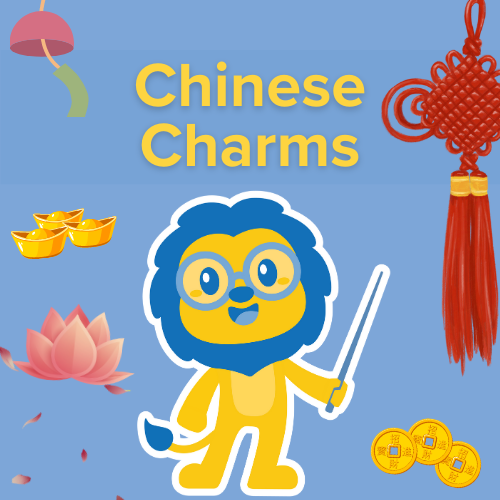
Chinese charms are objects, symbols, and characters believed to attract good fortune, wealth, protection, or spiritual growth. The most common include coins and ingots (wealth), jade pendants (protection), red string bracelets (warding off evil), the Fu symbol 福 (blessings), red envelopes 红包 (transferring luck), Bagua mirrors (deflecting negative energy), and mythical creatures like Pi Xiu. Many are considered lucky because their Mandarin names sound like auspicious words, a form of homophone symbolism deeply embedded in Chinese culture.
Chinese charms come in a variety of forms, each carrying its own unique symbolism and purpose.
But before we get into the list, it is worth understanding why lucky charms carry such weight in Chinese culture. Good fortune in Chinese tradition is not a passive hope; it is something actively cultivated through objects, colours, numbers, and spatial arrangement.
This philosophy runs through everyday life, from the layout of a Beijing apartment to the red envelope handed to a child on New Year’s morning.
Many charms are rooted in the Mandarin language itself: objects are lucky because their names sound like auspicious words. Others draw their power from Taoist cosmology, Buddhist imagery, or centuries of folk belief. Once you understand that, a walk through any Chinese market becomes a masterclass in cultural symbolism.
If you are curious about Chinese traditions, rituals, and what they can teach you about the language, this is the right place to start. 💡
Let us know in the comments if you know of any others we didn’t mention.
Let’s get started!
Chinese Charms | Most common types
Chinese Charms | How to activate and use them
Chinese Charms | Summary
Chinese Charms | FAQ’s
Chinese Charms l Popular & Common Types
Let’s have a look at the most popular types of Chinese Charms with their meaning and purpose.
Coins & Ingots
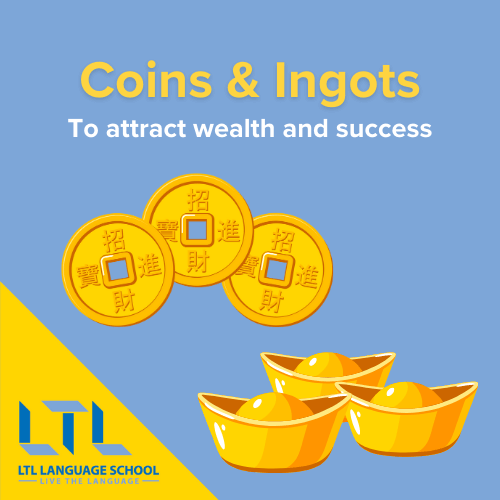
Purpose: to attract wealth and success.
Coins and ingots are among the most common Chinese charms associated with attracting wealth and prosperity.
- The round shape of the coin symbolises Heaven.
- The square hole in the center represents Earth.
Together, they represent the harmonious union of heaven and earth, bringing balance and abundance into one’s life.
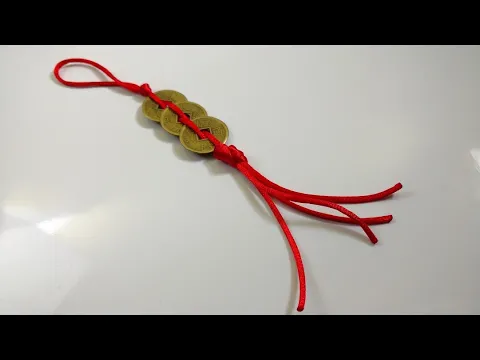
The number of coins used also matters. Three coins tied together is a classic feng shui arrangement, while sets of eight coins are prized for their connection to prosperity. Learn why in our guide to lucky numbers in Chinese culture.
WhatsAppvsWeChat
WhatsApp vs WeChat: Build up your sticker collection!
Jade Charms
Purpose: to bring good luck and protection.
Jade, a highly esteemed gemstone in the Chinese culture, is known to possess protective energies and the ability to attract good fortune.
These charms are crafted into multiple forms including dragons, phoenixes, and mythical creatures.
They are believed to serve as conduits for positive energy, safeguarding against negative influences.
Did you know: The most famous artwork in Taiwan (so much so it’s been referred to as the ‘Mona Lisa’ of Taipei) is a small jade cabbage less than 10 inches in size!
Red String Bracelets
Purpose: to ward off evil spirits.
Red string bracelets are not only fashionable accessories but also carry deep cultural significance in Chinese folklore.
These bracelets are believed to ward off evil spirits and protect the wearer from misfortune.
It is common to see individuals, young and old, wearing red string bracelets as a symbol of good luck and protection. In Chinese tradition, the bracelet is worn on the left wrist, since the left side is considered the receiving side, drawing good energy inward.
The Fu Symbol (福)
Purpose: to invite good fortune and blessings into the home.
If there is one Chinese lucky charm that appears absolutely everywhere, it is 福 (fú), the character for good fortune, luck, and blessings.
You will spot it on red paper cutouts, ceramic tiles, lanterns, and embroidered cushions across Beijing, Shanghai, and every city in between. During Chinese New Year it becomes almost impossible to miss.
One of the most charming traditions: 福 is deliberately hung upside down on doors and walls. In Mandarin, ‘upside down’ is 倒 (dào), which sounds identical to 到 (dào), meaning ‘to arrive’. So an inverted 福 literally signals that good luck has arrived. 💡
TIP💡 If you are studying Mandarin, 福 is a fantastic character to learn early. It shows up in everyday conversation, festive greetings, and even place names. You will find it in our guide to lucky numbers in Chinese culture too, where the number eight (八, bā) shares a similarly auspicious reputation.
Why Are These Objects Lucky? // The Language Clue
Here is something that makes Chinese charm culture genuinely fascinating, and something that clicks immediately once you start learning Mandarin.
Many objects are considered lucky not because of their appearance, but because their name sounds like an auspicious word in Chinese. Linguists call this a homophone; in Chinese culture it is practically an art form.
- Fish (鱼, yú) sounds like surplus or abundance (余, yú), which is why fish imagery appears on almost every New Year decoration.
- Bat (蝙蝠, biānfú) contains the syllable fú, the same sound as good fortune (福, fú).
- Eight (八, bā) sounds similar to prosper (发, fā), making it the luckiest number in Chinese culture. Read more in our guide to lucky numbers in Chinese culture.
- Vase (瓶, píng) sounds like peace (平, píng).
Once you know this, you will start spotting the logic behind shop displays, gift choices, and festival decorations everywhere you go in Beijing or Shanghai. It is one of those moments in language learning where culture and vocabulary collide in the best possible way. 🤔
Understanding why these charms are lucky is so much richer when you can read and hear the language behind them. If this has sparked your curiosity about Mandarin, we would love to help you take the next step.
Find your perfect Mandarin program and study with native-speaker teachers in Beijing, Shanghai, Chengdu, or online with Flexi Classes.
Bats (蝙蝠)
Purpose: to attract good fortune and blessings.
In Western cultures, bats carry associations with darkness and fear. In Chinese culture, they are a powerful symbol of good luck, and the reason is linguistic.
The word for bat, 蝙蝠 (biānfú), contains the syllable fú, which is the same sound as 福 (fú), meaning fortune and blessings. That single phonetic overlap made the bat one of the most beloved motifs in traditional Chinese art and architecture.
Five bats together (五福, wǔ fú) represent the Five Blessings: longevity, wealth, health, virtue, and a peaceful death. You will find this motif on porcelain, silk embroidery, and carved wooden panels in historic buildings across Beijing and Xi’an.
Red Envelopes (红包)
Purpose: to transfer good luck, blessings, and prosperity.
红包 (hóngbāo), literally ‘red envelope’, are one of the most recognisable symbols of Chinese good fortune. Given during Chinese New Year, weddings, and birthdays, they carry cash inside as a physical transfer of luck and goodwill from the giver to the receiver.
The red colour is key: red wards off evil and signals joy and vitality throughout Chinese culture.
Modern life has added a digital twist. WeChat’s virtual hongbao feature, launched in 2014, made sending digital red envelopes a national phenomenon, with billions sent during New Year each year.
TIP💡 If you receive a red envelope, do not open it immediately in front of the giver. Discretion is part of the etiquette. Learn more about the traditions surrounding these moments in our guide to auspicious New Year traditions.
Bagua Mirrors
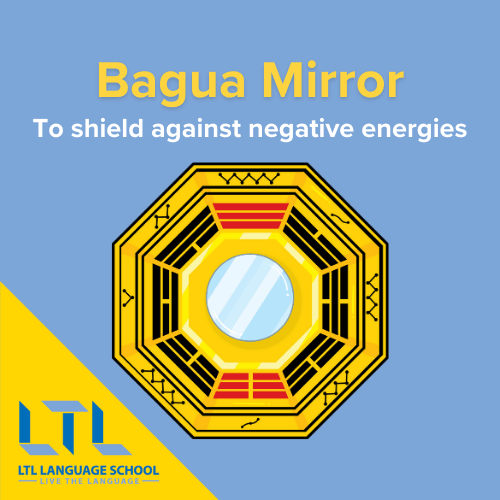
Purpose: to shield against negative energies.
Bagua mirrors, featuring the iconic yin-yang symbol and eight trigrams, are powerful protective charms used in Feng Shui practices.
They are believed to deflect negative energy, promote harmony, and bring peace to the surroundings.
Bagua mirrors are often placed near entrances to safeguard homes and businesses from malevolent forces. Mount them facing outward above the main entrance, never inside a room facing occupants.
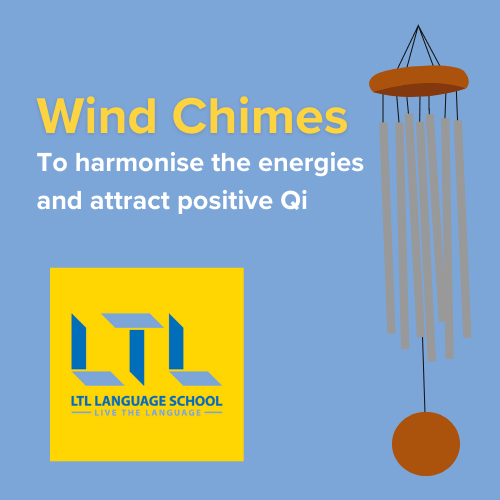
Wind Chimes
Purpose: to harmonise the energies and attract positive Qi.
Wind chimes, with their melodic sounds and vibrant designs, are not only delightful decorations but also function as powerful charms that draw in positive energy.
In Chinese tradition, wind chimes are believed to disperse stagnant energy, foster a harmonious atmosphere, and invite good luck and prosperity into the space. Hang them near windows or doorways where air moves naturally; metal chimes suit north or west-facing openings per feng shui principles.
Lotus Flower
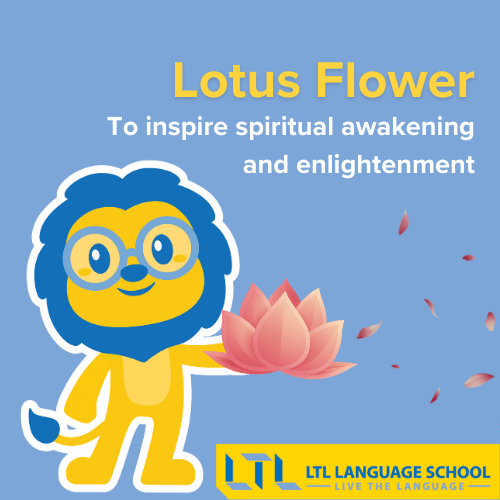
Purpose: to inspire spiritual awakening and enlightenment.
The lotus flower holds great significance in Chinese culture, as it symbolises purity, enlightenment, and spiritual growth.
Just as the lotus emerges from muddy waters and blossoms into a beautiful flower, it represents the journey of self-transformation and rising above adversities.
Lotus flower charms are often worn or displayed to inspire inner purity, spiritual awakening, and the pursuit of enlightenment.
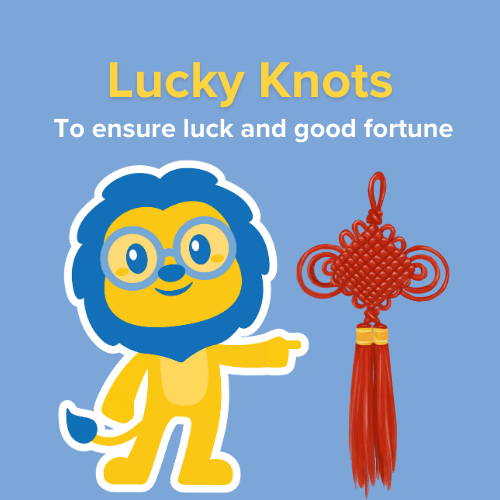
Lucky Knots
Purpose: to ensure luck and fortune.
Lucky knots, intricately woven with a single, unbroken thread, hold profound significance of luck and fortune in Chinese culture.
With a rich history spanning centuries, these ornamental knots are frequently exchanged as gifts, conveying blessings and well-wishes.
Displaying lucky knots in homes or wearing them as accessories is believed to attract positive energy, secure good fortune, and promote harmonious relationships. Hang them near the entrance, or gift one to someone at a threshold moment such as a new home, new job, or new year.
Laughing Buddha
Purpose: to spread joy and happiness.
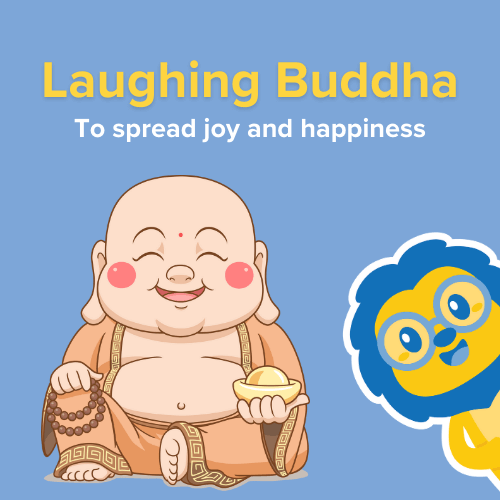
The Laughing Buddha, also known as Budai or the Happy Buddha, is a jolly and benevolent figure in Chinese culture.
With his large belly and infectious laughter, he is a symbol of joy, contentment, and abundance.
Statues or charms depicting the Laughing Buddha are believed to bring happiness, good luck, and prosperity into one’s life.
They are often placed in homes, offices, and businesses to create a joyful and positive atmosphere. Position the Laughing Buddha at eye level, facing the main entrance; never place him on the floor or in a bathroom.
Pi Xiu
Purpose: to protect against misfortune and negativity.
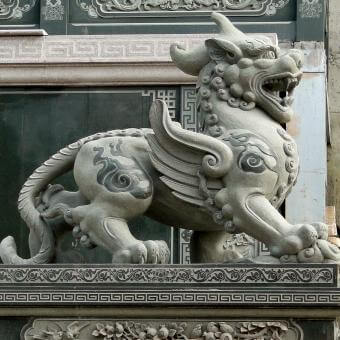
Pi Xiu, also spelled Pixiu, is a mythical creature with the body of a lion and the head of a dragon or Qilin.
There are two types of Pixiu:
- Bìxié (辟邪) is the female of the Pixiu species and has two antlers. She is believed to ward off evil and assist anyone suffering from bad feng shui. She is regarded as a powerful protector against misfortune, illness, and negative energy.
- Tiān lù (天禄) is the male and has one antler. He is associated with wealth accumulation. The belief is that he roams the earth collecting wealth and brings it back to his owner.
In feng shui practice, Pi Xiu charms are often placed facing outward near the entrance of a home or business, or worn as a bracelet with the head pointing away from the body. The key rule: never position Pi Xiu facing a mirror or a bedroom, as this is said to disturb its protective energy.
TIP💡 Pi Xiu bracelets are widely sold near Buddhist temples in Beijing and Chengdu. If you are shopping for one, black obsidian Pi Xiu is considered especially powerful for protection.
What kind of Pixiu would you like?
See These Charms in Person
TIP💡 If you are studying in Beijing, the Panjiayuan Antique Market in Chaoyang District is one of the best places to see (and buy) traditional charms: coins, jade pieces, lucky knots, and Pi Xiu figurines all in one place. In Shanghai, the City God Temple market in the Old City area offers a similar experience.
Our teachers in Beijing, Shanghai, and Chengdu regularly take students to local markets as part of cultural immersion sessions. It is one of those afternoons where you stop translating and start understanding, which is exactly what learning a language is really about.
Chinese Charms | Activating & Using Them
According to tradition, Chinese charms require thoughtful placement, activation, and adherence to cultural practices.
REMEMBER | Chinese charms are not meant to replace personal effort or responsibility.
They are tools that are believed to help align your energy, intentions, and environment to support your desires and aspirations.
Here’s a guide on how to use Chinese charms effectively, according to Chinese culture.
Choosing the right charm
Select a Chinese charm that resonates with your intentions and goals.
Consider the symbolism, materials used, and personal connection you feel towards the charm.
Whether it’s a coin, jade pendant, or red string bracelet, choose the charm that aligns with your desires.
Placement & Display // Per-Charm Guide
Once you have chosen your charm, find an appropriate location for it.
Each charm has its own placement logic in feng shui tradition. Here is a quick reference:
- Coins and ingots: Place three coins tied with red ribbon in the wealth corner of your home (far left from the entrance, per bagua mapping).
- Bagua mirror: Mount facing outward above the main entrance, never inside a room facing occupants.
- Wind chimes: Hang near windows or doorways where air moves naturally; metal chimes suit north or west-facing openings.
- Laughing Buddha: Position at eye level, facing the main entrance; never place on the floor or in a bathroom.
- Pi Xiu: Face outward toward the entrance or a window; avoid mirrors and bedrooms.
- Lucky knots: Hang near the entrance or gift to someone at a threshold moment (new home, new job, new year).
- Red string bracelet: Wear on the left wrist. In Chinese tradition the left side is the receiving side, drawing good energy inward.
Display your charm in a prominent position where it can be easily seen and admired.

Activation & Rituals
To activate the energy of your Chinese charm, consider performing a simple ritual.
This may involve holding the charm in your hands, visualising your intentions, and imbuing it with positive energy.
Some people prefer to light incense or recite prayers while activating their charms.
Follow your intuition and embrace the ritual that feels right to you.
Respect & Maintenance
Treat your Chinese charm with respect and care.
Cleanse it periodically to remove any accumulated negative energy.
You can do this by gently wiping the charm with a soft cloth or by exposing it to sunlight or moonlight.
Avoid letting others touch your charm unless it’s for a specific purpose, as personal energy can affect its effectiveness.
Intention & Focus
When using a Chinese charm, it’s essential to have clear intentions and maintain focus.
Concentrate on your goals, desires, or the specific energy you want to attract or repel.
This focused intention helps align your energy with that of the charm, amplifying its effects and creating a stronger connection.
Continued Awareness
Chinese charms work best when you cultivate an ongoing awareness of their presence and symbolism.
Take the time to reflect on the charm’s significance in your life.
This mindful practice deepens your connection with the charm and reminds you of its purpose and power.
Gratitude & Appreciation
Express gratitude for the positive changes and experiences that come into your life through the influence of the Chinese charm.
Cultivating an attitude of appreciation and thankfulness enhances the energy flow and reinforces the charm’s beneficial effects.
Chinese Charms | Summary
We’ve covered a lot of Chinese charms, and we hope you picked up something new along the way.
Here is a summary of all of them along with their symbolism.
| Chinese Charms | Symbolism |
|---|---|
| Gold & Ingot | To attract wealth and success |
| Jade | To bring good luck and protection |
| Red String Bracelet | To ward off evil spirits |
| Fu Symbol (福) | To invite good fortune and blessings |
| Bats (蝙蝠) | To attract good fortune and blessings |
| Red Envelopes (红包) | To transfer luck, blessings and prosperity |
| Bagua Mirrors | To shield against negative energies |
| Wind Chimes | To harmonise the energies and attract positive Qi |
| Lotus Flower | To inspire spiritual awakening and enlightenment |
| Lucky Knots | To ensure luck and fortune |
| Laughing Buddha | To spread joy and happiness |
| Pi Xiu | To protect against misfortune and negativity |
Chinese Charms by Purpose // Quick Reference
Not sure which charm suits your intention? Here is a quick guide grouped by what you are hoping to attract:
- Wealth and prosperity: Coins and ingots, Pi Xiu (male Tiān lù), red envelopes (hongbao), goldfish and koi imagery.
- Protection from evil: Red string bracelets, Bagua mirrors, Pi Xiu (female Bìxié), bat motifs.
- Good fortune and blessings: Fu symbol (福), lucky knots, bat symbolism, coins.
- Joy, contentment, and positivity: Laughing Buddha, wind chimes, lotus flower.
- Spiritual growth and purity: Lotus flower, jade charms.
- Love and relationships: Lucky knots, red string bracelets.
Many charms overlap categories. A jade Pi Xiu, for example, combines protective stone energy with the creature’s wealth-attracting symbolism. In Chinese tradition, layering intentions is entirely intentional. 💡
Chinese Charms | FAQs
What are some Chinese charms?
Some of the most common and popular Chinese charms include lucky knots, bagua mirrors, jade charms, gold coins and wind chimes.
Is the colour red lucky in Chinese culture?
Yes, the colour red is considered highly auspicious and lucky in Chinese culture. It holds a deep symbolic meaning and is associated with joy, prosperity, and good fortune.
What is believed to be the most powerful Chinese charm?
The power of a Chinese charm is believed to depend on its symbolism and the intentions of the individual using it.
There is no single charm that is universally considered the most powerful. The effectiveness of a charm lies in the personal connection and belief the wearer has towards it.
Can I wear multiple Chinese charms together?
Yes, according to the Chinese traditions, you can wear multiple charms together.
However, you should avoid overwhelming yourself with too many charms and consider how they interact and align with your intentions.
How do I activate the energy of a Chinese charm?
According the Chinese culture, activating the energy of a Chinese charm involves infusing it with your intentions and positive energy.
Hold the charm in your hands, visualise your desires, and focus on the purpose of the charm.
Some people also like to recite affirmations or prayers while activating their charms. The key is to imbue the charm with your personal energy and intentions.
Are Chinese charms only used for personal luck?
Chinese charms are often associated with personal luck and fortune, but their uses go beyond that.
They can be used to attract positive energy, protect against negative influences, enhance spiritual growth, and promote harmony.
Chinese charms can be applied in various aspects of life, including relationships, career, health, and overall well-being.
What is the luckiest feng shui item?
There is no single ‘luckiest’ feng shui item, as the right charm depends on your intention. However, three Chinese coins tied with red ribbon are among the most widely used feng shui items for attracting wealth, while the Bagua mirror is the most powerful for protection against negative energy. For overall good fortune, the Fu symbol (福) hung upside down on your door is considered one of the most auspicious choices in Chinese tradition.
Want more from LTL?
If you wish to hear more from LTL Language School why not join our mailing list? We give plenty of handy information on learning Chinese, useful apps to learn the language and everything going on at our LTL schools!
Sign up below and become part of our ever-growing community!
⭐ Download our free ebook, your starter pack of essential Mandarin learning resources!
BONUS || Want to study Chinese with us in China? Why not check out our group and individual classes here