
Wedding Traditions in China // Your Complete Guide
Chinese wedding traditions run from betrothal gifts (聘礼 pìnlǐ) and a lucky wedding date to marriage registration, collecting the bride (迎亲 yíngqīn), a tea ceremony for the elders and a large banquet where guests give red envelopes (红包 hóngbāo). Modern weddings mix these customs with western touches such as a white gown, vows and rings. Red, gold and the double happiness character 囍 still appear everywhere.
If you’ve been invited to a Chinese wedding, just curious about wedding customs in China or are even thinking about having your own wedding in the middle kingdom, then we have the guide for you.
Find out about Chinese wedding traditions along with modern Chinese wedding customs.
Before the Wedding // Betrothal, Lucky Dates and Blessings
Wedding Customs in China – Marriage Registration
Wedding Customs in China – Collecting the Bride
Wedding Customs in China – The Tea Ceremony
Wedding Customs in China – The Banquet
Wedding Customs in China – The Food and Drink
Wedding Customs in China – The Dress
Wedding Customs in China – The Decorations
Wedding Customs in China – Wedding Photographs

Before the Wedding // Betrothal, Lucky Dates and Blessings
Chinese wedding traditions start long before the banquet. Many modern couples keep only some of these rites, but you’ll still hear parents and grandparents talk about them, and knowing the words will help you follow the conversation.
The Three Letters and Six Rites (三书六礼)
Classical Chinese marriage followed the 三书六礼 (sān shū liù lǐ), the “three letters and six rites”. The three letters were the betrothal letter, the gift letter and the wedding letter. The six rites took a couple from proposal to wedding day:
| Hanzi | Pinyin | English |
|---|---|---|
| 纳采 | nàcǎi | Formal proposal, usually made through a matchmaker |
| 问名 | wènmíng | Asking for the bride’s name and birth details |
| 纳吉 | nàjí | Divining whether the match is lucky |
| 纳征 | nàzhēng | Presenting the betrothal gifts |
| 请期 | qǐngqī | Choosing the wedding date |
| 亲迎 | qīnyíng | Welcoming the bride on the wedding day |
That last rite lives on today as 迎亲 (yíngqīn), collecting the bride, which you’ll read about below.
Betrothal Gifts and the Dowry
A few weeks before the wedding, the groom’s family presents betrothal gifts (聘礼 pìnlǐ) to the bride’s family. In Guangzhou and other Cantonese-speaking cities this is called 过大礼 (guò dà lǐ), “passing the big gifts”. Traditional gifts include tea, wedding cakes, dragon and phoenix candles, jewellery and money.
The cash part is the 彩礼 (cǎilǐ), often translated as bride price. It shows the groom’s sincerity and his ability to provide, and the amount varies enormously from region to region and family to family.
In return, the bride’s family prepares a dowry (嫁妆 jiàzhuang) for her new life. Traditionally this meant bedding, clothing, a tea set and gold jewellery. Today it is just as likely to be household appliances or even a car, and some families send part of the betrothal gifts back as a gesture of goodwill.
Choosing a Lucky Wedding Date
Families often consult the Chinese almanac (黄历 huánglì) or a fortune teller, who compares the couple’s birth dates and times (八字 bāzì) to find an auspicious day (吉日 jírì). Many couples avoid the seventh lunar month, known as Ghost Month.
Numbers matter too. May 20, written 520, sounds a little like 我爱你 (wǒ ài nǐ, “I love you”), so it’s one of the busiest days of the year at marriage registration offices. Date choice is just one of the lucky and unlucky superstitions that shape the big day.
The Hair Combing Ceremony (上头)
In Cantonese families especially, the night before the wedding a “good fortune” woman, ideally someone with a happy marriage, healthy children and living parents, combs the bride’s hair four times. Each stroke carries a blessing: a marriage that lasts to the end, harmony into old age, many children and a long life together.
The groom often has his own version at home. The ritual is called 上头 (shàngtóu) and marks the step from childhood into married adult life.
| Hanzi | Pinyin | English |
|---|---|---|
| 聘礼 | pìnlǐ | Betrothal gifts |
| 过大礼 | guò dà lǐ | Formal presentation of betrothal gifts |
| 彩礼 | cǎilǐ | Bride price (betrothal money) |
| 嫁妆 | jiàzhuang | Dowry |
| 黄历 | huánglì | Chinese almanac |
| 八字 | bāzì | Birth date and time used for fortune telling |
| 吉日 | jírì | Auspicious day |
| 上头 | shàngtóu | Hair combing ceremony |
Wedding Customs in China – Marriage Registration
The registration of the marriage is one of the biggest differences between Chinese weddings and western weddings.
In the west the most important part of the wedding is when the bride and groom take their vows and sign the marriage register to officially become married. Whereas, in China the registration of the marriage ( 结婚登记 jiéhūn dēngjì) doesn’t actually happen at the wedding ceremony.
Instead, the couple officially get married at a marriage registration office (婚姻登记处 hūnyīn dēngjì chù), run by the local civil affairs bureau, because only these offices can legalise a marriage in China.
Since 10 May 2025, couples no longer have to travel back to their hometown (their 户口 hùkǒu, or household registration) to do this. They can register in any city and only need to bring their ID cards.
The marriage legalisation takes place before the wedding ceremony and banquet. Some couples will do the certification earlier on the same day, whereas others may do it a few days in advance or longer.
This means that when you attend a Chinese wedding the couple could have actually already been married for a week or more!
Registering the marriage separately from the wedding ceremony has only been in place since 1950 when a new Marriage Law was introduced. Traditionally there would be a marriage ceremony ( 拜堂 bài táng) that was part of the tea ceremony.
The ceremony involved the bride and groom kowtowing three times to: heaven and earth, their parents and ancestral tablets, and then bowing to each other. This was the equivalent of exchanging vows in the west.
Wedding Customs in China – Collecting the Bride
Collecting the bride is the start of the wedding ceremony ( 婚礼 hūnlǐ), the groom and his groomsmen go to the bride’s house to collect her and take her to the groom’s parents’ house.
Called 迎亲 (yíngqīn) in Chinese, 迎 means to welcome and 亲 means kin or close family, here the bride. Together it refers to the custom of collecting the bride.
But, collecting her isn’t that easy! The bridesmaids will tease the groom and his groomsmen and try to stop them from entering. The groom and groomsmen have to bribe the bridesmaids with enough 红包 (hóngbāo), red envelopes of cash, to hand the bride over to them.
In recent years some new wedding customs in China have emerged where the bridesmaids set challenges for the groom and his groomsmen. Doing a set of press-ups or being dared to eat a really spicy chilli are typical examples.
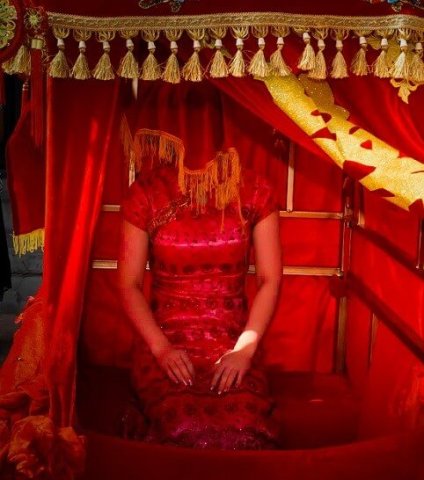
Sometimes the bridesmaids will also hide the bride’s shoes which the groom will have to find.
To avoid bad luck the bride should be carried to the car without her feet touching the floor.
Before leaving for the groom’s house the couple will bow to the bride’s parents. The couple then proceed to the groom’s parents house by the wedding car ( 婚车 hūnchē). Sometimes this can include a whole procession of cars.
The wedding car is the modern replacement for the sedan chair ( 轿子 jiàozi) that was traditionally sent to the bride’s parents house to collect her.
PSST – want to see Marketing man Max give a wedding speech in Chinese at his friends wedding? Take a look!
Wedding Customs in China – The Tea Ceremony
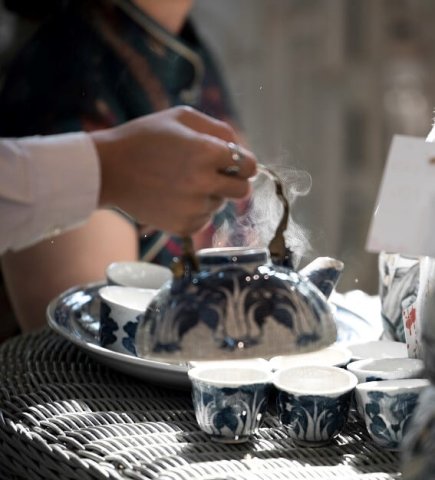
Traditionally the tea ceremony ( 奉茶 fèng chá) was one of the most important wedding customs in China as it was when the bride and groom would become officially married. Nowadays the ritual symbolises that the bride and groom are accepted by both families.
Normally the bride and groom will begin the ceremony by kneeling and offering tea to their elders, starting with the groom’s parents. They then proceed to serve tea from oldest to youngest.
In return, each elder gives the couple a red envelope or gold jewellery along with their blessings. If you’re marrying into a Chinese family, this is one of the moments that matters most, so it’s worth reading up on meeting your Chinese in-laws beforehand.
Wedding Customs in China – The Banquet
Traditionally, there would be several wedding banquets ( 喜宴 xǐyàn) over a number of days. With the most lavish banquet being held on the day of the wedding ceremony by the groom’s family. These banquets would often have a minimum of 12 courses!
Now the modern wedding customs in China are to have an elaborate banquet in a hotel or restaurant with some western style practices added.
On arrival to the banquet, guests present 红包 (hóngbāo) as wedding gifts for the bride and groom. Guest’s name and amount given are registered in a contribution book. This is so the wedding couple can reciprocate the same amount or more when those guests get married.
When preparing the 红包 (hóngbāo) it is important to avoid denominations of four as that is considered an unlucky number in China. Multiples of eight are good as this is a lucky number.
So how much should you give? There’s no fixed rule: it depends on the city and how close you are to the couple. As a rough guide, wedding hongbao in China commonly fall somewhere around 200 to 1,000 RMB, with colleagues and acquaintances at the lower end and close friends and family giving more.
💡 TIP: Aim to at least cover the cost of your seat at the banquet, and choose an even, lucky amount such as 600, 666 or 888 RMB. If you can’t attend, sending a hongbao by WeChat is perfectly normal. For more on the etiquette, see our guide to lucky red envelope gifts.
Most modern Chinese weddings will have a professional wedding ceremony host. The host will begin the wedding ceremony with a short introduction of the bride and groom. The bride and groom will then be invited on stage to exchange vows and rings ( 结婚戒指 jiéhūn jièzhǐ), similar to a western style wedding.
Modern Chinese wedding banquets are shorter than the traditional twelve courses, but it’s still a lot of food! The exact number of dishes varies by family and city, and many couples choose an even number because pairs are lucky at weddings.
A typical modern banquet runs roughly like this:
- Guests arrive, hand over their 红包 (hóngbāo) and sign the contribution book.
- The host introduces the couple, who exchange vows and rings on stage.
- The dishes arrive course by course while the bride changes outfits.
- The bride and groom visit every table to toast their guests.
- The bride changes into her final dress to see the guests off, and everyone leaves with wedding candy (喜糖 xǐtáng).
Wedding Customs in China – The Food and Drink
Similar to Chinese New Year, wedding customs in China dictate that there should be certain dishes with special significance served. Here are some of the most common dishes:
A whole fish – In Chinese the word for fish (鱼 yú) sounds the same as the word for surplus (余 yú), a wish that the couple will always have more than enough. This is the same reason why Chinese people eat fish at Chinese New Year.
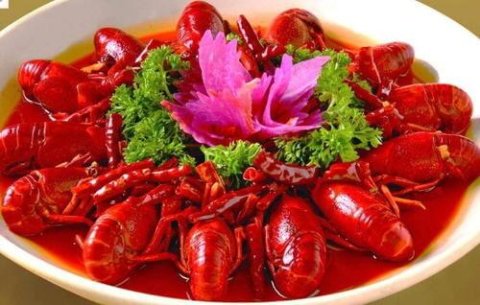
Lobster – The red colour of the lobster once cooked makes this a lucky food. The Chinese for lobster is also literally dragon (龙 lóng) shrimp (虾 xiā) and dragons are an auspicious symbol in Chinese culture.
Beijing roast duck – In Chinese culture ducks are a symbol of fertility and they also mate for life, this dish represents peace, unity and completeness in a marriage. Beijing roast duck is also delicious, so who wouldn’t want it at their wedding!
Traditionally all these dishes are served whole to represent the couples’ happiness remaining unbroken for life.
Abalone and sea cucumber – Abalone in Mandarin is 鲍鱼 bàoyú, which sounds like 包 bāo “guarantee” and 余 yú “surplus”. In Cantonese the word for sea cucumber is a homophone for “good heart”.
Now, no Chinese wedding would be complete without lots of alcohol and toasting ( 敬酒 jìng jiǔ).
According to wedding customs in China, the bride and groom will go around the room visiting their guests. The groom must toast each table with a shot of 白酒 (báijiǔ), a traditional Chinese spirit. The guests will reciprocate with everyone toasting by saying 干杯 (gān bēi), literally meaning dry cup it is the Chinese version of cheers.
That definitely sounds like a lot of drinking for the groom, however, sometimes he will tactfully swap out the 白酒 for water as it’s very strong!
A popular soft drink to have at wedding is 7-up because the Chinese transliteration is 七喜 (qī xǐ) which literally means “seven happiness”.
Wedding Customs in China – The Dress
Historically in China the bride would wear one dress which would normally be a traditional cheongsam ( 旗袍 qípáo) or jacket and skirt, all in red. The groom would wear a traditional Tang suit ( 唐装 tángzhuāng).
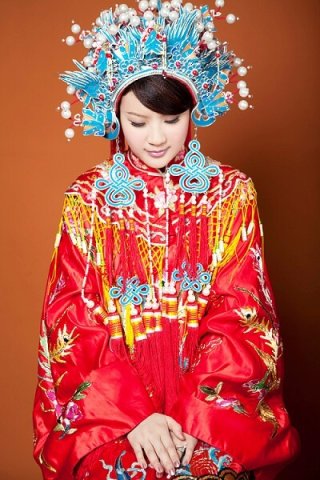
Recently the wedding customs in China have become more westernised with many brides choosing to wear a white bridal gown (婚纱 hūnshā). However, normally the bride will wear both this and a cheongsam, changing dress between different parts of the wedding.
But if you thought two dresses wasn’t enough, many brides also wear a third and even a fourth dress!
Yes, at modern weddings the bride may change up to four times. Often changing from their bridal gown to a standard ball gown between courses and then changing to a final fourth dress to send off the guests.
It has also become customary for the groom to wear western dress, with most grooms opting for a traditional coat and tails ( 燕尾服 yànwěifú).

Clothes in Chinese 👗 The Complete Guide to 101 Different Clothing Items (with Quiz)
The Ultimate Guide For Talking About Clothes in Chinese Perhaps you’re just interested in knowing different types of clothes in Chinese, or maybe you want to know specific vocab to use when shopping for clothes on Taobao. Either way our…
Wedding Customs in China – The Decorations
As with any wedding the decorations are an important part, and according to wedding customs in China some decorations are a must.
Chinese wedding decorations use the “double happiness” ( 双喜 shuāngxǐ) character: 囍, a lot. It’s simply two 喜 (xǐ, “joy”) characters side by side, one happiness for each partner, and it is only used in association with marriage. There will also be lots of wedding banners ( 喜幛 xǐzhàng) with congratulatory messages on them.
The other symbol you’ll spot everywhere is the dragon and phoenix (龙凤 lóngfèng). The dragon (龙 lóng) represents the groom and the phoenix (凤 fèng) the bride, and together they stand for a balanced, harmonious marriage. Look for them on red candles, banquet backdrops and embroidered bridal outfits such as the 龙凤褂 (lóngfèng guà).
It is also popular for 囍 to appear on the wedding cake.
The traditional colours used at Chinese weddings is a big difference from those used in the west. Red is the predominant colour at Chinese weddings because it is considered a very lucky colour symbolising joy, prosperity and happiness. You will also see a lot of gold at Chinese wedding because it signifies wealth and fortune.
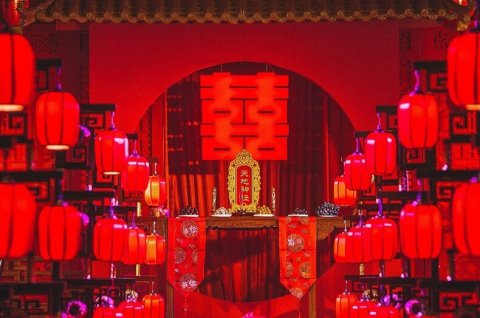
Historically, white was avoided at weddings because in China, it is the colour of mourning and associated with death. However, with western style weddings becoming more popular, white is now common at weddings, from the bride’s gown to the flowers and table decorations.
That relaxation applies to the couple and the decor, not to guests. As a guest, you should still avoid black, white and red (see the FAQ below), and it’s worth knowing a few other lucky and unlucky superstitions before the big day.
Flowers decorate the tables at Chinese weddings, the same as western ones. However, in China lilies are the most popular flower to have at weddings, unlike the west where lilies are most associated with funerals.
Lilies are popular because in Chinese the word for lily 百合 (bǎihé) sounds similar to the wedding greeting 百年好合 (bǎinián hǎo hé) which means may you live a long and happy life together.
Wedding Customs in China – Wedding Photographs
Now, this may seem very strange to westerners but the wedding customs in China are to have the wedding photographs ( 婚纱照 hūnshāzhào) taken before the actual wedding.
Couples will employ a local photo studio to take their wedding photos and will rent out several different outfits. Elaborate sets at the studio or different tourist destinations are the locations for most photos.
I’m sure anyone who has been in China during spring or summer will have seen at least one Chinese couple having their wedding photos taken.

In recent years wedding photos have become more and more elaborate with some couples spending huge amounts of money to make the perfect wedding album.
Some couples will even travel to another city or in some instances country for the photo shoot. Famous cities such as Venice, or Paris are among some of the most popular destinations.
For those who can’t afford to jet off to another country for their photo shoot The Beijing World Park may be a great alternative.
Regional and Ethnic Wedding Traditions
Everything above describes the Han Chinese weddings you’re most likely to attend in cities like Beijing or Shanghai. But there isn’t one single Chinese wedding: customs shift from city to city, and China’s 55 officially recognised ethnic minority groups have their own traditions.
In Guangzhou and other Cantonese-speaking cities, families put extra weight on the hair combing and tea ceremonies, and roast pig often features among the gifts. Travel to Kunming and the rest of Yunnan, home to around 25 ethnic minority groups, and Bai, Naxi or Yi weddings follow their own songs, dress and rituals, quite unlike a hotel banquet.
💡 TIP: If you’re invited to a wedding in a city you don’t know well, ask the couple, a local friend or your Chinese teacher what to expect. They’ll appreciate you asking, and it’s great speaking practice too.
Wedding Customs in China – Wedding Vocabulary
If you want to discuss wedding customs in China with a Chinese friend or perhaps in class with your Chinese teacher, you’ll need to know some wedding vocabulary.
Wedding basics:
| HANZI | PINYIN | ENGLISH |
|---|---|---|
| 婚礼 | hūnlǐ | Wedding (ceremony) |
| 结婚 | jiéhūn | Get married |
| 新娘 | xīnniáng | Bride |
| 新郎 | xīnláng | Groom |
| 伴娘 | bànniáng | Bride’s maid |
| 伴郎 | bànláng | Best man of a wedding |
| 新人 | xīnrén | The newlywed couple |
Wedding stages and rituals:
| HANZI | PINYIN | ENGLISH |
|---|---|---|
| 结婚登记 | jiéhūn dēngjì | Marriage registration |
| 迎亲 | yíngqīn | Welcoming/collecting the bride |
| 拜堂 | bài táng | Perform the traditional wedding ceremony |
| 奉茶 | fèng chá | Tea ceremony |
| 喜宴 | xǐyàn | Wedding banquet |
| 婚纱照 | hūnshāzhào | Wedding photos |
Wedding clothes and accessories:
| HANZI | PINYIN | ENGLISH |
|---|---|---|
| 婚纱 | hūnshā | White bridal gown |
| 头纱 | tóushā | Veil for white bridal gown |
| 旗袍 | qípáo | Cheongsam, traditional Chinese fitted dress with a high collar |
| 燕尾服 | yànwěifú | Coat and tails |
| 唐装 | tángzhuāng | Tang suit, traditional Chinese jacket |
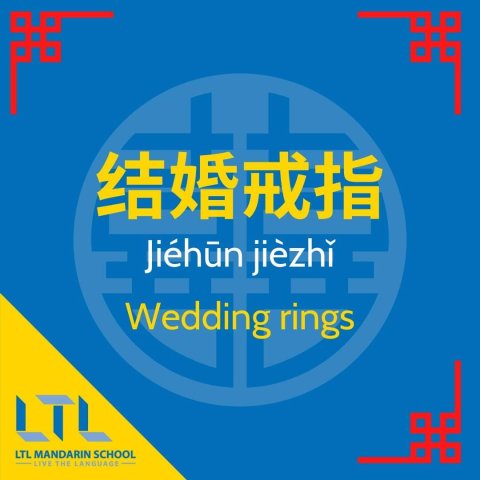
| 结婚戒指 | Jiéhūn jièzhǐ | Wedding rings |
Other useful wedding vocabulary:
| HANZI | PINYIN | ENGLISH |
|---|---|---|
| 喜幛 | xǐzhàng | Wedding banner |
| 双喜 | shuāngxǐ | Double happiness |
| 婚车 | Hūnchē | The wedding car |
| 轿子 | jiàozi | A sedan chair |
| 红包 | hóngbāo | Red envelope filled with money |
If you want to learn more about Chinese wedding traditions why not watch The Farewell and practice your Chinese at the same time.
Or experience these traditions for real. Our students live with carefully selected host families, so you’ll pick up the customs and the language together. Come and learn Chinese in China.
Wedding Customs in China – FAQ’s
How do you say wedding in Chinese?
Wedding in Chinese is 婚礼 (hūnlǐ), 婚 means to wed or marry and 礼 means ceremony or ritual.
Why do brides wear red in Chinese weddings?
Red symbolizes happiness, good luck, and prosperity in Chinese culture. Many brides wear a red qipao (旗袍) or traditional wedding dress (秀禾服), though some modern brides now opt for a white gown for the ceremony and change into red later.
What colors should I avoid wearing to a Chinese wedding?
Black should not be worn to a Chinese wedding as it signifies bad luck to the newlyweds, and dark colors in general should be avoided. White is best skipped too, as it is the traditional colour of mourning. You also shouldn’t wear red as normally the bride will be wearing a red dress!
Instead, choose smart, semi-formal clothes in cheerful colours such as pink, peach, light blue, purple or soft neutrals. Something you’d wear to a nice restaurant or a business dinner is about right.
Traditionally, who pays for the wedding in China?
Traditionally, it is the groom’s family who pay for the wedding in China.
What should I give as a gift at a Chinese wedding?
Normally, wedding guests in China will gift a 红包 (hóngbāo), a red envelope filled with money, to the bride and groom. If you are unsure about gift-giving etiquette, make sure to check out our blog on Chinese gift-giving.
What are the rules of marriage in China?
A marriage in China only becomes legal when the couple registers it at a marriage registration office (婚姻登记处 hūnyīn dēngjì chù), run by the local civil affairs bureau. The wedding ceremony and banquet have no legal effect on their own.
Since 10 May 2025, couples can register in any city rather than returning to their hometown, and they only need their ID cards. The legal minimum age to marry is 22 for men and 20 for women.
What are the etiquette rules for guests at a Chinese wedding?
Guests hand over a red envelope (红包 hóngbāo) on arrival, and their name and amount are recorded in a contribution book. Avoid amounts containing four, an unlucky number, and favour lucky even amounts.
Don’t wear black, white or red, as red is the bride’s colour. When the couple visit your table to toast, join in with 干杯 (gān bēi), and expect to leave with wedding candy (喜糖 xǐtáng).
How much money do you give for a Chinese wedding?
There is no fixed rule, but wedding hongbao in China commonly fall around 200 to 1,000 RMB. Colleagues and acquaintances give at the lower end, while close friends and family give more.
Aim to at least cover the cost of your seat at the banquet, and pick an even, lucky amount such as 600, 666 or 888 RMB. If you can’t attend, sending a hongbao by WeChat is perfectly normal.
Want more from LTL?
If you wish to hear more from LTL Language School why not join our mailing list? We give plenty of handy information on learning Chinese, useful apps to learn the language and everything going on at our LTL schools!
Sign up below and become part of our ever-growing community!
⭐ Download our free ebook, your starter pack of essential Mandarin learning resources!
BONUS || Want to study Chinese with us in China? Why not check out our group and individual classes here





[…] of formal clothes, what about wedding clothes? Check out our blog on wedding customs in China to find out […]
[…] Chinese weddings are generally very different to western weddings. […]
[…] You’ll see here that the word for ring includes the character for finger 指 . To specify different kinds of rings, a description is added before just the same as it is in English. For instance you can see that the word for married 结婚 is added before ring to make the word wedding ring. […]
[…] year I went to a tea ceremony in China and can honestly say it was a very enjoyable […]
Is it ok to wear black to a Chinese wedding?
Hi Clara,
It's best to avoid wearing black to a Chinese wedding as it symbolises mourning and death. However, wearing something which does have some black on it should be ok.
Thanks, The LTL Team
[…] important events like Chinese New Year or Chinese weddings there are some dishes which are a […]