
The word for color in Chinese is 颜色 yán sè, and most color names are a base character plus 色 sè (color), just like all of these 👇
| English | Chinese | Pinyin |
|---|---|---|
| Red | 红色 | hóng sè |
| Black | 黑色 | hēi sè |
| White | 白色 | bái sè |
| Green | 绿色 | lǜ sè |
| Yellow | 黄色 | huáng sè |
| Blue | 蓝色 | lán sè |
Each color also carries cultural meaning. Red stands for good fortune and joy, white is the traditional color of mourning, and yellow was the Emperor’s color in Imperial China.
Learn All The Important Chinese Colors
Do you think knowing Chinese Colors and their meanings is important?
Recently I was on the train and I looked over the shoulder of a Chinese man checking his phone for the latest stock prices.
To my horror, everything on the screen was marked red!
I asked him “Gǔshì shìfǒu bēngkuì?” (股市是否崩溃?) Is the stock market crashing?
He turned to me, laughing: “Hóng sè hěn hǎo” (红色很好).
In Chinese stock markets, red means prices are rising and green means they are falling, the reverse of what you’d see on a US trading screen.
“Red is good” – Anonymous Commuter
Chinese Colors and their Meanings
First, the word itself: color in Chinese is 颜色 yán sè. Almost every color name follows the same pattern, a base character plus 色 sè (color), so 红 hóng + 色 sè gives you 红色 hóng sè, red.
In everyday speech the 色 often drops away, as in 红酒 hóng jiǔ (red wine) or 白菜 bái cài (Chinese cabbage, literally ‘white vegetable’).
One way you could really impress your Chinese colleagues is to show off your understanding of Chinese colors and meanings.
Also when buying your Chinese partner any gifts it’s probably a good idea to know lucky Chinese colours and unlucky Chinese colors.
Let’s go through them now:
Yellow in Chinese – 黄色 huáng sè
Shades, Synonyms and Phrases // Using Chinese Colors
Bronze in Chinese – 古铜色 gǔ tóng sè
Azure in Chinese / Saffron in Chinese
Turquoise in Chinese / Cerise in Chinese
Maroon in Chinese / Lilac in Chinese
Tan in Chinese / Indigo in Chinese
Think you know your Chinese colours already?
Test your knowledge of Chinese colors with our quiz, located at the bottom of this article.
Black in Chinese – 黑色 hēi sè
Black color in Chinese represents water. Ancient Chinese people regarded black as the king of colors. Today, Chinese culture associates it with evil and sadness.
Because of its link with mourning, black is traditionally kept away from happy occasions such as weddings, birthdays and Chinese New Year.
Funerals are different. In modern Chinese cities you’ll see plenty of black at a funeral, often as dark clothing or a black armband, alongside the traditional white.
On its own, 黑 hēi simply means black. The shady meanings come from compound words, where 黑 suggests something illegal, hidden or wicked:
| Chinese | Pinyin | English |
|---|---|---|
| 黑市 | hēi shì | black market |
| 黑车 | hēi chē | unlicensed taxi |
| 黑心 | hēi xīn | wicked, cruel (literally ‘black-hearted’) |
Maybe don’t wear that really cool black shirt on a first date with a Chinese person.
White in Chinese – 白色 bái sè
Here is something you should definitely know before you attend a Chinese funeral.
White is the traditional color of mourning and is associated with death. Close family members often wear white, while guests at modern funerals usually choose black or other plain, dark clothes. Whatever you wear, leave anything bright red at home.
White color in Chinese is also associated with metal, representing brightness, purity and fulfilment.
Quick, before you read on: why not learn how to say all these colors with our HOW TO series on Youtube?
Red in Chinese – 红色 hóng sè
Red not surprisingly corresponds with fire. It symbolises good fortune and joy.
You’ll see red everywhere during Chinese New Year.
Warning: do not write names in red ink!
In ancient times, a death row criminal’s name was written in chicken blood, later this evolved to being written in red ink.
Some people use red ink in a break-up letter, a curse for someone to die, or the news that a friend or relative has passed away. So just stick with your black and blue pens for your love letters.
Pink in Chinese – 粉色 fěn sè
Pink is considered a shade of red, so it carries the same meanings of good fortune and joy.
FUN FACT || In Chinese society, during holiday or special occasions they exchange a red envelope with money inside.
The red color of the envelope symbolizes good luck and is a symbol to ward off evil spirits.
Green in Chinese – 绿色 lǜ sè
Does your business sell green hats?
Well, I’ve got some bad news if you’re hoping to break into the Chinese market. Starting in the Yuan Dynasty (1279–1368) family members of prostitutes were forced to wear green hats.
Today, if you see someone wearing a green hat they wish for you to know their partner had been unfaithful.
Aside from the odd green hat rule.
Green in Chinese otherwise stands for clean and contamination free and is used on organic products.
TIP💡 The ü in 绿 lǜ trips up a lot of English speakers. Say “ee”, then round your lips as if to whistle, without moving your tongue. If it comes out as “loo”, you’ve said 路 lù (road) instead! On a phone, most pinyin keyboards use v for ü, so type lv. You can also practice your Chinese pronunciation to check your tones.
Yellow in Chinese – 黄色 huáng sè
Yellow in Chinese represents the element of earth.
Yellow signifies neutrality and good luck and that’s why it’s common to see it paired with red.
Yellow in China traditionally symbolised power, royalty and prosperity. In Imperial China, yellow was the Emperor’s color.
Warning! Today, yellow is symbolic of pornography in publications in China.
Don’t panic about a yellow book cover, though. The slang belongs to the word, not the shade: 黄色 describes adult content, as in 黄色电影 huáng sè diàn yǐng (an adult film). Just be careful calling a joke or a website 黄色 unless you mean it!
Blue in Chinese – 蓝色 lán sè
Despite Chinese people’s feelings on blue cheese (see video)…
Blue in Chinese represents healing, trust and calmness.
Ironically, we lost all trust with our Chinese teachers after making them eat something that doesn’t go down too well with natives!
They give us stinky Chinese food, we give them blue cheese!
Revenge is sweet! See how they react below…

Purple in Chinese – 紫色 zǐ sè
Purple in China represented divinity and immortality in ancient times.
You can still see that heritage in the Forbidden City, whose Chinese name 紫禁城 Zǐjìnchéng begins with 紫, purple. It is named after the purple star where the Celestial Emperor was believed to live.
Today purple in Chinese is more associated with love or romance particularly with younger generations.
Gray in Chinese – 灰色 huī sè
Gray in Chinese symbolises humbleness and unassumingness.
In ancient times, ordinary people wore grey clothes and had grey houses.
Today, gray in Chinese can be used to describe something dark, tarnished, or represent gloomy weather and emotions.
Shades, Synonyms and Phrases // Using Chinese Colors
Once you know the basics, a few patterns let you describe almost anything.
Colors With Two Names: Orange, Pink and Brown
Some everyday colors have two common names, and you’ll hear both:
| Chinese | Pinyin | English |
|---|---|---|
| 橙色 | chéng sè | orange (from 橙 chéng, orange fruit) |
| 橘色 | jú sè | orange (from 橘 jú, tangerine) |
| 粉色 | fěn sè | pink |
| 粉红色 | fěn hóng sè | pink (literally ‘powder red’) |
| 棕色 | zōng sè | brown |
| 咖啡色 | kā fēi sè | brown (literally ‘coffee color’) |
Light and Dark Colors in Chinese
Put 浅 qiǎn (light) or 深 shēn (dark) in front of a color:
| Chinese | Pinyin | English |
|---|---|---|
| 浅蓝色 | qiǎn lán sè | light blue |
| 深蓝色 | shēn lán sè | dark blue, navy |
| 浅绿色 | qiǎn lǜ sè | light green |
| 深红色 | shēn hóng sè | dark red |
How to Talk About Colors in Chinese
| Chinese | Pinyin | English |
|---|---|---|
| 什么颜色? | Shén me yán sè? | What color? |
| 这是什么颜色? | Zhè shì shén me yán sè? | What color is this? |
| 你最喜欢什么颜色? | Nǐ zuì xǐ huan shén me yán sè? | What’s your favorite color? |
| 我最喜欢的颜色是蓝色。 | Wǒ zuì xǐ huan de yán sè shì lán sè. | My favorite color is blue. |
| 我喜欢红色。 | Wǒ xǐ huan hóng sè. | I like red. |
To describe an object, add 的 de: 红色的车 hóng sè de chē is a red car. In a shop, 我要黑色的 wǒ yào hēi sè de means “I want the black one”.
Olympic Colors in Chinese
China has come a long way since Xu Haifeng won the nation’s first-ever gold medal in the 1984 Olympics’ ’50m pistol’ shooting event. The Olympic medal colors, however, have a much longer history in China. Read on to find out to say these colors and find out about their significance through China’s history.
Gold in Chinese – 金色 jīn sè
Gold is traditionally the color of prosperity and fortune in China.
You will often see it paired with red for special occasions and gifts. Yellow or Gold is traditionally considered the most beautiful in Chinese culture.
Gold also represents freedom from worldly cares which is why it is also often used in Buddhist temples.
Gold represents the color of a winning Olympian!
Silver in Chinese – 银色 yín sè
Silver is generally considered to be part of the ‘white’ family of colours.
Silver symbolises the idea of purity and wealth.
In Chinese the word for this color is literally 银 “silver” 色 “color”.
Silver represents a 2nd placed finish for an Olympian.
Bronze in Chinese – 古铜色 gǔ tóng sè
As in English, the word for Bronze color refers directly to the metal that inspired the name.
In Chinese the word for Bronze is 古 “ancient” 铜 “copper/bronze” 色 “color”.
In museums across China you can find many ancient Chinese tools, pots and other artefacts made out of the metal.
Bronze represents the 3rd placed finish for an Olympian.
To say a placing, put 第 dì in front of the number:
| Chinese | Pinyin | English |
|---|---|---|
| 第一 | dì yī | first |
| 第二 | dì èr | second |
| 第三 | dì sān | third |
Ready for more? Head over and learn the numbers in Chinese.
More Obscure Colors in Chinese
Maybe you’re thinking of sprucing up your Hutong apartment by giving it a lick of paint or choosing a vibrant new wallpaper.
Or perhaps you just like talking about things with a certain amount of precision.
If so, you might want to learn the words for some of these extra, more obscure colors in Chinese.
Of course, there’s a whole catalogue of color names to get through, but here are some to start off your rainbow journey:
| Chinese | Pinyin | English |
|---|---|---|
| 天蓝色 | tiān lán sè | azure (sky blue) |
| 藏红花色 | zàng hóng huā sè | saffron |
| 绿松石色 | lǜ sōng shí sè | turquoise |
| 樱桃红 | yīng táo hóng | cerise (cherry red) |
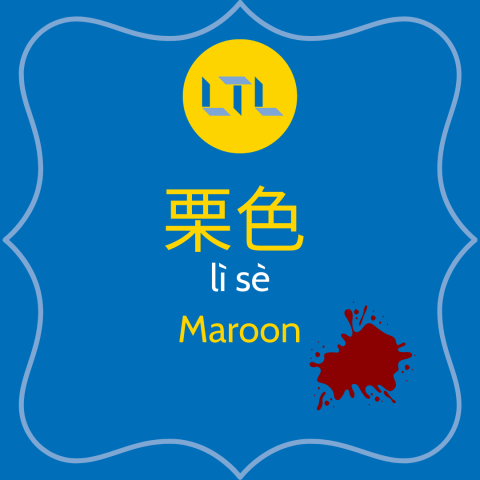
| 栗色 | lì sè | maroon |
| 淡紫色 | dàn zǐ sè | lilac |
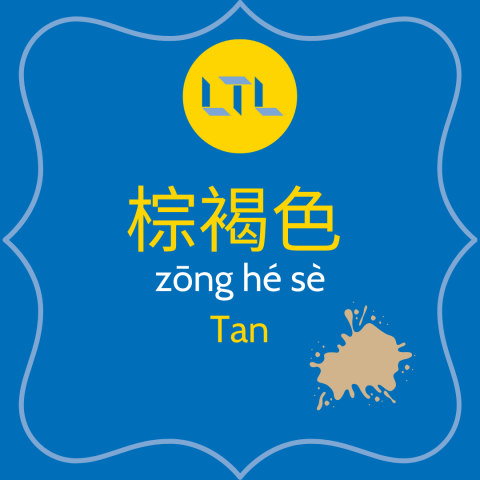
| 棕褐色 | zōng hè sè | tan |
| 靛蓝色 | diàn lán sè | indigo |
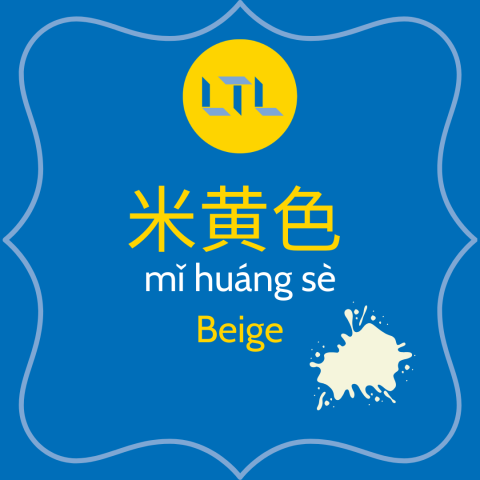
| 米色 | mǐ sè | beige |
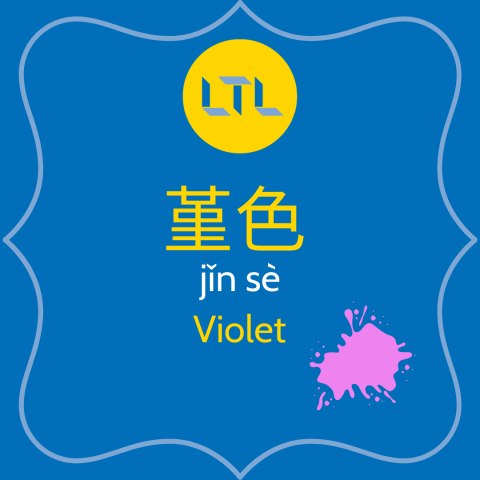
| 紫罗兰色 | zǐ luó lán sè | violet |
Azure in Chinese / Saffron in Chinese
Turquoise in Chinese / Cerise in Chinese
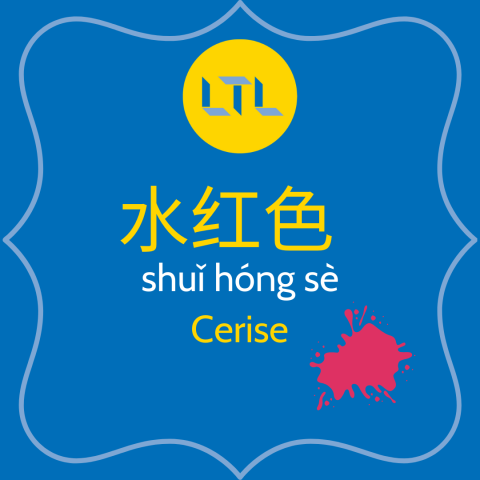
Maroon in Chinese / Lilac in Chinese
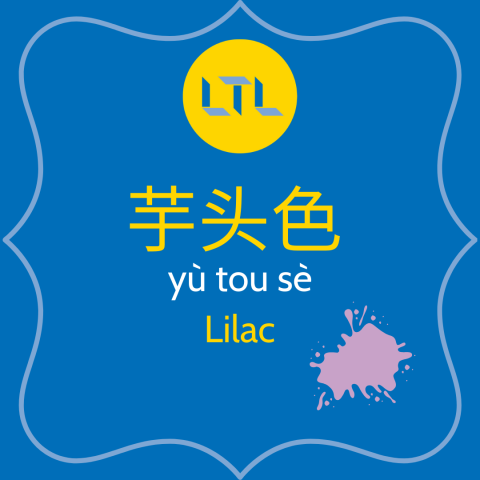
Tan in Chinese / Indigo in Chinese
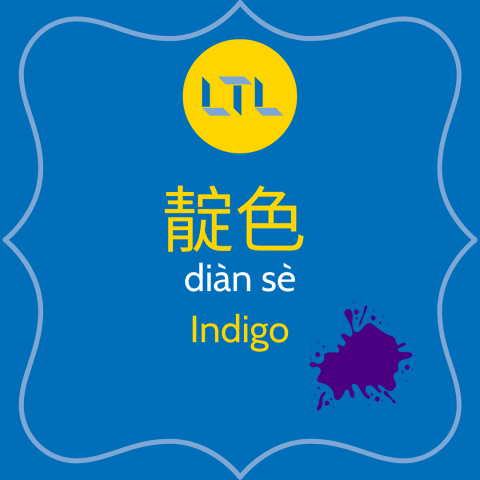
Beige in Chinese / Violet in Chinese
Want to discover more ways to learn Mandarin online? Great! Once your colors are down, pair them with our shapes in Chinese vocabulary so you can describe a 红色的圆 hóng sè de yuán (a red circle). First, though, we’ve got two more things for you.
Chinese Colors Quiz
Let’s put you to the test and see how many of those colours you can remember with our Colors Quiz!
It’s really quick, super simple and the results are immediate! Share your score below if you are happy with it!

Learning colors from a list is a great start, but they really stick when you hear them every day: picking out a 红包 hóng bāo with your host family or haggling over a 深蓝色 shēn lán sè jacket at a Beijing market. Find your perfect Mandarin program and live, breathe and dream the language.
If you REALLY love learning the colors in other languages, why not check out how to say all these colors in Vietnamese, Japanese, Korean and Spanish as well also!
Chinese Colors || FAQs
How do you say Gold in Chinese?
Gold in Chinese is 金色 jīn sè.
How do you say Green in Chinese?
Green in Chinese is 绿色 lǜ sè.
How do you say Red in Chinese?
Red in Chinese is 红色 hóng sè.
How do you say White in Chinese?
White in Chinese is 白色 bái sè.
How do you say Yellow in Chinese?
Yellow in Chinese is 黄色 huáng sè.
What is the most popular colour in Chinese culture?
Red is. Red symbolises fortune and joy and is seen widely across China, not least the Chinese flag. Red in Chinese is 红色 hóng sè.
Is Black a good colour in Chinese culture?
Black is best avoided at happy occasions such as weddings, birthdays and Chinese New Year, because it is linked with mourning.
At funerals it is perfectly acceptable, and in modern Chinese cities many mourners wear black alongside the traditional white.
Do Chinese wear white clothes to funerals?
Yes, traditionally they do. White is the color of mourning in Chinese culture, and close family often wear white at a funeral.
If you are a guest, black or other plain, dark clothes are a safe choice. Avoid bright red, which is reserved for celebrations.
What is the situation with wearing green hats in China?
Wearing a green hat is something you should avoid at all costs.
Here is why.
Starting in the Yuan Dynasty (1279–1368) family members of prostitutes were forced to wear green hats.
Even to this day, if someone is seen wearing a green hat, you might be thought of in ways you least expected!
What is the Chinese word for “color”?
The Chinese word for color is 颜色 yán sè. Most color names add 色 sè to a base character, so 红 hóng plus 色 sè gives 红色 hóng sè, red.
To ask what color something is, say 这是什么颜色? Zhè shì shén me yán sè.
How do I say “my favorite color is” in Chinese?
Say 我最喜欢的颜色是 wǒ zuì xǐ huan de yán sè shì, then add the color. For example, 我最喜欢的颜色是蓝色 means “My favorite color is blue.”
To ask someone else, use 你最喜欢什么颜色? Nǐ zuì xǐ huan shén me yán sè, meaning “What’s your favorite color.”
How do you say all the colors in Chinese?
Most Chinese colors follow one pattern: a base character plus 色 sè. The basics are 黑色 hēi sè (black), 白色 bái sè (white), 红色 hóng sè (red), 粉色 fěn sè (pink), 绿色 lǜ sè (green), 黄色 huáng sè (yellow), 蓝色 lán sè (blue), 紫色 zǐ sè (purple) and 灰色 huī sè (gray).
Orange is 橙色 chéng sè and brown is 棕色 zōng sè or 咖啡色 kā fēi sè. Put 浅 qiǎn (light) or 深 shēn (dark) in front to change the shade, as in 深蓝色 shēn lán sè, dark blue.
Want more from LTL?
If you wish to hear more from LTL Language School why not join our mailing list? We give plenty of handy information on learning Chinese, useful apps to learn the language and everything going on at our LTL schools!
Sign up below and become part of our ever-growing community!
⭐ Download our free ebook, your starter pack of essential Mandarin learning resources!
BONUS || Want to study Chinese with us in China? Why not check out our group and individual classes here







19 comments
[…] Meaning: Golden Gate (金 Jīn = Gold; 门 mén = […]
[…] the Temple of Heaven, there are 240 clove trees that line up to create a sea of color. You can find them near the Hall of […]
[…] the group so large we divided the students into two groups, a yellow team and a blue team (LTL colours of […]
[…] the colour black in Chinese represents illegality, so it could be translated as ‘illegal guest’, a fitting term […]
[…] 68. More than 30 million people live in caves in China, in Shaanxi province. 69. White is the colour of mourning and thus is always worn at funerals as a symbol of death. 70. Red is always worn at […]
Great info, thanks for sharing this! Loving the depth of colours you've gone to!
That was the plan, you can find Red, Yellow and Blue everywhere... but what about Bronze, Silver and Gold?!
LTL Team
hen hao
[…] one of the most commonly used colours because it represents wealth and fortune. However the most common colour at a Chinese wedding is […]
[…] gemstones have a colour followed by the characters for gemstone (宝石) or stone (石) afterwards. However, you’ll […]
Thx for all the colors in chinese thank you so much.
Our pleasure Evon!
[…] powder – 古铜粉 (gǔ tóng fěn), 古铜 is the colour bronze. However, you’re unlikely to see many Chinese people wearing bronzing powder as a pale […]
[…] White is the colour of mourning and thus is always worn at funerals as a symbol of […]
Like the Olympic ones!
🥇🥈🥉
[…] Silver is generally considered to be part of the 'white' family of colours. It symbolises the idea of purity and wealth. In Chinese the word for this color is literally 银 “silver” 色 “color”. via […]
hen hao
[…] https://ltl-taiwan.com/chinese-colors/#chapter-1 […]