
Basic Mandarin for Beginners // Everything You Need to Start
Basic Mandarin for beginners comes down to about 100 high-frequency phrases covering greetings, numbers, directions, ordering food, and asking for help.
Learn them in pinyin first, focus on the four tones, and you can hold real conversations within weeks, long before you tackle Chinese characters or the full 2,200 hours the US Foreign Service Institute estimates for professional proficiency.

Learning Mandarin may seem challenging, but a few key phrases can go a long way in making meaningful connections and navigating everyday situations.
Below you’ll find 105 essential Mandarin phrases, with characters, pinyin, and English, organised by situation. Greetings, numbers, directions, ordering food, asking for help: the phrases that actually come up in daily life.
Whether you’re asking for directions with 在哪里 (zài nǎlǐ), ordering local dishes in a restaurant, or seeking help in a tricky situation, this guide has got you covered.
Perfect for beginners, these phrases will give you the confidence to communicate effectively and immerse yourself in the world of Mandarin Chinese
💪 And if you’re looking to keep that momentum going in a structured environment, consider exploring longer-term study options in Beijing that balance practical use with deeper learning.
At LTL, we’ve been teaching Mandarin since 2007, in Beijing, Shanghai, Chengdu, and across Asia.
Our students hold a 98% HSK pass rate, and we’re accredited by IALC. We know what works for beginners, and it starts exactly here: real phrases, used in real situations.

Is Mandarin Hard to Learn?
Honestly? Yes, Mandarin is one of the more challenging languages for English speakers. The US Foreign Service Institute classifies it as a Category IV language, estimating around 2,200 class hours to reach professional proficiency.
But here’s what that number doesn’t tell you: you can hold a real conversation after a few weeks of focused study. You don’t need 2,200 hours before Mandarin becomes useful.
The four main hurdles beginners face are:
- Tones. Mandarin has four tones (plus a neutral). The same syllable means completely different things depending on pitch. mā (妈) means ‘mother’; mǎ (马) means ‘horse’. Getting them wrong is part of learning, everyone does it.
- Characters. There’s no alphabet. Written Mandarin uses characters (汉字, hànzì). The good news: you don’t need characters to start speaking. Pinyin (the romanised phonetic system) gets you talking from day one.
- No shared roots. Unlike French or Spanish, Mandarin shares almost no vocabulary with English. Every word is genuinely new.
- Tones again. Seriously, tones. 😄
The flip side: Mandarin grammar is remarkably logical. No verb conjugation, no gendered nouns, no plural endings. Once you know a word, it stays that word.
TIP💡 Start with pinyin and the 105 phrases in this guide. You’ll be surprised how quickly a few hours of practice builds real confidence.
Want to go deeper on the writing system? Check out our guide to Chinese characters and pinyin basics.
⬇️⬇️⬇️ Basic Mandarin Quiz ⬇️⬇️⬇️




Basic Mandarin Greetings
| HANZI | PINYIN | ENGLISH |
|---|---|---|
| 你好 | nǐ hǎo | Hello |
| 我是… | wǒ shì… | I am… |
| 你好吗? | nǐ hǎo ma | How are you? |
| 我很好的谢谢 | wǒ hěn hǎo xiè xiè | I’m good thanks |
| 你吃了吗? | nǐ chī le ma | Have you eaten?* |
| 很高兴认识你 | hěn gāo xìng rèn shi nǐ | Nice to meet you |
| 你叫什么名字? | nǐ jiào shén me míng zì? | What is your name? |
| 我叫… | wǒ jiào… | My name is… |
| 我朋友叫… | wǒ péngyǒu jiào… | My friend’s name is… |
| 我来自… | wǒ lái zì… | I’m from… |
| 你来自哪里? | nǐ lái zì nǎ li? | Where are you from? |
| 再见 | zài jiàn | Goodbye |
TIP💡 In China, most foreigners adopt a Chinese name, teachers will give you one in your first class. Want to find yours now? Get your free Chinese name with our name generator 🎉


Check out some alternate ways to say hello in Mandarin or some more about basic greetings in Chinese here.
Thanks and Related Phrases in Mandarin
| HANZI | PINYIN | ENGLISH |
|---|---|---|
| 谢谢 | xiè xiè | Thank you |
| 请 | qǐng | Please |
| 不客气 | bú kè qì | You’re welcome |
| 对不起 | duì bu qǐ | I’m sorry |
| 打扰一下 | dǎ rǎo yí xià | Excuse me |
| 是 | shì | Yes |
| 不是 | bú shì | No |
| 我很好谢谢 | wǒ hěn hǎo xiè xiè | I’m good thanks |
| 你呢? | nǐ ne? | And you?: |


Time-Related Phrases in Chinese
| HANZI | PINYIN | ENGLISH |
|---|---|---|
| 早上好 | zǎo shàng hǎo | Good morning (early morning) |
| 上午好 | shàng wǔ hǎo | Good morning (late morning) |
| 中午好 | zhōng wǔ hǎo | Good afternoon (only to be used around midday) |
| 下午好 | xià wǔ hǎo | Good afternoon |
| 晚上好 | wǎn shàng hǎo | Good evening |
| 晚安 | wǎn ān | Goodnight |



Asking Questions in Chinese
| HANZI | PINYIN | ENGLISH |
|---|---|---|
| …在哪里? | … zài nǎlǐ? | Where is …? |
| 怎么去…? | zěn me qù …? | How do I get to …? |
| …有多远? | …yǒu duō yuǎn? | How far is …? |
| 你能在地图上给我看看吗? | nǐ néng zài dì tú shàng gěi wǒ kàn kan ma? | Can you show me on a map? |
| 你能把它写下来吗? | nǐ néng bǎ tā xiě xià lái ma? | Can you write that down? |
| 它的价格是多少 ? | tā de jià gé shì duō shǎo? | How much does it cost? |
| 这是什么? | zhè shì shén me? | What is this? |
| 现在几点? | xiàn zài jǐ diǎn? | What time is it? |
| 你有 … 吗? | nǐ yǒu … ma? | Do you have …? |
| 你们有便宜一点的吗? | nǐ men yǒu pián yi yì diǎn de ma? | Do you have anything cheaper? |
| 你喜欢 … 吗? | nǐ xǐ huan … ma? | Do you like …? |
| 最好的 … 是什么? | zuì hǎo de … shì shénme? | What is the best …? |
| … 怎么说? | … zěn me shuō? | How do you say …? |
| 北京哪里好玩儿? | Běijīng nǎ lǐ hǎo wán er? | What is fun to do in Beijing? |
| 你有什么建议? | nǐ yǒu shén me jiàn yì? | What do you recommend? |
| 我在哪里可以 …? | wǒ zài nǎ li kě yǐ …? | Where can I …? |


Basic Mandarin Numbers
| HANZI | PINYIN | ENGLISH |
|---|---|---|
| 一 | yī | One |
| 二 | ér | Two |
| 三 | sān | Three |
| 四 | sì | Four |
| 五 | wǔ | Five |
| 六 | liù | Six |
| 七 | qī | Seven |
| 八 | bā | Eight |
| 九 | jiǔ | Nine |
| 十 | shí | Ten |
| 一百 | yì bǎi | One hundred |
| 一千 | yì qiān | One thousand |
TIP💡 Wondering how these phrases fit into the bigger picture? HSK 1, the entry level of China’s official Mandarin proficiency exam, requires around 150 vocabulary items. Many of the phrases in this guide map directly to that level.
Test your HSK knowledge and see where you stand.
Want to go all the way to a million? Listen to all the numbers
Places in Chinese
| HANZI | PINYIN | TRANSLATION |
|---|---|---|
| 这里 | zhè lǐ | Here |
| 那里 | nà lǐ | There |
| 地方 | dì fang | Place |
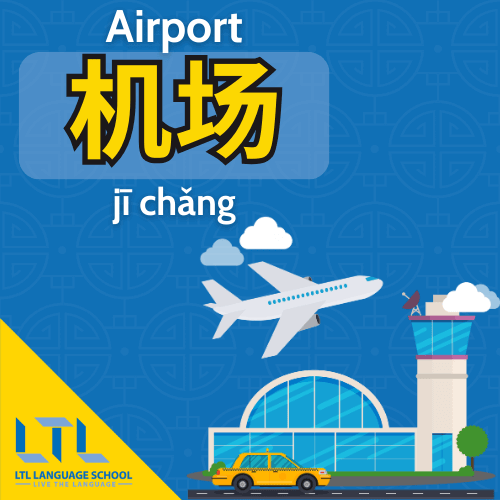
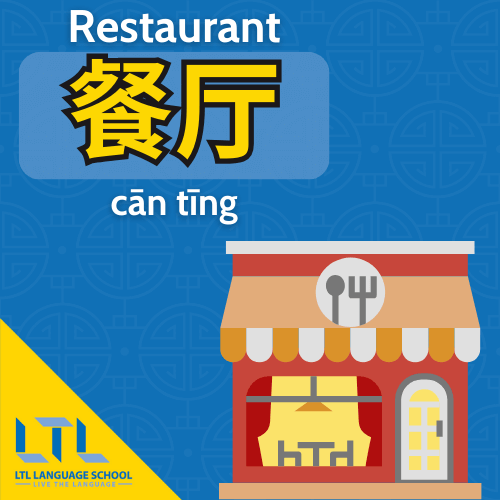
| 餐厅 | cān tīng | Restaurant |
| 咖啡馆 | kā fēi guǎn | Cafe |
| 酒店 | jiǔ diàn | Hotel |
| 机场 | jī chǎng | Airport |
| 火车站 | huǒ chē zhàn | Train station |
| 汽车站 | qì chē zhàn | Bus station |
| 超市 | chāo shì | Supermarket |
TIP💡 These phrases will serve you across every Mandarin-speaking city, but the context changes. In Beijing you’ll hear 哪儿 (nǎr) instead of 哪里 (nǎlǐ) for ‘where.’ In Shanghai the local dialect bleeds into daily conversation.
In Chengdu, people speak a little slower, which many beginners find easier to follow. Want to study Mandarin across Chinese cities?
We run programs in Beijing, Shanghai, Chengdu, Kunming, Xi’an, and more.

Vehicles in Chinese


Directions in Chinese
| HANZI | PINYIN | ENGLISH |
|---|---|---|
| 左边 | zuǒ biān | Left |
| 右边 | yòu biān | Right |
| 直 | zhí | Straight |
| 向后 | xiàng hòu | Backwards |
Learn the directions in Chinese here.
Likes and Dislikes in Chinese
| HANZI | PINYIN | ENGLISH |
|---|---|---|
| 我喜欢 | wǒ xǐ huān | I like |
| 我不喜欢 | wǒ bù xǐ huān | I don’t like |
| 我想去… | wǒ xiǎng qù… | I’d like to go to… |
| 我对 … 过敏 | wǒ duì … guò mǐn | I’m allergic to … |
TIP💡 One phrase people always ask about: 我爱你 (wǒ ài nǐ), ‘I love you.’ It’s direct and sincere in Mandarin, though in everyday speech many people show affection through actions rather than words. Still worth knowing 😊
Ordering in Chinese
| HANZI | PINYIN | ENGLISH |
|---|---|---|
| 我想… | wǒ xiǎng … | I would like… |
| 你们有 … 吗? | nǐmen yǒu … ma? | Do you have …? |
| 你会说英语吗? | nǐ huì shuō yīng yǔ ma? | Do you speak English? |
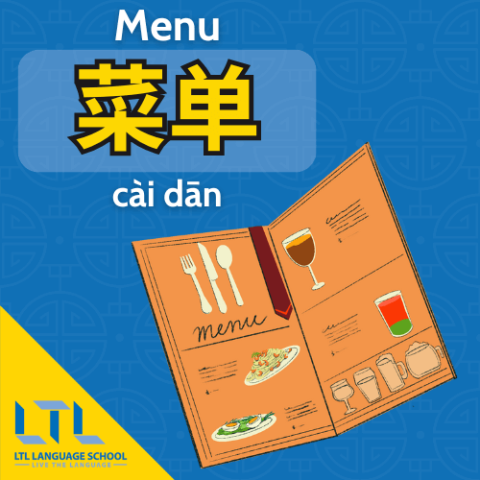
| 请给我菜单 | qǐng gěi wǒ cài dān | Menu, please |
| 买单 | mǎi dān | Bill please |
| 这 | zhè | This |
| 那 | nà | That |

TIP💡 Ordering food is where tones really matter. Getting the wrong tone on 要 (yào, ‘want/need’) or 炒 (chǎo, ‘stir-fried’) can cause real confusion.
TIP💡 Make sure you’re pronouncing your pinyin initials correctly, ‘x’, ‘zh’, ‘q’, and ‘c’ don’t sound like their English equivalents. Our Chinese Pronunciation Trainer is a great way to practise getting them right.
Food in Chinese
| hANZI | PINYIN | ENGLISH |
|---|---|---|
| 面条 | miàn tiáo | Noodles |
| 米饭 | mǐ fàn | Rice |
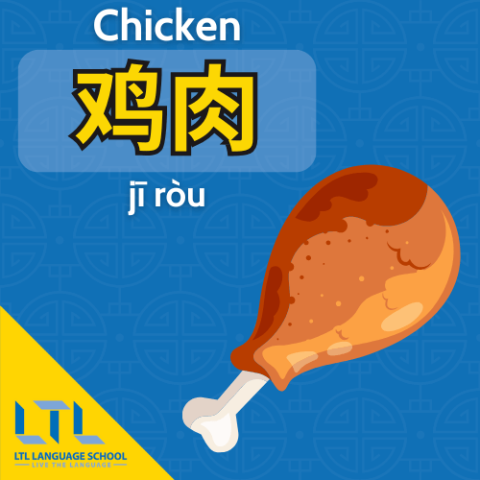
| 鸡肉 | jī ròu | Chicken |
| 牛肉 | niú ròu | Beef |
| 猪肉 | zhū ròu | Pork |
| 素食者 | sù shí zhě | Vegetarian |

Basic Mandarin tip: Expressing that you are vegetarian or vegan can be difficult in China. A good way to be understood is to say you are Buddhist (佛教) fó jiào. Typically people will understand your diet if you say this.

How to Decode a Chinese Menu Like a Pro 🍜 Chinese Menus Explained + The Complete Cheat Sheet
Chinese Menus. How to read them, how to decode them? Not so easy right? Well with our FREE Chinese Menu cheat sheet and tips, you’ll have no problems!
Drinks in Chinese
| HANZI | PINYIN | ENGLISH |
|---|---|---|
| 水 | shuǐ | Water |
| 咖啡 | kā fēi | Coffee |
| 可乐 | kě lè | Cola |
| 啤酒 | pí jiǔ | Beer |
| 茶 | chá | Tea |
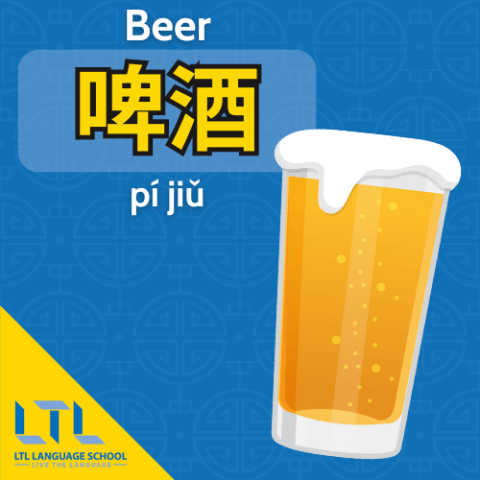

PRO TIP || gānbēi (干杯) means “dry cup”, or to finish your drink. So be careful to use the term loosely.
Find out the most popular traditional Chinese dishes here.
Misunderstandings in Chinese
| HANZI | PINYIN | ENGLISH |
|---|---|---|
| 请再说一遍 | qǐng zài shuō yībiàn | Please say that again |
| 请慢嗲 | qǐng màn diē | More slowly, please |
| 我不明白 | wǒ bù míng bái | I don’t understand |
| 对不起, 我不会说汉语 | duìbùqǐ, wǒ bù huì shuō hànyǔ | I’m sorry, I don’t speak Mandarin |
| … 是什么意思? | … shì shén me yì si | What does … mean? |
🌍 Want to learn how to apologize in another language? Check out how to say Sorry in Japanese!
Help in Chinese
| HANZI | PINYIN | ENGLISH |
|---|---|---|
| 帮助 | bāng zhù | Help |
| 小心 | xiǎo xīn | Be careful |
| 危险 | wēi xiǎn | Danger |
| 紧急 | jǐn jí | Emergency |
| 火 | huǒ | Fire |
What Next? Build on These Basics
A phrase list is your starting point, not your finish line. If you want to move from memorised phrases to real fluency, immersion makes the biggest difference.
Studying in Beijing, Shanghai, Chengdu or another Mandarin-speaking city means you’re practising these phrases every single day: at the market, in taxis, at dinner. You live, breathe and dream the language.
Find your perfect Mandarin program, from one-week intensives to full semester courses across multiple cities.
Or if you’d rather start from home, our Flexi Classes platform offers Mandarin lessons 24/7 with native-speaking teachers. Start your 7-Day Free Trial on Flexi Classes.
📥 Download the Chinese Beginner’s Ebook, free, practical, and written by our teachers.
📺 Learn Chinese with LTL on Youtube, short videos, pronunciation tips, and real classroom moments from our teachers across Asia.
Basic Mandarin || Quiz

Basic Mandarin || FAQs
Is Mandarin too hard to learn?
Mandarin is genuinely challenging for English speakers, tones and characters are real hurdles. But ‘hard’ doesn’t mean ‘impossible.’ Millions of non-native speakers learn it every year.
The key is consistent practice and not waiting until you’re ‘ready’ to speak.
How long does it take to learn Mandarin?
The US Foreign Service Institute estimates around 2,200 hours to reach professional proficiency. Conversational Mandarin for travel and daily life?
Many students reach that level in 6-12 months of focused study, especially with immersive methods.
How can I teach myself Mandarin?
Start with pinyin and the most common phrases (you’re in the right place 👋). Add a flashcard app like Pleco or Anki for vocabulary.
Listen daily, podcasts, dramas, anything. And speak from day one, even badly. That discomfort is the learning.
Is Mark Zuckerburg fluent in Mandarin?
He gave a well-publicised Mandarin speech at Tsinghua University in 2014 and has studied it for years. Fluent?
Most linguists would say conversational at best. But it proves that with enough motivation, anyone can make real progress.
Want more from LTL?
If you wish to hear more from LTL Language School why not join our mailing list? We give plenty of handy information on learning Chinese, useful apps to learn the language and everything going on at our LTL schools!
Sign up below and become part of our ever-growing community!
⭐ Download our free ebook, your starter pack of essential Mandarin learning resources!
BONUS || Want to study Chinese with us in China? Why not check out our group and individual classes here






32 comments
Bus: 总线 – zǒng xiàn don't they use 公共汽车 for bus?
Yes they have a number of ways to say this actually but upon reflection 公共汽车 Gōnggòng qìchē is the most widely used so we have changed that!
Thanks for your feedback
i like chinese language and culture of music and art
it's useful and helpful.
[…] you’re done check out directions in Chinese or basic mandarin phases for more helpful stuff to help you get around […]
[…] yet if you want to learn some simple sentences for getting around. We’ve made 100 basic mandarin flashcards you can […]
[…] a basic Chinese food vocabulary and these tips, you’ll have everything you need to find the best restaurants […]
[…] drive to a nearby café to go through my class-notes. As I sit struggling through relatively basic vocabulary, amused locals offer to […]
[…] you need to know all the important vocabulary regarding this topic, so we are going to start with […]
This is so useful LTL, hopefully I can learn these all soon 💪
Thank you Jaime! Good luck with learning them 加油!
LTL
I really want to learn Mandarin so that later when I go to China it won't be too difficult to speak it.
[…] of all, here is some basic vocabulary to get you […]
Really helpful, thank you! Ryan
Thanks Ryan, glad you found it helpful!
The LTL Team
how can I learn Chinese efficiently and quickly?
👏👏👏
🍻
Hi
[…] LTL Mandarin School Beijing. Jianguo Rd. 88, Xiandai SOHO, Building B, 504 建国路88号现代城SO… […]
[…] Basic Mandarin | 105 (Simple) Phrases To Make Your Life … […]
[…] Chinese offers weekly lessons on common Chinese words and […]
Why is there a picture of Jay Gatsby featured here?
[…] https://ltl-beijing.com/basic-mandarin/ […]
[…] from words, you can also consider picking up some basic Chinese phrases. Here are the basic 105 Chinese phrases you can pick […]
very useful for the begginer like me 🙂 thank you very much <3
Pleasure! Always happy to help 🙂
bookmarked!!, I love your websіte!
Not bad 23 correct out of 35 yahoooo, i love mandarin and starting some basic words thank you and KUDOS LTL xie xie.....
Great score, well done Juvy! Keep up the great work 🙂
It was super helpful I got 34 at the end of the assessment
Great score, well done