
All You Need to Know on Pregnancy in China
Chinese pregnancy traditions centre on protecting the mother and baby by keeping the body’s yin and yang in balance.
The most famous is 坐月子 (zuò yuè zi), or ‘doing the month’, a 30 to 40 day postpartum confinement period involving rest, warming foods, no cold exposure, and close family caregiving. Alongside it sit prenatal practices like 胎教 (tāi jiào, fetal education) and a long list of food and lifestyle taboos observed to varying degrees in modern Chinese families.
“Sitting-in” or “zuò yuè zi” (坐月子). Have you heard of this Chinese pregnancy tradition?
Today we touch on the really interesting topic of Chinese Pregnancy Traditions. And concentrate on one in particular!
The Chinese pregnancy tradition to know is ‘Sitting in’ or ‘doing the month’. It’s a notoriously structured month of ‘rest’ following childbirth championed in Chinese culture.
Although not unique to China, the Chinese traditions of balancing Yin and Yang for health and strong family links tie in well with the experience.
You can check out our post on Chinese family roles and hierarchy to learn more about the immediate and extended family!
Read on to learn about pregnancy, postpartum traditions and the continued practice and development in modern society.

Chinese Pregnancy Traditions // Pre-Birth Highlights
From pregnancy, an expectant mother’s yin and yang becomes off-balance, so family members will share caretaking duties and encourage new dietary habits.
This is to ensure both mother and baby are physically and mentally healthy as a result of the love and support they receive.
Rules during pregnancy cover diet, behaviour, and environment. Common ones you’ll hear include:
- Avoid pineapple (菠萝, bōluó): traditionally believed to carry a risk of miscarriage, especially in early pregnancy, due to its ‘cooling’ nature in Chinese food therapy.
- Avoid lamb (羊肉, yángròu): the word for lamb (yáng) sounds similar to the word for epilepsy (羊癫疯, yángdiānfēng) in many Chinese dialects, so it’s avoided to prevent illness in the baby.
- Avoid cold drinks and raw foods: these are considered yin (cold) energy and can disrupt the body’s balance, particularly dangerous when the body is already working hard.
- No moving house or major renovations: disturbing the home environment is thought to upset the fetal spirit (胎神, tāi shén). You’ll notice Chinese families often pause home projects the moment a pregnancy is confirmed. 🤔
- Consume special soups and warming foods: ginger, red dates (红枣, hóng zǎo), and longan (龙眼, lóng yǎn) are staples, all considered yang and nourishing for both mother and baby.
Curious about what to name a new arrival?
Our guide to popular Chinese baby boy names is a great place to start. 👶
At the time of the birth, the mother-in-law will be present instead of the husband to provide support.
Following the labour, the baby will cared for by nurses and family members for up to 24 hours to allow the new mother some time to rest and recover.
Chinese Pregnancy Traditions // Taijiao (胎教) and Prenatal Education
Long before 坐月子 begins, many expectant mothers in China practise 胎教 (tāi jiào), literally ‘fetal education’.
The idea is simple: what the mother experiences during pregnancy shapes the developing child. So mothers are encouraged to listen to classical music 🎵, read poetry aloud, speak calmly and positively, and avoid loud noises, arguments, or stressful environments.
Historically, taijiao guidance dates back thousands of years. The Taichanshu (胎产书), an early medical text, outlined how a mother’s diet, emotions and sensory environment in each month of pregnancy would influence the baby’s character and physical health.
Modern Chinese families often blend the traditional with the contemporary: some mothers play Mozart or classical Chinese erhu pieces; others read stories aloud each evening. You’ll hear this referred to warmly as ‘talking to the baby’ (跟宝宝说话, gēn bǎobao shuōhuà).
Whether you believe in the science or not, taijiao reflects something central to Chinese pregnancy culture: the mother and baby are seen as one unit from the very first weeks, and the mother’s inner world matters just as much as her physical health. 🤔
Chinese Pregnancy Traditions // “Doing The Month”
For thousands of years, new mothers have taken part in the Chinese pregnancy tradition of 坐月子 (zuò yuè zi), translated as ‘doing the month’ or ‘sitting in’.
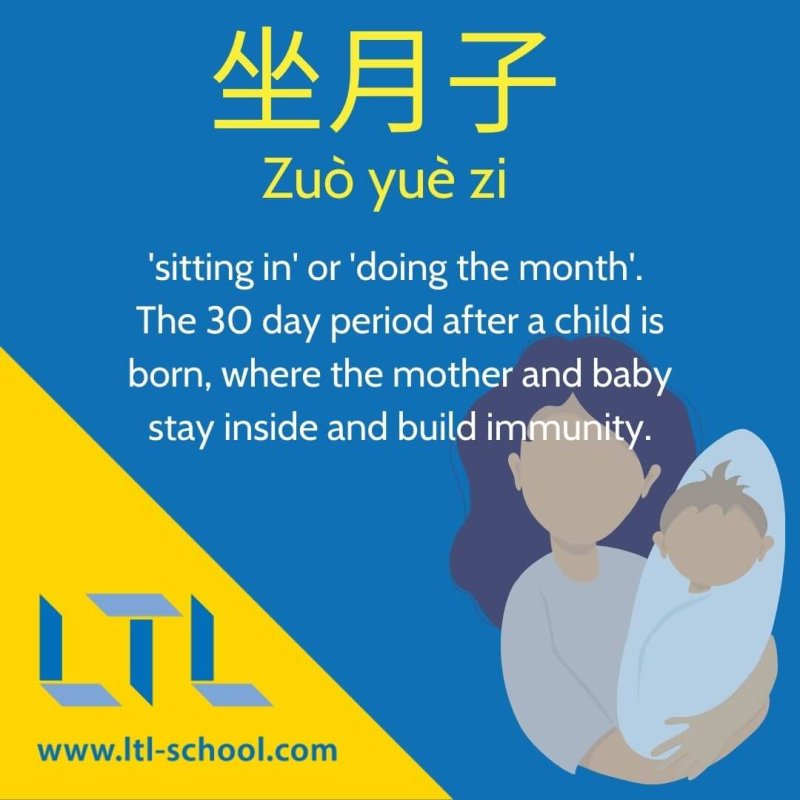
This act is also known as ‘postnatal confinement’ and is documented as early as the first century, recorded in the Book of Rites , one of the foundational classics of Chinese tradition, from the Zhou dynasty.
“Post-natal confinement” is simply the first 30-40 days after birth where the mother does not leave home, entertain visitors or shower.
Most new mothers will be cared for by their own mothers or mother-in-law, who will either visit daily or move in for the time period.
And the tradition stretches well beyond mainland China.
In Taipei, Singapore, and Chinese communities worldwide, zuò yuè zi is equally observed, though the specifics adapt to local life. In Singapore, for example, specialised postnatal centres (月子中心, yuèzi zhōngxīn) have become popular, offering hotel-style confinement suites with in-house nurses, lactation consultants and traditional meal preparation.
In Taipei, the same centres are common, and many families supplement centre care with a hired 月嫂 (yuèsǎo), a professional confinement nanny. 💡
For non-Chinese partners or international friends of a Chinese family, knowing this tradition exists, and taking it seriously, goes a long way.
The traditional belief stems from an understanding that both the mother and baby have low immunity and need to be protected and nursed back to full health.
During this period of isolation, specific food and drinks are regularly prepared for the mother to help rebuild her body, shrink her uterus and encourage lactation.
This confinement period can also be referred to as the “fourth trimester” as it’s a crucial period of time for the newborn to adjust to life in the world and the mother to recover.
TIP💡 If you’re a non-Chinese partner, friend, or healthcare professional: understanding 坐月子 isn’t just interesting, it’s genuinely useful. If your partner’s family insists on confinement practices that seem unusual, they come from a place of deep care and centuries of tradition.
Ask questions with curiosity rather than scepticism. And if you work in healthcare in a city with a large Chinese community, knowing that a patient may be reluctant to shower, leave home, or eat cold foods postpartum helps you give better, more culturally informed care.
Chinese Beauty Standards vs The West | How Different Are They?
How big are the differences between Chinese beauty standards and those of the West? You’ll be amazed at some of the challenges that happen on Tiktok!
Chinese Pregnancy Traditions // Yin and Yang
Yin and Yang is a premise that underlines all Chinese philosophy and is just as prevalent in the post-birth recovery traditions as it is in Chinese medicine, food choices and even what temperature water you should drink.
If you’re not sure about the answer, check out our informative post on why hot water is a massive thing in China!
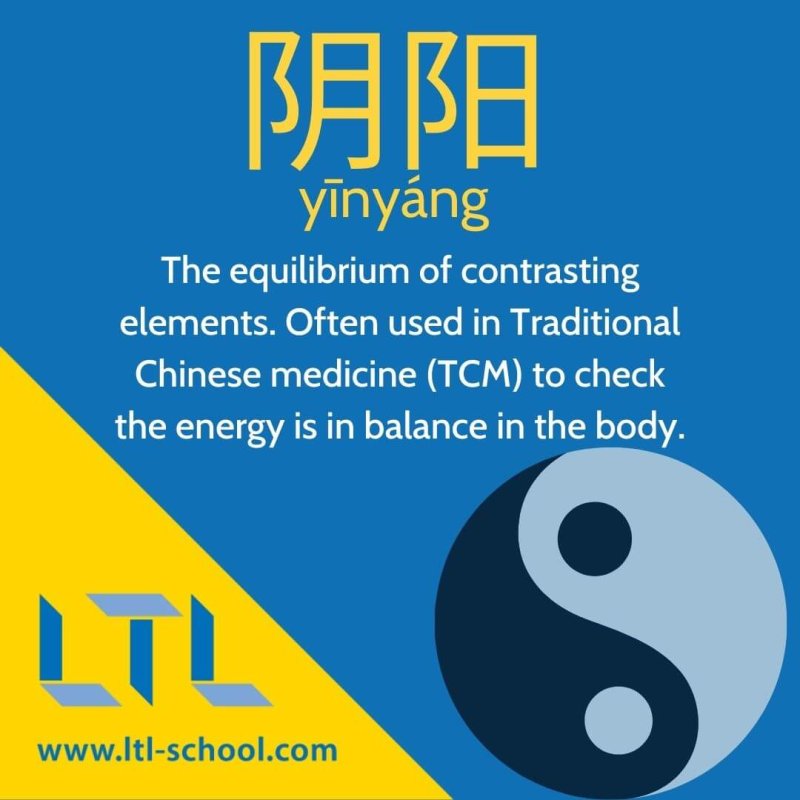
The basic principle is that your Yin and Yang must be balanced in every aspect of your life.
As soon as the two fall out of balance, you are more prone to illness and disease.
Many foods, medications and illnesses fall into the categories and can be counteracted by increasing the opposite energy.
Traditional Chinese Medicine dictates that in the human body, our blood carries ‘qi’ or ‘chi’ at all times, a crucial energy needed to thrive.
When blood is lost through childbirth, the body falls into yin (coldness). A new mother will need to increase her yang to restore balance to her body.
This is heavily reflected in the Chinese pregnancy rules, a good example is the dish pork knuckles mixed with ginger and black vinegar.
The pork helps with calcium levels, the ginger removes wind from the body and the meaty broth provides hydration and nutrients.
Every ingredient helps to remove or undo an imbalance.
Chinese Pregnancy Traditions // Post-Natal Confinement Rules?
Post-natal confinement rules vary and typically each family will decide individually how to follow them.
It’s worth acknowledging the modern debate around 坐月子 too.
For some mothers, the structured rest and constant family care is genuinely restorative. For others, the restrictions, particularly not leaving home, not showering freely, and having the mother-in-law in close quarters for weeks, can feel isolating or create tension. 🤔
Researchers studying postnatal depression in Chinese communities have noted that adherence to strict confinement rules can be a double-edged experience: the social support reduces some stress, but the loss of personal autonomy can increase it.
Open conversations between partners before the birth, about which traditions to follow and how flexibly, make a real difference.
The listed rules are more of a ‘guideline’.
Family members, especially mothers and mothers-in-law will advise from their own experiences and knowledge, passing down wisdom that will be further shared down the line in the future.
The primary principle is to avoid catching a chill to prevent illnesses later on including joint problems, whilst resting, sleeping, feeding the newborn baby and eating only.
Rules commonly include:
- No showering or hair-washing for the first week or more: the body is considered highly vulnerable to ‘wind chill’ (受风, shòu fēng) entering through open pores. Modern practice often involves warm-water washing with ginger-infused water as a compromise.
- No leaving the house: fresh air and outdoor temperatures are considered risky for the depleted yin body.
- No cold water contact: even washing hands should use warm water. Cold is the enemy of recovery in this framework.
- Eat warming foods at every meal: think sesame oil chicken (麻油鸡, máyóu jī), fish soup, red date tea (红枣茶, hóngzǎo chá), and glutinous rice. Each dish is chosen for its yang, blood-building, or lactation-supporting properties.
- Rest and sleep as much as possible: screen time, reading and emotional stress are all discouraged to protect the mother’s eyes and nervous system.
- Limit visitors: guests bring outside energy and germs. Close family only, and even then, for short periods.
Remember, these are guidelines, not laws. Every family negotiates them differently, and in cities like Beijing and Shanghai, the approach tends to be more flexible than in rural areas.
Additionally, strict rules may encourage new mothers to stay in bed for the first two weeks.
They may also be discouraged from watching TV, reading or access to their phones to avoid becoming too emotional over external drama or problems.
Ingredients such as red dates, sesame oil and ginger are key ingredients in medicinal broths and soups during the time period.
The binding of the stomach is also encouraged to prevent the possibility of organ prolapses, improve the waistline and aid organs in returning to their original locations prior to pregnancy.
17 Chinese Dumplings Every Dumpling Fan Needs to Try
Steamed, boiled, fried and baked, there’s not a type of dumpling China doesn’t have. So get ready dumpling fans, today we’re looking at 17 of the best
Chinese Pregnancy Traditions // Modern-Day Twist
For many, the traditional, stricter version of staying home is viewed as outdated so has been adapted to keep it relevant in the 21st century.
With time restrictions on maternity leave and general need for access to technology, it’s often not wholly possible to maintain a complete ‘sitting in’ month, so solutions are cropping up.
Around mainland China, luxurious confinement centres are appearing in mass.
These offer 24-hour assistance from trained nurses, dietary advice and pre-cooked meals are delivered, access to doctors and an additional layer of peace, more control over how to observe the period.
A stay in one of these centres can cost more than 100,000 RMB ($15,484) according to Chinese news outlet Sixth Tone, who also highlight that with new control comes modernisation.
These centres will provide a weekly hand-washing with washcloths soaked in TCM, combining the aversion to washing with the benefits of TCM exposure.
After giving birth and sitting the month, a woman is recognised as a mother as well as a wife and a daughter.
Her position in the family is elevated, so it’s important she is allowed the time to rest and recover in order to fulfil her new role efficiently.
The centres are a combination of scientific and traditional Chinese methods, allowing flexibility to modern issues.
As recently as 2013, cases of heatstroke and subsequent death have occurred in new mothers attempting to avoid catching a chill.
Adjusting the age-old tradition to continue allowing new mothers the option to recover fully whilst preventing harm is a necessary move.
If you end up sitting in yourself but decide to observe the rules less formally, or just want more insights into Chinese culture, check out our video about some of the best Chinese dramas currently available below!
Chinese Pregnancy Traditions – FAQs
Do Chinese mothers leave the house after giving birth?
Not for the first 30 days, this is known as the zuò yuè zi period (‘doing the month’).
What is the postpartum period called in Chinese?
坐月子 – zuò yuèzi.
It translates to ‘sitting in’ and is often referred to as ‘doing the month’ or post-natal confinement.
What do new mothers traditionally avoid after giving birth?
New mothers traditionally avoid washing their hair and body, raw fruit and veg, cold air, going outside, going up and downstairs and crying.
What are the Chinese beliefs about pregnant women?
In Chinese culture, pregnancy is seen as a time when a woman’s yin and yang become imbalanced, making her and the baby vulnerable.
Family members take on extra caretaking duties, specific warming foods are recommended, and a range of taboos (avoiding cold foods, certain meats, and stressful environments) are observed to protect mother and child. The mother is considered the vessel of new life, and her physical and emotional wellbeing is a collective family responsibility.
What is the pregnancy rule in China?
There is no single official ‘pregnancy rule’ in China today.
Historically, and in traditional culture, the core principle is maintaining yin-yang balance throughout pregnancy and the postpartum period. This manifests in dietary restrictions, rest requirements, and the practice of 坐月子 (zuò yuè zi) after birth.
Modern Chinese families follow these traditional guidelines to varying degrees, with urban families typically taking a more flexible approach.
What is the 3-child rule in China?
China’s family planning policies have changed significantly over the decades.
The well-known one-child policy (1980-2015) was followed by a two-child policy, and since 2021, Chinese families have been permitted to have up to three children.
This shift reflects concerns about an ageing population and declining birth rate. For specifics on current policy, the Chinese Ministry of Health and National Health Commission are the authoritative sources.
What is pregnancy like in China?
Pregnancy in China is a deeply family-centred experience.
Expectant mothers often move in with or near their own parents or in-laws, receive specially prepared meals, and are surrounded by a network of support shaped by traditional Chinese medicine principles. In cities like Beijing and Shanghai, modern obstetric care sits alongside traditional practices: it is common for a woman to attend hospital check-ups while also following traditional dietary and lifestyle guidance at home.
What do Chinese women do when they are pregnant?
Common practices include following a warming diet (red dates, ginger, special soups), practising 胎教 (tāi jiào, fetal education) by playing music and speaking positively to the baby, avoiding foods considered cooling or risky (pineapple, lamb, raw foods), and preparing for 坐月子 by arranging family support or a professional confinement nanny (月嫂, yuèsǎo) well in advance.
Do Chinese people shower after giving birth?
This is one of the most-asked questions about 坐月子. Traditionally, washing the hair and showering were avoided for the first month after birth to prevent wind and cold entering the body through open pores, a concept grounded in yin-yang theory.
In modern practice, most families compromise: warm showers with ginger-infused water are often permitted after the first week, and many postnatal centres (月子中心, yuèzi zhōngxīn) in cities like Taipei and Singapore offer this as standard.
Want more from LTL?
If you wish to hear more from LTL Language School why not join our mailing list? We give plenty of handy information on learning Chinese, useful apps to learn the language and everything going on at our LTL schools!
Sign up below and become part of our ever-growing community!
⭐ Download our free ebook, your starter pack of essential Mandarin learning resources!
BONUS || Want to study Chinese with us in China? Why not check out our group and individual classes here





1 comments
[…] Chinese Pregnancy Traditions ???? What Should I Know? […]