
Discover the Different Ways to Say Yes in Chinese and When to Use Each One in Specific Contexts
Quick answer: Mandarin has no single word for ‘yes’. The three most useful defaults are 对 (duì) for confirming a statement, 好 (hǎo) or 好的 (hǎo de) for agreeing to a suggestion, and echoing the verb from the question (e.g. 你去吗?, 去!). Save 是 (shì) for equative sentences (‘A is B’), and reach for 没错 (méi cuò), 当然 (dāng rán) or 好的 (hǎo de) in formal settings.
Learning how to say “yes” in Chinese is a lot more interesting than you think!
In Western culture, ‘yes’ is a single, straightforward word. In Mandarin, there is no direct one-to-one equivalent.
Instead, the language uses several context-dependent expressions to express agreement, and which one you choose depends on the question being asked, the relationship you have with the person, and the register of the conversation.
When you start studying Chinese, 是的 (shì de; yes), 对 (duì; right) and 好的 (hǎo de; okay) are some of the first phrases you learn to express ‘yes’. But when should you use each of them? And are there other ways to confirm something in Mandarin?
We’ll give 好的 a proper section below because it deserves one.
In this guide, we’ll answer those questions and walk you through the most common expressions to say yes in Chinese in both casual and formal settings. We hear this question from students in Beijing and Shanghai almost every week, it’s one of those things that feels simple but opens up a whole new layer of how Mandarin actually works.
Saying Yes in Casual Conversations
The Echo Method: Mirror the Verb
When to Use 对 vs 是 (Why Beginners Get This Wrong)
How to Say Yes in Formal Settings
Regional Differences Worth Knowing

Yes in Chinese || Basic Ways to Say Yes
First, let’s start with the most straightforward way that works in almost every situation. You can use these words to agree with someone or answer a yes or no question.
These words might seem simple, but they’ll cover you in most situations. If any of these characters are new to you, take a look at our guide to the most common Chinese characters explained, it’s a great companion read.
是
YesThis little word works pretty much everywhere. It works in a sentence to affirm something.
对
Correct/RightThis is your go-to word when you want to say “that’s right,” in a daily conversation. Super versatile and sounds a bit more casual than 是.
Here’s another one to mix it up a bit:
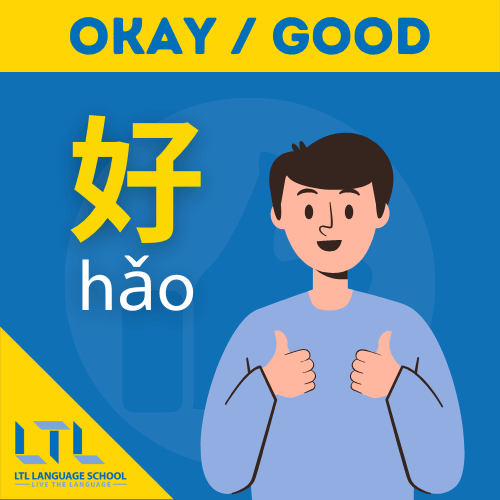
好hǎo
Okay/Good
It’s like giving a thumbs-up with your voice. For example, when someone suggests grabbing a coffee or when your Chinese friends ask if you want to have dinner together, you can say: 好! hǎo
Yes in Chinese || Saying Yes in Casual Conversations
Daily interactions with your friends or hanging out with colleagues can be more casual. In these contexts, saying yes can be fun and relaxed.
There are some slang and local dialects that you can choose from.
嗯
èn
This is a super casual way to say “yes,” almost like “mm-hmm” in English. It’s perfect for quick replies. It’s like a simple nod to an idea.
Remember, this word is very casual, so don’t use it with someone you respect or someone more senior than you.
For example, in a conversation:
你想一起去吃饭吗?
Do you want to grab something to eat together?嗯
Mm-hmm, sure.对啊duì a
Yeah!
好啊hǎo a
Sure!
是的shì de
Yes it is!
These three examples simply add an interjection after the three basic words to say yes we introduced before.
They are a more casual and upbeat way to agree. You often hear them in daily conversations with friends. They definitely sound more relaxing.
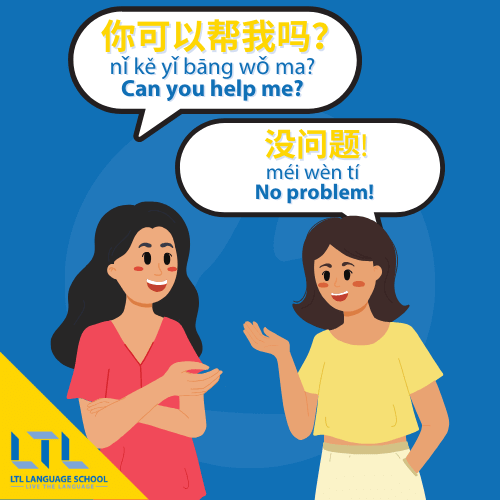
没问题méi wèn tí
No problem
This is a casual way to agree to help or join in on something.
It’s often used when someone asks you for a favor and you want to sound friendly.
For example:
你可以帮我吗?
Can you help me?没问题!
No problem!我同意wǒ tóng yì
I agree
Just like in a casual conversation with friends, this phrase is helpful to affirm everything your friend says.

It has more connotation to show that you agree.
It puts more emphasis on what you agree with.
For example:
我同意,他们的牛肉面太棒了!
Wǒ tóngyì, tāmen de niúròu miàn tài bàng le!
I agree, their beef noodles are fantastic!
Yes in Chinese || The Echo Method: Mirror the Verb
Here is the thing most beginners don’t realise: Mandarin doesn’t have one universal ‘yes’ the way English does.
Instead, the most natural way to agree is to echo back the main verb from the question. Native speakers do this constantly.
If someone asks you 你喜欢吗?(Nǐ xǐhuān ma? Do you like it?), the most natural ‘yes’ is 喜欢 (xǐhuān), not 是.
If someone asks 你去吗?(Nǐ qù ma? Are you going?), you say 去 (qù), I’m going.
💡 TIP: Think of it as answering ‘going’ instead of ‘yes, I am going’. It sounds far more natural and is exactly what you’ll hear on the streets of Beijing and Shanghai.
Here are some common examples:
| Question | Natural ‘Yes’ reply | What it literally means |
|---|---|---|
| 你喜欢吗?Nǐ xǐhuān ma? | 喜欢!Xǐhuān! | (I) like (it)! |
| 你去吗?Nǐ qù ma? | 去!Qù! | Going! |
| 你吃吗?Nǐ chī ma? | 吃!Chī! | Eating! |
| 你知道吗?Nǐ zhīdào ma? | 知道!Zhīdào! | Know (it)! |
Once this clicks, you’ll start hearing it everywhere.
It is one of those shifts that makes your Mandarin feel genuinely natural rather than textbook-translated.
Want to go deeper on how Mandarin grammar structures agreement and affirmation? Visit our Chinese Grammar Bank for structured lessons on the patterns covered in this guide.
Yes in Chinese || When to Use 对 vs 是 (and Why Beginners Get This Wrong)
This is one of the most common mistakes we see from new learners, so let’s sort it out.
是 (shì) is an equative verb. It means ‘to be’ in the sense of ‘A is B’. So 我是老师 (Wǒ shì lǎoshī) means ‘I am a teacher’. When used alone as ‘yes’, it only fits when someone has just made a statement that equates two things and you’re confirming it.
对 (duì) means ‘correct’ or ‘right’. It works in far more situations as a general confirmation, and it’s what you’ll hear most often in casual conversation.
🤔 A quick way to think about it: if someone says something and you’re nodding along to confirm they got the facts right, say 对. If someone asks ‘is X the same as Y?’ and the answer is yes, 是 is appropriate, but even then, native speakers often default to 对.
The safest rule for beginners: default to 对 or use the Echo Method (mirror the verb). Overusing 是 is the single biggest tell that someone learnt Mandarin from a phrase book.
Yes in Chinese || More Ways to Agree
Once you are past the basics, these expressions will make you sound far more natural.
有 (yǒu), Yes, I have / Yes, there is
有 is the verb for ‘to have’ or ‘to exist’, and it doubles as a ‘yes’ when someone asks whether something exists or whether you’ve experienced something.
你有时间吗?(Nǐ yǒu shíjiān ma? Do you have time?) Answer: 有!(Yǒu!) Yes, I do!
你去过北京吗?(Nǐ qùguò Běijīng ma? Have you been to Beijing?) Answer: 有!(Yǒu!) Yes, I have!

行 (xíng), Fine / Works for me
行 is the word to use when you’re agreeing to a plan or giving permission. You’ll hear it a lot in everyday conversations in Beijing.
明天见?(Míngtiān jiàn? Meet tomorrow?) Answer: 行!(Xíng!) Works for me!
可以 (kěyǐ), Sure / That’s okay
可以 covers ability and permission. When someone asks if something is allowed or possible, this is your natural ‘yes’.
我可以坐这里吗?(Wǒ kěyǐ zuò zhèlǐ ma? Can I sit here?) Answer: 可以!(Kěyǐ!) Sure!
好吧 (hǎo ba), Fine… / Okay then
好吧 is the reluctant or resigned yes. You are agreeing, but maybe not enthusiastically. It’s the Mandarin equivalent of a shrug followed by ‘fine, okay’.
我们走吧?(Wǒmen zǒu ba? Shall we go?) Answer: 好吧。(Hǎo ba.) Fine, okay.
🤔 Notice the tone difference: 好啊 (hǎo a) is enthusiastic, 好吧 (hǎo ba) is resigned. Same character, very different vibe.
妥妥的 (tuǒtuǒ de), Totally sorted / Absolutely
This is an enthusiastic, informal yes popular among younger speakers. If something is definitely happening and you’re fully on board, 妥妥的 is your phrase.
周末一起打球?(Zhōumò yīqǐ dǎqiú? Play ball together this weekend?) Answer: 妥妥的!(Tuǒtuǒ de!) Absolutely sorted!

Yes in Chinese || How to Say Yes in Formal Settings
It will be a different context in formal settings like business meetings or academic settings.
Saying yes in these scenarios would require you to show respect and be more professional. Here are some words to help you navigate those conversations.
好的 (hǎo de), Certainly / Understood
好的 is the polite, professional version of 好. You’ll use it in work contexts, with someone more senior, or when you want to show attentiveness.
你能明天早点来吗?(Nǐ néng míngtiān zǎodiǎn lái ma? Can you come in a bit earlier tomorrow?) Answer: 好的,没问题。(Hǎo de, méi wèntí.) Certainly, no problem.
💡 TIP: In a business email or WeChat message to a manager, 好的 lands much better than a bare 好. It’s a small change that signals professionalism.
没错méi cuò
That’s correct
This word is slightly more formal than just simply saying yes. It is an excellent option to affirm something that you agree with. It sounds more certain than simply 对 (duì).
没错,这次会议很重要。
That’s right, this meeting is very important.当然dāng rán
Of Course
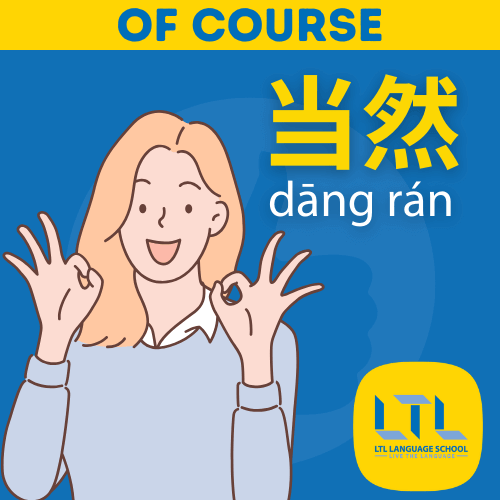
This is a polite and confident way to say yes when you want to express certainty. It is perfect when you are asked if something is possible.
For example, when you are asked if you can finish the annual report in time, you can say 当然 dāng rán.
诚然
chéng rán
Indeed / Certainly
This is a very formal way to agree with someone, usually your boss or someone who is in a senior position. It has a connotation of respect and sounds very literal.
For example, when someone you respect offers you a suggestion, you can say:
诚然,您的提议很有价值。
Indeed, your suggestion is very valuable.理应如此lǐ yīng rú cǐ
It should be so / That’s how it should be
This is also a formal word that you can use to affirm someone’s opinion.
Typically, you can say this to your client or your boss in a work setting when they address something.
For example:
理应如此,客户满意度是我们的首要任务。
That’s how it should be, customer satisfaction is our top priority.
Yes in Chinese || Regional Differences Worth Knowing
If you’re heading to Beijing, you’ll quickly notice that 对对对 (duì duì duì), the triple repeat, is everywhere.
People use it in rapid conversation to show enthusiastic agreement, almost like nodding three times in quick succession. It can feel abrupt at first but it’s entirely natural and warm.
In Taipei, you’ll hear 对 less frequently as the default confirmation, with 好 and 好的 doing more of the heavy lifting in everyday speech.
是 also appears more often in formal Taiwanese Mandarin contexts.
💡 TIP: Neither style is more correct, they’re regional flavours of the same language. If you study with LTL in Beijing you’ll naturally absorb the Beijing rhythm; if you’re in Taipei, the Taipei style will feel normal within weeks.
Yes in Chinese || Cultural Considerations When Saying Yes
Just remember, when you’re in China, you’re about to dive into another world that may have some confusing culture.
Sometimes in Chinese, ‘Yes’ doesn’t always actually mean yes – this can be a point of confusion for foreigners!
But here’s the deal. In Eastern culture, people aren’t always fans of laying out all their cards on the table.
They are used to indirect communication, usually to avoid confrontation and to save their face 面子 miànzi.
Remember when your Chinese colleague nodded and smiled when you suggested a deadline?
Yeah, that wasn’t necessarily a “yes.” It might have meant, “I heard you,” or “I’ll think about it,” or even “Not a chance, buddy, but I’m too polite to say so.“
Or how about when your Chinese friend says 好的 hǎo de to your dinner invitation but then never shows up? They might have been saying “yes” to acknowledge your invitation, not to accept it.
Learning to recognize the subtle cues is like learning a whole new language on top of Chinese. But hey, this is the fun part of being in a different culture. Why not embrace the diversity in it?
Yes in Chinese || Quick-Reference Table
Here’s every expression covered in this guide at a glance. Screenshot it, save it, or add it to your Pleco flashcard deck.
| Chinese | Pinyin | Meaning | Register |
|---|---|---|---|
| 是 | shì | Yes / To be | Neutral |
| 对 | duì | Correct / Right | Neutral to casual |
| 好 | hǎo | Okay / Good | Casual |
| 好的 | hǎo de | Certainly / Understood | Polite / Formal |
| 是的 | shì de | Yes, it is | Neutral |
| 对啊 | duì a | Yeah! | Casual |
| 好啊 | hǎo a | Sure! | Casual / Enthusiastic |
| 好吧 | hǎo ba | Fine… / Okay then | Casual / Reluctant |
| 嗯 | èn | Mm-hmm | Very casual |
| 没问题 | méi wèntí | No problem | Casual |
| 我同意 | wǒ tóngyì | I agree | Casual to neutral |
| 没错 | méi cuò | That’s correct | Formal |
| 当然 | dāng rán | Of course | Neutral to formal |
| 有 | yǒu | Yes (I have / there is) | Neutral |
| 行 | xíng | Fine / Works for me | Casual |
| 可以 | kěyǐ | Sure / That’s okay | Neutral |
| 妥妥的 | tuǒtuǒ de | Absolutely sorted | Informal / Enthusiastic |
Ready to move beyond vocabulary lists and start using these phrases in real conversations?
Find your perfect Mandarin program with LTL and practise with native-speaking teachers in Beijing, Shanghai, or online via Flexi Classes.
Yes in Chinese || FAQs
Is there a Chinese word for yes?
There is no single word in Mandarin that maps directly onto the English ‘yes’.
Instead, Mandarin uses a range of context-specific expressions: 对 (duì) for confirmation, 好 (hǎo) for agreement to a suggestion, verb echoing for direct question responses, and formal options like 没错 (méi cuò) or 当然 (dāng rán). This is one of those quirks that makes Mandarin genuinely interesting to learn.
What is the most common way to say “yes” in Chinese?
The most common way to say “yes” in Chinese is 是 (shì), which works in almost every situation.
What’s a formal way to say “yes” in Chinese business settings?
In formal Chinese business settings, you can use 诚然 (chéng rán), which means “indeed” or “certainly,” to show respect and agreement.
Does nodding always mean “yes” in Chinese culture?
No, nodding in Chinese culture doesn’t always mean “yes.” Sometimes, it just means “I heard you” without implying agreement or commitment.
How can I tell whether a Chinese person’s “yes” is genuine or just being polite?
To determine if a Chinese person’s “yes” is genuine, pay attention to context, tone, and body language.
Sometimes, a polite “yes” might actually mean “I’ll think about it” or even a soft “no.”
How do you casually agree in Chinese?
To casually agree in Chinese, you can use 嗯 (èn), which is similar to “mm-hmm” in English, or phrases like 好啊 (hǎo a) meaning “sure!”
Does 对 (duì) mean yes in Chinese?
对 (duì) means ‘correct’ or ‘right’, and it functions as the closest general-purpose ‘yes’ in everyday Mandarin conversation.
It’s more versatile than 是 and you’ll hear it constantly in Beijing, Shanghai, and across Mandarin-speaking cities.
Use it when you want to confirm that something is accurate or agree with a statement.
Does 好 (hǎo) mean yes?
好 (hǎo) literally means ‘good’ or ‘okay’, but in context it absolutely functions as ‘yes’.
When someone proposes a plan, suggests meeting for food, or asks if you’re ready, 好 is a natural, friendly confirmation. Its polite cousin 好的 (hǎo de) is used in more formal or professional settings.
Does 是 (shì) mean yes in Chinese?
是 (shì) is the verb ‘to be’ in Mandarin, the equivalent of ‘is/am/are’.
It can be used to confirm identity or equality statements (我是学生, I am a student), and in that context it functions as ‘yes’.
However, using 是 as an all-purpose yes for every type of question is a very common beginner mistake. In most conversational contexts, 对 or verb-echoing will sound far more natural.
When should I use 对 vs 是?
Use 对 (duì) when you’re confirming that something someone said is correct or agreeing with a statement.
Use 是 (shì) when confirming that two things are the same or when the question specifically uses the verb 是 (e.g. 你是老师吗?, Are you a teacher?).
When in doubt, use 对 or echo the verb from the question. Overusing 是 is the fastest way to sound like a phrase-book learner rather than a real speaker.




![Language Reactor ⭐️ Your Next Favourite Learning Tool [2024 Update] Thumbnail](https://ltl-school.com/wp-content/uploads/Language-Reactor-for-Netflix-480x246.png)



1 comments
This guide is super helpful! I love that you included audio—it's so useful for pronunciation. Can't wait to practice saying "yes" in different contexts!