
The Most Common Chinese Proverbs and Sayings Explained
Chinese proverbs (谚语 yànyǔ) are short traditional sayings that pass down wisdom from classical philosophers like Confucius, Laozi, and Mencius.
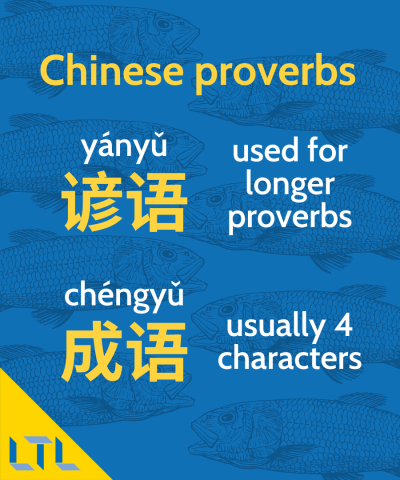
They fall into two main types: 成语 (chéngyǔ), dense four-character idioms rooted in historical stories, and 谚语 (yànyǔ), longer folk sayings closer to English proverbs. Both are still used daily in modern Mandarin conversation, and learning even a handful will noticeably improve your fluency and cultural understanding.
So what are Chinese proverbs (谚语 yànyŭ in Chinese)?
In a nutshell…
Chinese proverbs (or Chinese idioms) are sayings which originate from famous Chinese philosophers and writers.
成语 vs 谚语 // What’s the Difference?
Chinese proverbs fall into two main types, and it’s worth knowing the difference.
成语 (chéngyǔ) are classical four-character idioms, usually rooted in a historical story or literary allusion. They’re dense, poetic, and every native speaker knows them.
谚语 (yànyǔ), on the other hand, are longer folk sayings passed down through generations, closer to what English speakers might call a proverb or adage.
Both types are alive in modern conversation. You’ll hear them in Beijing classrooms, Chengdu tea houses, and Shanghai boardrooms alike. The 11 proverbs below are a mix of both.
Confucius is probably the most well-known Chinese philosopher to whom many proverbs are attributed.
There are hundreds of popular proverbs which usually give the reader an inspirational or motivational thought for the day.
And remember, each 10,000 mile journey begins with just one step.
千里之行,始於足下
qiānlǐ zhī xíng, shǐyú zú xiàLaozi (Chinese philosopher)
They’re also a great way to expand your Chinese vocabulary when you’re learning Mandarin.
If you study with us in Beijing or Shanghai, you’ll start hearing these proverbs within your first week, from teachers, host families, and locals at the market. 不怕慢,就怕站 (bù pà màn, jiù pà zhàn) is practically the unofficial motto of every student who’s ever wrestled with tones in a Beijing classroom.
Our teachers in Beijing and Shanghai use proverbs deliberately in lessons as vocabulary anchors. Once you’ve heard 机不可失,时不再来 (jī bù kě shī, shí bù zài lái) used to describe missing a sale at the wet market, you never forget it.
A Real LTL Classroom Anecdote
Our teacher Lilia in Beijing has a rule in her intermediate classes: every Monday starts with a 成语 (chéngyǔ). She writes the four characters on the board, gives students 60 seconds to guess the meaning from context, then reveals the story behind it.
By the end of a semester, students have 20+ proverbs they can actually use, not just recite. It’s one of the most effective vocabulary techniques we’ve seen.
“My teacher in Beijing taught us 不怕慢,就怕站 in my second week. I wrote it on a sticky note above my desk and it genuinely got me through the hardest months of tonal practice.”
James from Australia, LTL Beijing
So, before getting stuck into the best Chinese proverbs, we wanted to give you our Chinese Proverb of the Day… come back every day for a new pearl of wisdom from the Chinese language!
We’ve put together many of our favourites below, grouped by theme so you can find exactly what you’re looking for. Each one includes the characters, pinyin, a literal translation, and what it actually means in real life.
Use the quick-jump links below to skip to what interests you most: Chinese Proverbs About Wisdom, Family, Friendship, Love, Success, plus a Chinese New Year section, dragon proverbs, and even some funny ones.
TIP💡 If you want to impress a native speaker, learn one proverb from each category. Drop one naturally in conversation and watch their reaction, it never gets old.
Chinese Proverbs || Dig the Well Before You Are Thirsty
Chinese Proverbs || Teach A Man to Fish
Chinese Proverbs || One Only Learns From One’s Mistakes
Chinese Proverbs || It Is Better to Make Slow Progress
Chinese Proverbs || Opportunity Knocks But Once
Chinese Proverbs || Learn to Walk Before You Run
Chinese Proverbs || The Master Leads You to the Door
Chinese Proverbs || He Who Asks A Question
BONUS || 3 More Chinese Proverbs
Chinese New Year || Chinese New Year Proverbs
Dragons || Chinese Proverbs About Dragons
Funny || Funny Chinese Proverbs
Chinese Proverbs || FAQs

1. Dig the Well Before You Are Thirsty
Proverb in Chinese: 未雨绸缪
Pinyin: wèiyǔchóumóu
English translation: dig the well before you are thirsty. Plan ahead.
Here, 未雨 (wèiyǔ) means before it rains.
未 (wèi) usually refers to something in the future, i.e. something that hasn’t happened yet, so in this case the rain.
绸缪 (chóumóu) means to bind something with silk.

Here, the proverb literally means repair (bind with silk) your house before the rain comes, make sure that you are prepared for a rainy day.
The English meaning is sometimes equated to the saying “Dig the well before you are thirsty”.
Source: Shī Jīng (诗经, The Book of Songs), one of the oldest collections of Chinese poetry.
📖 Example in use:
下个月要考HSK,我们最好未雨绸缪,现在就开始复习。
(Xià gè yuè yào kǎo HSK, wǒmen zuì hǎo wèiyǔchóumóu, xiànzài jiù kāishǐ fùxí.)
“The HSK is next month, we’d better plan ahead and start revising now.”
2. Teach a Man to Fish

Proverb in Chinese: 授人以鱼不如授人以渔
Pinyin: shòu rén yǐ yú bù rú shòu rén yǐ yú
English translation: This is a very well-known proverb, meaning that it’s much more effective to teach someone how to do something for themselves than to simply do it for them in the long-term.
In Chinese, the saying can be literally translated to…
“Giving a man a fish is not equal to teaching a man to fish”.
In English, it is most often translated as “Give a man a fish and you feed him for one day. Teach a man to fish and you feed him for a lifetime”.
Source: Attributed to Laozi’s philosophical tradition; widely cited in Confucian teaching texts.
📖 Example in use:
与其帮他写作业,不如教他方法,授人以鱼不如授人以渔。
(Yǔ qí bāng tā xiě zuòyè, bù rú jiāo tā fāngfǎ, shòu rén yǐ yú bù rú shòu rén yǐ yú.)
“Rather than doing his homework for him, teach him how, give a man a fish versus teach him to fish.”

3. One Only Learns From One’s Mistakes

Proverb in Chinese: 吃一堑,长一智
Pinyin: chī yī qiàn, zhǎng yī zhì
English translation: This proverb is all about learning from your experiences or mistakes.
The Chinese word 堑 (qiàn) literally means moat or pit.
So eat one pit/moat, grow one knowledge point.
There are several translations we can choose from in English. Here we’ve used: “One only learns from one’s mistakes”.
But more literal translations could be: “Fall into the pit, a gain in your wit” or “Fall into the moat and you’ll be wiser next time”.
Source: A popular 谚语 (yànyǔ) folk saying, not tied to a single classical text.
📖 Example in use:
这次失败没关系,吃一堑,长一智。
(Zhè cì shībài méi guānxi, chī yī qiàn, zhǎng yī zhì.)
“It’s OK to have failed this time, one only learns from one’s mistakes.”
4. It’s Better to Make Slow Progress Than No Progress at All
Proverb in Chinese: 不怕慢,就怕站
Pinyin: bù pà màn, jiù pà zhàn
English translation: This proverb means that the only thing we should be afraid of is stopping completely.
It reminds us to be patient and that some things take time, slow progress is still progress after all.
This best translates into English to…
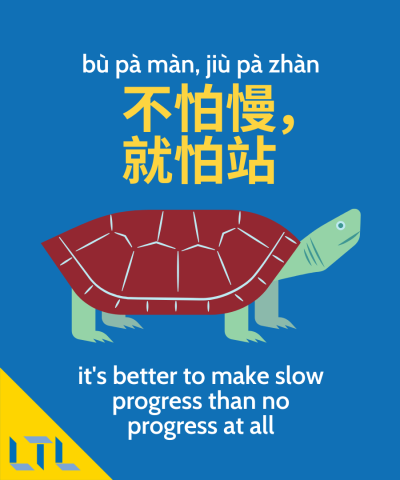
“Be not afraid of growing slowly, be afraid of standing still”.
Wise words there!
Source: A widely used 谚语 (yànyǔ) folk saying, echoed across classical and modern Chinese writing.
📖 Example in use:
别担心进展慢,不怕慢,就怕站!
(Bié dānxīn jìnzhǎn màn, bù pà màn, jiù pà zhàn!)
“Don’t worry about slow progress, be afraid of standing still!”
5. Opportunity Knocks But Once

Proverb in Chinese: 机不可失,时不再来
Pinyin: jī bù kě shī, shí bù zài lái
English translation: This proverb reminds us that we need to seize opportunities when they present themselves.
Here, 机 (jī) means opportunity (机会, jīhuì), and 不可失 (bùkě shī) refers to something that we can’t miss.
时不再来 means the time (时 shí) won’t come again another time.
In English, this saying best translates to: “Opportunity knocks but once”.
Source: Classical Chinese saying, echoed in Tang dynasty literature.
📖 Example in use:
快报名吧,机不可失,时不再来!
(Kuài bàomíng ba, jī bù kě shī, shí bù zài lái!)
“Sign up quickly, opportunity knocks but once!”
COOL BLOG ALERT – Want to learn how to swear in Shanghainese…?!

6. Learn to Walk Before You Run

Proverb in Chinese: 一口吃不成胖子
Pinyin: yī kǒu chī bù chéng pàngzi
English translation: The Chinese and English, when taken in literal terms, are quite different for this proverb.
In Chinese, 一口 means one mouthful, 吃 (chī) translates to eat, 不成 (bùchéng) to impossible, and 胖子 (pàngzi) means a fat person.
Altogether, it’s impossible to become fat with just one mouthful.
The meaning here is to take things slowly; don’t try to stuff your face at the start.
In English is best translated to “Learn to walk before you run”.
Source: A common 谚语 (yànyǔ) folk saying used in everyday speech.
📖 Example in use:
学中文要一步一步来,一口吃不成胖子。
(Xué Zhōngwén yào yī bù yī bù lái, yī kǒu chī bù chéng pàngzi.)
“Learning Chinese has to be step by step, you can’t become fat in one bite.”
7. The Master Leads You to the Door, the Rest is Up to You

Proverb in Chinese: 师父领进门,修行在个人
Pinyin: shī fu lǐng jìn mén, xiū xíng zài gè rén
English translation: This idiom translates into English quite smoothly.
Masters open the doors (师父领进门).
You enter by yourself: here, 修行 (xiūxíng) literally means practising Buddhism or Daoism, but actually refers to the action of opening the door. 在个人 (zài gè rén) means “is on the individual”.
In other words, the act itself is up to the individual.
Source: A traditional 谚语 (yànyǔ) associated with the master-apprentice tradition in Chinese martial arts and religious study.
📖 Example in use:
老师教了方法,但师父领进门,修行在个人。
(Lǎoshī jiāo le fāngfǎ, dàn shīfu lǐng jìn mén, xiūxíng zài gè rén.)
“The teacher gave you the method, but the master leads you to the door, the rest is up to you.”
FANCY LEARNING TWO BONUS IDIOMS? Check out Anastaciia’s video with us below.

8. He Who Asks A Question

Proverb in Chinese: 请教别人一次是五分钟的傻子,从不请教别人是一辈子的傻子
Pinyin: qǐng jiào bié rén yī cì shì wǔ fēnzhōng de shǎzi, cóng bù qǐng jiào biérén shì yī bèizi de shǎzi
English translation: He who asks a question is a fool for five minutes; he who does not ask a question remains a fool forever.
This Chinese proverb is very well known too. It encourages the reader to be curious and ask questions about what they don’t know.
In Chinese, 请教 (qǐngjiào) means to ask someone for advice, 五分钟的傻子 (wǔ fēnzhōng de shǎzi) means a “five-minute fool”, whereas 一辈子的傻子 (yī bèizi de shǎzi) means a “fool for life”.
Source: A modern 谚语 (yànyǔ) frequently attributed to Confucian teaching principles about curiosity and lifelong learning.
📖 Example in use:
不懂就问,请教别人一次是五分钟的傻子。
(Bù dǒng jiù wèn, qǐngjiào biérén yī cì shì wǔ fēnzhōng de shǎzi.)
“If you don’t understand, just ask, asking once makes you a fool for five minutes only.”
9. Chinese Proverbs – Just 3 More…
It’s difficult to know when to draw the line and just stop, we could write on and on and on…
There are thousands of proverbs after all and we love teaching you them but for now, it’s time to take stock, learn the ones above and give you just three more which might be useful in day-to-day life.
Let’s take a look!


Chinese New Year Proverbs
Chinese New Year (春节, Chūnjié) is the single biggest occasion when proverbs and auspicious sayings come alive. You’ll hear these on red envelopes (红包, hóngbāo), door couplets (对联, duìlián), and in family toasts, whether you’re spending Spring Festival in Beijing, Shanghai or Chengdu.
Here are four you’ll want to know:
- 新年快乐 (Xīnnián kuàilè), “Happy New Year”. Simple but essential.
- 万事如意 (Wànshì rúyì), “May everything go as you wish”. A classic blessing.
- 年年有余 (Nián nián yǒu yú), “May you have abundance year after year”. 余 (yú) sounds like “fish” (鱼, yú), hence why fish is always on the New Year table. 🐟
- 步步高升 (Bùbù gāoshēng), “May you rise higher with every step”. Used as a career and life blessing.
TIP💡 If you’re studying in Beijing or Shanghai around the Lunar New Year period, you’ll hear these constantly. They’re brilliant vocabulary to have ready.
Chinese Proverbs About Dragons
The dragon (龙, lóng) holds a unique place in Chinese culture. Unlike Western dragons, it represents good fortune, imperial power, and prosperity. These proverbs reflect that.
- 龙生龙,凤生凤 (Lóng shēng lóng, fèng shēng fèng), “Dragons beget dragons, phoenixes beget phoenixes.” Meaning: children take after their parents. A 谚语 (yànyǔ) folk saying.
- 神龙见首不见尾 (Shén lóng jiàn shǒu bù jiàn wěi), “You see the divine dragon’s head but not its tail.” Meaning: used to describe someone mysterious, elusive, or whose abilities are hard to grasp fully.
- 来者不善,善者不来 (Lái zhě bù shàn, shàn zhě bù lái), not a dragon proverb directly, but often paired in classical texts with dragon imagery to describe powerful, unpredictable forces.
TIP💡 龙 (lóng) appears in dozens of Chinese idioms. Learning its extended meanings early gives you a big vocabulary shortcut.
Funny Chinese Proverbs (Yes, Really)
Not all Chinese proverbs are solemn wisdom from ancient sages. Some are wonderfully blunt, and native speakers use them to get a laugh, in Beijing hutong chats, Shanghai lift small talk, and Chengdu tea-house gossip alike.
- 狗嘴里吐不出象牙 (Gǒu zuǐ lǐ tǔ bù chū xiàngyá), “You can’t get ivory from a dog’s mouth.” Meaning: don’t expect good things from a bad person.
- 画蛇添足 (Huà shé tiān zú), “Draw a snake and add feet.” Meaning: to overdo something and ruin it. A 成语 (chéngyǔ) from a famous Han dynasty fable.
- 半瓶醋 (Bàn píng cù), “Half a bottle of vinegar.” Meaning: someone who thinks they know a lot but actually doesn’t. You’ll hear this one in daily life. 😄
TIP💡 Drop 半瓶醋 (bàn píng cù) into conversation in Beijing and you’ll get an instant reaction from any native speaker.
Want to Use These Proverbs With a Native Speaker?
Learning proverbs from a list is one thing. Using them naturally in conversation, that’s where real progress happens.
At LTL, our teachers in Beijing, Shanghai, and Chengdu weave 成语 (chéngyǔ) and 谚语 (yànyǔ) into lessons from day one. It’s one of the fastest ways to sound less like a textbook and more like someone who actually lives and breathes the language.
If you can’t make it to China right now, our Flexi Classes platform runs Mandarin sessions 24/7, and proverbs come up more than you’d think.
👉 Find your perfect Mandarin program
There we have it, 11 great Chinese proverbs to learn plus a stack of bonus themes.
If you want to discover even more Chinese idioms and sayings, check out our other article.
These proverbs are great not just for day-to-day speech but also for learning useful vocabulary and basic (or advanced) Chinese grammar.
HOW ABOUT TRYING SOMETHING NEW? We even wrote articles about some of the most commonly used Vietnamese proverbs, Russian proverbs, Italian proverbs and also the top Korean proverbs.
Come and see how they compare to these Chinese ones.
For now, we leave you with one of our other really popular blogs, take a look…

Chinese Names 🤩 A Simple and Easy Guide to Understanding Names in China
Follow our guide to Chinese names to discover the most popular names in China (for boys and girls). Ever wanted your own Chinese name? We can help.
Ready to try your hand at our Chinese Proverbs quiz?
We’ve prepared a quick-fire quiz to see how much you really know about Chinese Proverbs.
Take our Chinese Proverbs quiz here.
Chinese Proverbs || FAQs
How do you say Chinese Proverbs in Mandarin?
Chinese proverbs 4 characters long (sometimes 6) are called 成语 (chéngyǔ).
Those longer are called 谚语 (yànyŭ).
What are Chinese Proverbs?
Chinese proverbs (or Chinese idioms) are sayings which originate from famous Chinese philosophers and writers.
What is an ancient Chinese proverb?
An ancient Chinese proverb is 师父领进门,修行在个人 (shī fu lǐng jìn mén, xiū xíng zài gè rén).
This translates to “the master leads to you to the door, the rest is up to you.”
What are some other Chinese sayings?
不怕慢,就怕站 (bù pà màn, jiù pà zhàn) means it’s better to make slow progress than no progress at all.
授人以鱼不如授人以渔 (shòu rén yǐ yú bù rú shòu rén yǐ yú) translates to “Give a man a fish and you feed him for a day; teach a man to fish and you feed him for a lifetime.”
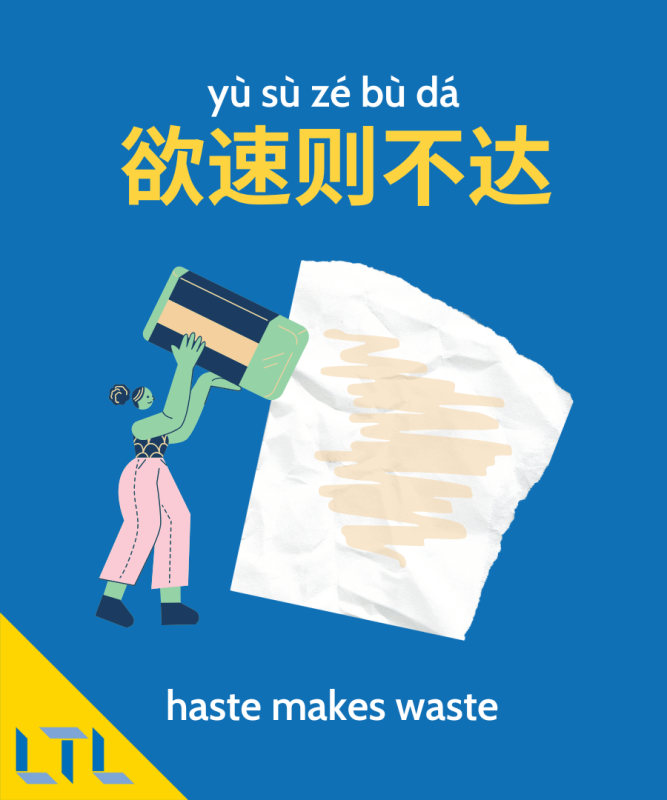
欲速则不达 (yù sù zé bù dá) means haste makes waste.
If you want to discover more Chinese sayings and idioms check this post out.
Is it useful to learn Chinese proverbs?
Yes, proverbs are used in day-to-day speech all the time.
Learning these, when you get to an advanced level of Chinese, is a very beneficial thing to do and will help your spoken Chinese greatly.
Where did the first Chinese proverbs come from?
Confucius is probably the most well-known Chinese philosopher to whom many proverbs are attributed.
There are hundreds of popular proverbs which usually give the reader an inspirational or motivational thought for the day.
What are some great techniques to learn Chinese?
Aside from getting to grips with the local lingo using proverbs, listening to Chinese music, watching Chinese movies and subscribing to Chinese podcasts are a great way to improve your skills fast.
Why are Chinese proverbs so good?
Chinese proverbs pack a huge amount of meaning into very few characters, often just four in the case of 成语 (chéngyǔ). They draw on thousands of years of philosophy, history and folk wisdom from thinkers like Confucius, Laozi and Mencius, so a single line can carry a full story or moral lesson. Native speakers use them daily to sound persuasive, cultured or witty, which is why learning even a handful noticeably boosts your Mandarin fluency.
What is the most beautiful Chinese proverb?
Many people consider 千里之行,始於足下 (qiānlǐ zhī xíng, shǐyú zú xià – ‘A journey of a thousand miles begins with a single step’, attributed to Laozi) the most beautiful, because it is both poetic and universally applicable.
Why are Chinese proverbs so good?
Chinese proverbs distil thousands of years of philosophy, agriculture, family life, and statecraft into four to eight characters. They carry historical weight from texts like the Analects (论语, Lúnyǔ) and the Tao Te Ching (道德经, Dào Dé Jīng), which is why they feel timeless rather than dated.
What are some popular Chinese phrases for everyday use?
Beyond formal proverbs, everyday Chinese is full of set expressions: 加油 (jiā yóu, ‘add oil’ – keep going!), 随便 (suíbiàn, ‘whatever you like’), 没问题 (méi wèntí, ‘no problem’). Proverbs like 不怕慢,就怕站 work well in casual encouragement contexts too.
Want more from LTL?
If you wish to hear more from LTL Language School why not join our mailing list? We give plenty of handy information on learning Chinese, useful apps to learn the language and everything going on at our LTL schools!
Sign up below and become part of our ever-growing community!
⭐ Download our free ebook, your starter pack of essential Mandarin learning resources!
BONUS || Want to study Chinese with us in China? Why not check out our group and individual classes here








53 comments
[…] Looking for more Chinese pearls of wisdom? […]
[…] Provérbios Chineses (EN) – Conheça algumas ótimas joias de sabedoria da cultura tradicional chinesa, enquanto aprende novas e interessantes palavras e frases em chinês. (erro em ingles, bits / bites) […]
[…] more from LTL Mandarin School why not join our mailing list. We give plenty of handy information on learning Chinese, useful apps to learn the language and everything going on at our LTL schools! Sign up below and […]
[…] sobre a China junte-se à nossa lista de mailing. Nós sempre enviamos informações e dicas sobre aprender chinês, apps úteis na China e tudo mais que está acontecendo nas nossas escolas. Assine abaixo e faça […]
[…] sobre a China junte-se à nossa lista de mailing. Nós sempre enviamos informações e dicas sobre aprender chinês, apps úteis na China e tudo mais que está acontecendo nas nossas escolas. Assine abaixo e faça […]
[…] more from LTL Mandarin School why not join our mailing list. We give plenty of handy information on learning Chinese, useful apps to learn the language and everything going on at our LTL schools! Sign up below and […]
[…] Chinese Proverbs: Learn Mandarin through Chinese Sayings […]
[…] Chinese Proverbs: Learn Mandarin through Chinese Sayings […]
[…] more from LTL Mandarin School why not join our mailing list. We give plenty of handy information on learning Chinese, useful apps to learn the language and everything going on at our LTL schools! Sign up below and […]
[…] sobre a China junte-se à nossa lista de mailing. Nós sempre enviamos informações e dicas sobre aprender chinês, apps úteis na China e tudo mais que está acontecendo nas nossas escolas. Assine abaixo e faça […]
[…] is well-versed in Chinese poetry and ancient literature, so expect quotes from Chinese poets and Confucius, as well as many insights into Chinese culture […]
[…] a China junte-se à nossa lista de mailing. Nós sempre enviamos informações e dicas sobre aprender chinês, apps úteis na China e tudo mais que está acontecendo nas nossas escolas. Assine abaixo e faça […]
[…] a China junte-se à nossa lista de mailing. Nós sempre enviamos informações e dicas sobre aprender chinês, apps úteis na China e tudo mais que está acontecendo nas nossas escolas. Assine abaixo e faça […]
[…] a China junte-se à nossa lista de mailing. Nós sempre enviamos informações e dicas sobre aprender chinês, apps úteis na China e tudo mais que está acontecendo nas nossas escolas. Assine abaixo e faça […]
[…] a China junte-se à nossa lista de mailing. Nós sempre enviamos informações e dicas sobre aprender chinês, apps úteis na China e tudo mais que está acontecendo nas nossas escolas. Assine abaixo e faça […]
[…] a China junte-se à nossa lista de mailing. Nós sempre enviamos informações e dicas sobre aprender chinês, apps úteis na China e tudo mais que está acontecendo nas nossas escolas. Assine abaixo e faça […]
[…] a China junte-se à nossa lista de mailing. Nós sempre enviamos informações e dicas sobre aprender chinês, apps úteis na China e tudo mais que está acontecendo nas nossas escolas. Assine abaixo e faça […]
[…] sobre a China junte-se à nossa lista de mailing. Nós sempre enviamos informações e dicas sobre aprender chinês, apps úteis na China e tudo mais que está acontecendo nas nossas escolas. Assine abaixo e faça […]
[…] a China junte-se à nossa lista de mailing. Nós sempre enviamos informações e dicas sobre aprender chinês, apps úteis na China e tudo mais que está acontecendo nas nossas escolas. Assine abaixo e faça […]
[…] a China junte-se à nossa lista de mailing. Nós sempre enviamos informações e dicas sobre aprender chinês, apps úteis na China e tudo mais que está acontecendo nas nossas escolas. Assine abaixo e faça […]
[…] sobre a China junte-se à nossa lista de mailing. Nós sempre enviamos informações e dicas sobre aprender chinês, apps úteis na China e tudo mais que está acontecendo nas nossas escolas. Assine abaixo e faça […]
[…] a China junte-se à nossa lista de mailing. Nós sempre enviamos informações e dicas sobre aprender chinês, apps úteis na China e tudo mais que está acontecendo nas nossas escolas. Assine abaixo e faça […]
[…] sobre a China junte-se à nossa lista de mailing. Nós sempre enviamos informações e dicas sobre aprender chinês, apps úteis na China e tudo mais que está acontecendo nas nossas escolas. Assine abaixo e faça […]
[…] a China junte-se à nossa lista de mailing. Nós sempre enviamos informações e dicas sobre aprender chinês, apps úteis na China e tudo mais que está acontecendo nas nossas escolas. Assine abaixo e faça […]
[…] sobre a China junte-se à nossa lista de mailing. Nós sempre enviamos informações e dicas sobre aprender chinês, apps úteis na China e tudo mais que está acontecendo nas nossas escolas. Assine abaixo e faça […]
[…] sobre a China junte-se à nossa lista de mailing. Nós sempre enviamos informações e dicas sobre aprender chinês, apps úteis na China e tudo mais que está acontecendo nas nossas escolas. Assine abaixo e faça […]
[…] a China junte-se à nossa lista de mailing. Nós sempre enviamos informações e dicas sobre aprender chinês, apps úteis na China e tudo mais que está acontecendo nas nossas escolas. Assine abaixo e faça […]
[…] sobre a China junte-se à nossa lista de mailing. Nós sempre enviamos informações e dicas sobre aprender chinês, apps úteis na China e tudo mais que está acontecendo nas nossas escolas. Assine abaixo e faça […]
[…] a China junte-se à nossa lista de mailing. Nós sempre enviamos informações e dicas sobre aprender chinês, apps úteis na China e tudo mais que está acontecendo nas nossas escolas. Assine abaixo e faça […]
[…] a China junte-se à nossa lista de mailing. Nós sempre enviamos informações e dicas sobre aprender chinês, apps úteis na China e tudo mais que está acontecendo nas nossas escolas. Assine abaixo e faça […]
[…] a China junte-se à nossa lista de mailing. Nós sempre enviamos informações e dicas sobre aprender chinês, apps úteis na China e tudo mais que está acontecendo nas nossas escolas. Assine abaixo e faça […]
[…] a China junte-se à nossa lista de mailing. Nós sempre enviamos informações e dicas sobre aprender chinês, apps úteis na China e tudo mais que está acontecendo nas nossas escolas. Assine abaixo e faça […]
[…] a China junte-se à nossa lista de mailing. Nós sempre enviamos informações e dicas sobre aprender chinês, apps úteis na China e tudo mais que está acontecendo nas nossas escolas. Assine abaixo e faça […]
[…] a China junte-se à nossa lista de mailing. Nós sempre enviamos informações e dicas sobre aprender chinês, apps úteis na China e tudo mais que está acontecendo nas nossas escolas. Assine abaixo e faça […]
[…] a China junte-se à nossa lista de mailing. Nós sempre enviamos informações e dicas sobre aprender chinês, apps úteis na China e tudo mais que está acontecendo nas nossas escolas. Assine abaixo e faça […]
[…] a China junte-se à nossa lista de mailing. Nós sempre enviamos informações e dicas sobre aprender chinês, apps úteis na China e tudo mais que está acontecendo nas nossas escolas. Assine abaixo e faça […]
[…] Looking for more Chinese pearls of wisdom? […]
what's another example of one of chinese's 4 character idioms?
Hey Lucy,
Another example of one of China's idioms is 名不虚传 (míngbùxūchuán). This essentially means that someone has a well-deserved reputation and that they live up to their reputation. So, a nice thing!
LTL
[…] is a country which is perhaps more famous for its proverbs than its idioms. However, there are still plenty to choose from, and we picked another idiom that […]
Nice blog!
Thank you, glad to see you are enjoying our blogs! 🙂
Each country has its own unique proverbs, fascinating to say the least
King regards, Boswell Hessellund
[…] 心想事成 xīnxiǎng-shìchéng is actually a Chinese proverb, so it doesn’t have to strictly be kept for Chinese New […]
These are great, love the little cards as well
Thanks Ethan, super kind
[…] Chinese Proverbs // 11 Of The Best (Explained & Revealed) […]
[…] now that the prices have dropped significantly from their recent highs? They will get my standard Chinese Proverb […]
6 in English might be better translated to Don't bite off more than you can chew. Still means to take it slow, as does walk before you run, but seems to match the Chinese root words better.
Also works, thanks for the comment
LOVE THIS BLOG
THANKS!!
[…] “আত্মবিশ্বাস হলো সফলতার প্রথম ধাপ।” &… […]