
An 8 Step Guide to Learning Chinese OUTSIDE of China
Yes, you can reach conversational fluency in Mandarin Chinese without setting foot in China.

The eight-step method below combines daily active listening (Netflix, podcasts), spaced-repetition vocabulary (Anki, Quizlet), graded reading, tone drilling, live online lessons and measurable goals, the same building blocks LTL students use every year to hit HSK milestones from home.
Expect roughly 1,500–2,000 hours of focused study to get to conversational fluency, and use this guide as your roadmap.
Looking to learn Chinese from outside China? Here are 8 easy ways to practise your Chinese skills, no matter where you are in the world.
💡 Can you really get fluent without going to China? Yes, and thousands of LTL students prove it every year. Immersion in a Chinese-speaking city accelerates progress, but reaching conversational fluency from home is absolutely achievable.
It takes roughly 1,500–2,000 hours of focused study to get there, and the eight methods below are the most effective ways to build those hours. Ready? Let’s get into it.
When you immerse yourself in a Chinese-speaking environment, words and tones stick faster, that’s simply true. But immersion is a practice, not just a postcode. You can manufacture it from anywhere.
If you ever want to supercharge your progress with in-person classes, you can study Chinese in China with us across multiple cities. We offer courses across Beijing, Shanghai, Singapore and beyond, whenever you’re ready to take the leap. 😎
Until then, here are eight ways to keep moving forward right where you are.
In this article, we explore eight ways you can practice and improve your Chinese when you’re not in China. Oh, and most of them are free!
Practice Method #1 || Watch a Netflix Series
Practice Method #2 || Find a Language Group
Practice Method #3 || Use Social Media
Practice Method #4 || Listen to Podcasts
Practice Method #5 || Use Quizlet & Anki
Practice Method #6 || Read, Read and Read Some More
Practice Method #7 || Set Measurable Goals
Practice Method #8 || Find a Teacher

Learning Chinese Outside of China || Watch Netflix
Netflix has a great selection of Chinese shows, and they’re a brilliant way to improve your listening skills, pronunciation and grammar while doing something you enjoy.
You can choose to watch shows with English or Chinese subtitles (or both)… or if you’re feeling brave, go without any at all!
But before you start, note that simply watching TV isn’t enough to absorb the language and tick studying off your to-do list for the day (if only it were that easy).
For best results, leave time to actively watch it and take note of the new words and phrases you hear.
That means pausing, rewinding and rewatching parts to make sure the new knowledge goes in.
We didn’t say it’s relaxing!

Learning Chinese Outside of China // Find a Language Group
DID YOU KNOW | More than 50 million Chinese people live overseas?
That’s good news if you want to improve your language skills at home.
No matter where you are, you probably won’t need to look far for a community of Chinese speakers.
There’s no better way to learn Chinese than by using the language, and this is even more important when you’re not surrounded by it all day, every day.

Try searching for groups on MeetUp or Facebook, or ask a local language school if they run or know of any conversation clubs near you.
This isn’t only a great way to keep your language skills up, but it’s also useful for keeping in touch with cultural news and trends.
Can’t find a local group? Go digital. Language exchange apps connect you with native Mandarin speakers who want to learn your language in return, a genuine win-win:
- HelloTalk, text, voice-note and call with native speakers. Built-in correction tools let partners annotate your messages.
- Tandem, similar concept with a stronger focus on structured conversation sessions.
TIP💡 Don’t just text, schedule a 15-minute voice call once a week. Speaking output is the skill most self-studiers neglect, and it’s the one that decays fastest without practice.
Learning Chinese Outside of China || Social Media
We’ve said it before, and we’ll say it again: social media is great for learning Chinese.
There are so many brilliant accounts on Instagram that focus on teaching the language in different ways. Lessons are often short and super easy to consume (and get addicted to).
So, whatever your learning style or your level, you’re sure to find something that works for you.

We’ve rounded up some of our favourite Chinese Instagram accounts for you to check out.
Go take a look and tell us which ones you like best!
The same goes for Chinese social media.
If you’ve got an account on platforms like Weibo or Bilibili, try watching videos or reading articles as part of your study routine.
It’s good for both seeing the language in action and keeping up with trends and current events.

67 Opposites in Chinese | The Ultimate Guide
Opposites in Chinese | The Simple Chinese Opposite Words Dictionary A great way to improve your Chinese vocabulary is to learn opposites in Chinese. If that is your goal then you’ve come to the right place! Opposites in Chinese is…
Learning Chinese Outside of China || Podcasts
If you struggle to find time to study Chinese, then podcasts are your answer.
Listen to them on your commute, at the gym, when you’re walking into town… basically any time you can’t safely read or write.
The best thing about listening to podcasts is that you can hear the language in use. This is especially useful for mastering Chinese pronunciation and nailing your tones without needing to drill them from a textbook.
Again, there are loads of creators on YouTube, Instagram and Tiktok teaching different content in an abundance of ways.
You can find creators based on HSK levels, general conversations or even current hot topics.
In other words, you’re bound to find one you like.
No excuses any more!
Learning Chinese Outside of China || Use Quizlet & Anki
Learning vocab is a tedious process when you can’t just absorb the new words around you.
But free flashcard apps make it more enjoyable by gamifying word lists.

Simply create an account, create a set of flashcards and start practising.
If you’re studying for a HSK exam, you don’t even need to create the lists. Flashcard sets are available for you to use from levels 1 through to 6.
Anki vs Quizlet, which should you use?
Both are excellent, and they work on different principles:
| Tool | Method | Best for |
|---|---|---|
| Quizlet | Fixed review intervals | Beginners, HSK word lists, gamified practice |
| Anki | Spaced repetition (SRS) | Long-term retention, custom decks, serious learners |
Spaced repetition means you review a character just before you’d naturally forget it, so you study less but remember more. Most advanced self-learners swear by Anki for exactly this reason.
Not sure which to pick? We compared both in detail: Anki vs Quizlet, the full breakdown.
Learning Chinese Outside of China || Read, Read, Read
Even if you’re more interested in speaking fluently than reading well, reading is a valuable skill that can indirectly improve your speaking.
That’s because it gives you time to analyse and internalise correct sentence structures, unlike when you’re scrambling to keep up with a listening task.
The most important thing to note here is that you should read something you enjoy.
Reading in a foreign language takes a lot of concentration, so the text needs to engage you. Else you’ll quickly lose focus and stop taking it in.
TIP💡 Read material that’s just below your level. It might sound counterintuitive, but easier texts are easier to follow and read fluently. You may come across one or two characters you don’t recognise, looking those up won’t demotivate you the way checking every other word would.
Where to find the right level of reading material:
- Du Chinese, graded stories from complete beginner to advanced, with tap-to-translate and audio. One of the best structured reading tools available.
- The Chairman’s Bao, real news articles rewritten at HSK 1–6 levels. Keeps your vocabulary current and culturally relevant.
- Pleco reader, paste any Chinese text and tap any character for an instant definition.
Should you learn to write characters or just recognise them?
For most learners outside China, recognition first is the smarter approach. You’ll need to read Chinese far more often than you’ll need to write it by hand. Focus on recognising hanzi fluently, and add handwriting practice later if you have a specific reason (HSK writing tasks, calligraphy interest).
The more you train your brain to read hanzi, the easier it gets, so start steady and step up the difficulty as you go.
Learning Chinese Outside of China // Set Measurable Goals
Like anything, if you want to make real progress in Chinese, you should set a goal.
Whether your ultimate aim is to become fluent, pass a certain Chinese proficiency exam levels milestone, or finish a book in Chinese, try creating a structured learning plan and defining milestones along the way.
This makes the process a lot less overwhelming, and it gives you a chance to recognise your achievements along the way.
Plus, it will keep you on track when things get busy, you hit a language learning lull, or you feel like giving up.
What does a realistic daily study schedule look like?
Conversational fluency in Mandarin typically takes 1,500–2,000 hours of focused study. That sounds daunting, but broken down, it’s very manageable:
| Daily study time | Hours per week | Approximate time to conversational fluency |
|---|---|---|
| 30 minutes | 3.5 hrs | ~8–10 years |
| 1 hour | 7 hrs | ~4–5 years |
| 2 hours | 14 hrs | ~2–2.5 years |
| 3 hours | 21 hrs | ~1.5 years |
TIP💡 Consistency beats intensity. 45 minutes every day will get you further than a 4-hour weekend session. Build a routine, not a marathon.

139 Verbs in Chinese || A Complete Guide & FREE Quiz
A Complete Guide to 139 Verbs in Mandarin Chinese // Travel, Dining, Social Situations and More! So you want to learn all the verbs in Chinese? Mastering verbs is a crucial step in learning any language, and Chinese is no…
Learning Chinese Outside of China // Find a Teacher
One of the best ways to create and stick to a learning plan is to find a teacher, someone who keeps you accountable, corrects your tones in real time, and pushes you past the plateaus you’d give up on alone.
What to look for in an online Mandarin teacher:
- Native speaker with structured teaching experience (not just conversation practice)
- Lesson plans tied to your goals, HSK prep, business Chinese, or conversational fluency
- Regular feedback on pronunciation, especially tones, which are very hard to self-diagnose
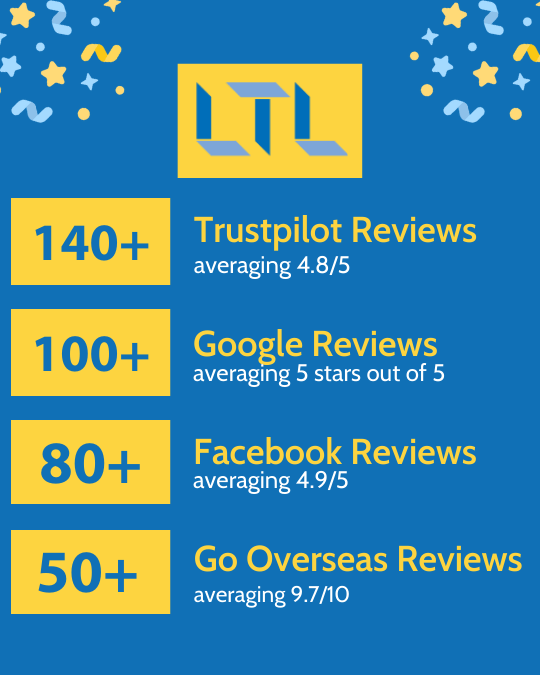
At LTL, our teachers are native Mandarin speakers who have helped thousands of students live, breathe and dream the language, with a 98% HSK pass rate to show for it. We’re accredited by IALC and recognised by universities including Michigan State.
Find your perfect Mandarin program and speak to our team about what works for your schedule and goals.


Learning Chinese Outside of China // Master Your Tones First
Here’s the truth: Mandarin has four tones (plus a neutral fifth), and getting them wrong means saying something completely different from what you intend. 🎵
- māo (猫) = cat, máo (毛) = hair, mǎo (卯) = a time unit, mào (冒) = to emit. Same syllable, four different meanings.
When working with new students in Beijing, tones are always the first thing we tackle, not because they’re the hardest part, but because building bad habits early is very difficult to undo.
How to practise tones outside China:
- Minimal pairs drilling, practice pairs like mā / má / mǎ / mà out loud every day for 5 minutes. Record yourself and compare to a native speaker.
- Shadowing, pick a short clip of a native speaker (YouTube, podcast) and repeat the audio in real time, matching rhythm and pitch.
- Tone marks in all your notes, always write nǐ hǎo, never ‘ni hao’. The muscle memory of reading correct tones reinforces the sound.
- Use Pleco, the Pleco dictionary app gives you audio pronunciation for every entry. Tap and listen before you write.
TIP💡 Don’t wait until your tones are ‘perfect’ before speaking. Imperfect tones spoken confidently are more intelligible than perfect tones whispered hesitantly. Get comfortable being corrected, it’s how you improve fastest.
Learning Chinese Outside of China // Common Mistakes to Avoid
Even the most motivated learners hit the same walls. Here are the pitfalls we see most often, and how to sidestep them:
- Studying passively, watching a Chinese drama while scrolling your phone is entertainment, not study. Active engagement (pausing, looking up words, rewatching) is what moves the needle.
- Skipping speaking for too long, reading and listening are comfortable. Speaking is uncomfortable. If you haven’t spoken a word of Mandarin in the last week, that’s the problem to fix first.
- Ignoring tones early on, tones feel optional when you’re a beginner because people still understand you. They become very hard to correct later. Build the habit now.
- Studying too many things at once, one app, one podcast, one class. Adding a new tool every week without mastering any of them is a very common trap.
- No measurable goal, ‘I want to get better at Chinese’ is not a goal. ‘I want to pass HSK 3 by March’ is. See Step 7 above for how to structure this.
🤔 Which of these sounds familiar? Be honest with yourself, identifying the bottleneck is the first step to breaking through it.
BONUS || Flexi Classes
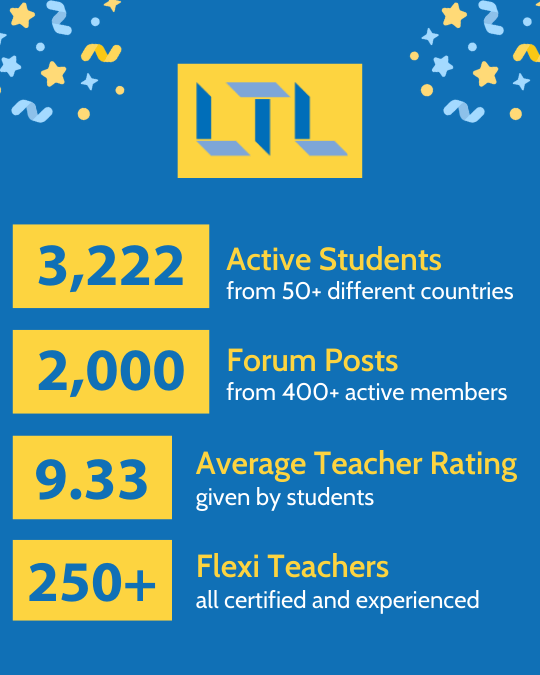
We provide 24/7 live Mandarin lessons with Flexi Classes, and they are hugely popular with students learning outside China.
Here’s why Flexi Classes works so well for self-directed learners:
- Book or cancel any lesson with 24 hours’ notice, fits around your schedule, not the other way around
- Live classes with native Mandarin teachers, not pre-recorded videos, but real conversation and real-time correction
- Levels from absolute beginner to advanced, including structured HSK exam preparation
- Study from anywhere, whether you’re in London, São Paulo, or Seoul, the classroom comes to you
Think of it as manufacturing immersion from your desk. 🖥️
Find your perfect Mandarin program or contact our team to find the right course for your level and goals.
We offer a range of courses, both on and offline, that can help you achieve your goals and that fit your schedule.
It goes without saying that you shouldn’t use any of these resources in isolation.
This is an 8 step guide to success!
We’re sorry to say you won’t become a fluent Chinese speaker just by watching Netflix or tuning into a podcast each day!
But if you choose a few of these tools and integrate them into your daily or weekly routine, you’ll continue seeing progress long after you’ve left China.
DID YOU KNOW | They say it takes around 66 days for a new habit to become automatic, so keep it up!
Are you learning Chinese outside China? How do you like to practise your skills? Tell us in the comments below.
Frequently Asked Questions
What is the fastest way to learn Chinese?
The fastest route to Mandarin Chinese fluency combines daily active study (at least 1 hour), regular speaking practice with native speakers via language exchange apps or an online Chinese tutor, and spaced-repetition flashcards (Anki) for vocabulary.
Tackle tones and pinyin pronunciation early, because bad habits formed now are hard to break later.
Conversational fluency typically requires 1,500–2,000 hours of focused effort, so 2 hours a day gets you there in around 2–2.5 years.
Is Mandarin harder, or Japanese?
Both are genuinely challenging for English speakers.
Mandarin’s main difficulties are its four tones and Chinese character recognition.
Japanese uses three writing systems (hiragana, katakana, kanji) and has complex grammar with verb conjugations and honorifics.
Most learners find Mandarin pronunciation harder at first but its grammar simpler than Japanese. Neither is quick, be realistic about the commitment.
How to say “I love you” in Chinese?
The direct translation is 我爱你 (wǒ ài nǐ), literally “I love you”.
It’s used, but less freely than in English, Chinese speakers often reserve it for very serious romantic contexts. Pay attention to the third tone on wǒ and nǐ, and the fourth (falling) tone on ài.
What do Chinese say instead of “I love you”?
Because 我爱你 (wǒ ài nǐ) can feel very strong in Chinese culture, speakers often use softer or more indirect phrases in everyday romance. Common alternatives include 我喜欢你 (wǒ xǐhuān nǐ), “I like you”, and warm expressions of care through actions, gifts or texts rather than the phrase itself.
The internet-era shorthand 520 (wǔ èr líng) sounds close to wǒ ài nǐ and is widely used online and on 20 May each year.
Can I self-teach Mandarin?
Yes, but it’s harder than learning with a structured teacher, and most self-learners plateau at intermediate level without guided feedback.
Self-study works well for vocabulary flashcards, graded readers and listening skills. For tones and speaking output, regular feedback from a native speaker makes an enormous difference.
A hybrid approach, self-study plus occasional online Chinese tutor lessons, is the most effective route for most learners outside China.
Want more from LTL?
If you wish to hear more from LTL Language School why not join our mailing list? We give plenty of handy information on learning Chinese, useful apps to learn the language and everything going on at our LTL schools!
Sign up below and become part of our ever-growing community!
⭐ Download our free ebook, your starter pack of essential Mandarin learning resources!
BONUS || Want to study Chinese with us in China? Why not check out our group and individual classes here








1 comments
[…] When you stay with a local family, you are likely to interact with them on a daily basis. You will share meals, conversations, and experiences with them, which can help you build a relationship with them and sharpen your language skills! […]