
Learn all the Body Parts in Chinese with Audio & Example Sentences
The whole body in Chinese is 身体 (shēntǐ), and the core body parts are 头 (tóu, head), 脸 (liǎn, face), 手 (shǒu, hand), 胳膊 (gēbo, arm), 腿 (tuǐ, leg) and 脚 (jiǎo, foot). To say a body part hurts, use the pattern 我 + body part + 疼 (téng), as in 我头疼 (wǒ tóu téng), “I have a headache”.
Identifying and naming your body parts in Chinese can come in handy when seeing the doctor, playing sports, going clothes shopping, and much more!
Body words also turn up early in HSK vocabulary lists, so once you’ve finished here, keep building with our 500+ essential Chinese vocabulary list.
So with that being said, let’s learn how to talk about body parts in Chinese.
We’ll tell you how to say everything from head 头 (tóu) to toe 脚趾 (jiǎo zhǐ) and provide you with audio examples and downloadable graphics to help you practice.
Let’s get started!
Body Parts in Chinese || General Body 身体 (shēntǐ)
Body Parts in Chinese || Head and face – 头脸 (tóuliǎn)
Body Parts in Chinese || Upper Body 上半身 (shàngbànshēn)
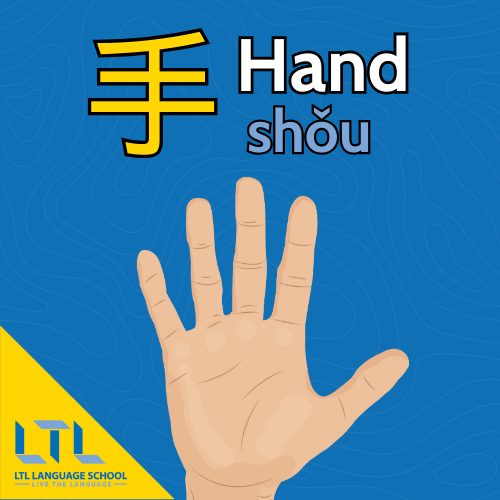
Body Parts in Chinese || Hands 手 (shǒu)
Body Parts in Chinese || Internal organs – 脏腑 (zàngfǔ)
Body Parts in Chinese || Lower Body 下半身 (xiàbànshēn)
Body Parts in Chinese || How to Say What Hurts in Chinese
Body Parts in Chinese || Chinese Idioms with Body Parts
Body Parts in Chinese || FREE QUIZ
Body Parts in Chinese – General Body 身体 (shēntǐ)
| Body Part | Pinyin | Hanzi |
|---|---|---|
| Body | shēn tǐ | 身体 |
| Skin | pí fū | 皮肤 |
| Muscle | jī ròu | 肌肉 |
| Bone | gǔtou | 骨头 |
| Joints | guān jié | 关节 |
| Blood | xiě / xuè yè | 血 / 血液 |
| Blood vessel | xuè guǎn | 血管 |
| Vein | jìng mài | 静脉 |
| Vein network (mostly figurative) | màiluò | 脉络 |
| Hair/Body Hair | máo | 毛 |
The whole body in Chinese is called 身体 (shēntǐ), but what about the single parts of it?
Here are a few example sentences using these words:
| Hanzi | Pinyin | English |
|---|---|---|
| 你身体好吗? | Nǐ shēntǐ hǎo ma? | How’s your health? |
| 冬天我的皮肤很干。 | Dōngtiān wǒ de pífū hěn gān. | My skin gets very dry in winter. |
| 他每天去健身房练肌肉。 | Tā měitiān qù jiànshēnfáng liàn jīròu. | He goes to the gym every day to build muscle. |
| 我的手在流血。 | Wǒ de shǒu zài liú xiě. | My hand is bleeding. |
💡 Notice that 身体 also means health, which is why 你身体好吗 is a caring question, not an anatomy quiz. In everyday speech 血 is often read xiě, as in 流血 (liú xiě, to bleed), while formal compounds such as 血液 and 血管 use xuè.
TIP💡 Look at 肌, 肚, 脖, 胸, 腿, 脚, 脸 and 肺 and you’ll spot the same component on the left: 月. Here it isn’t the moon at all but a squashed form of 肉 (ròu, flesh), so it’s a strong hint that a character has something to do with the body. You’ll find it at the bottom of 胃 and 背 too.
你的肌肉很大
Your muscles are very big你的头发很漂亮
You have beautiful hair这些天我的身体更强壮
My body is much stronger these days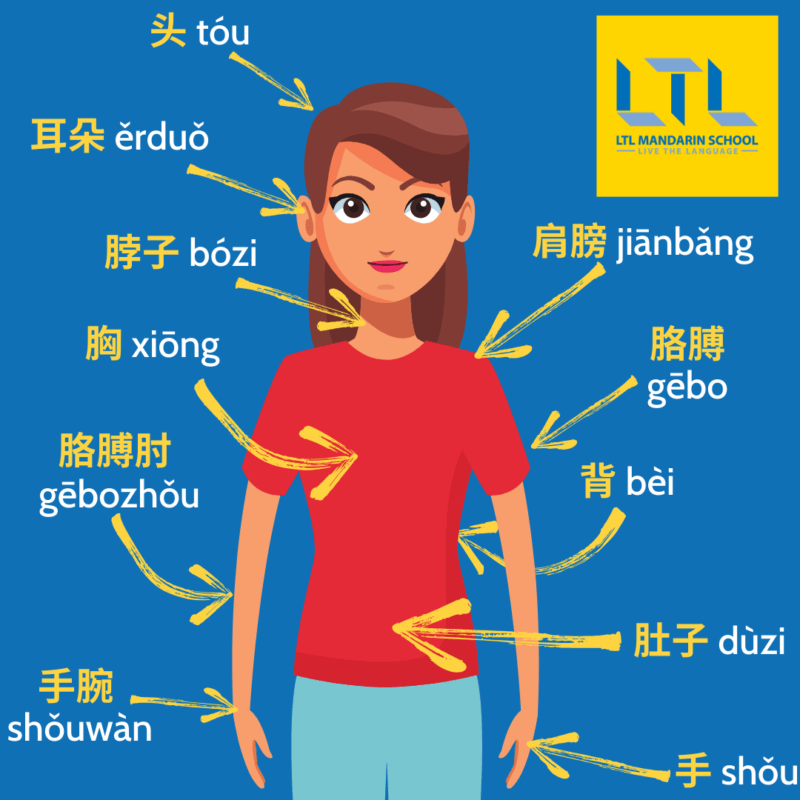
Body Parts in Chinese – Head and face – 头脸 (tóuliǎn)
Let’s start at the top. Here is the vocabulary you need for the head and the face, from 额头 (étóu, forehead) down to 下巴 (xiàba, chin). If you want to go further with cheeks, lashes and lips, our guide to facial features and makeup vocab picks up where this list stops.
You’ll often pair these words with an adjective, as in 你的眼睛很大 (nǐ de yǎnjīng hěn dà, your eyes are big).
To get the word order right every time, visit our Chinese Grammar Bank 💡
| 头 | tóu | head |
| 眼睛 | yǎnjīng | eye |
| 鼻子 | bízi | nose |
| 鼻孔 | bíkǒng | nostrils |
| 耳朵 | ěrduǒ | ear |
| 嘴 | zuǐ | mouth |
| 牙齿 | yáchǐ | tooth/teeth |
| 舌 | shé | tongue |
| 脸颊 | liǎnjiá | cheek |
| 额头 | é’tóu | forehead |
| 眉毛 | méimáo | eyebrows |
| 眼皮 | yǎnpí | eyelid |
| 睫毛 | jiémáo | eyelashes |
| 唇 | chún | lips |
| 下巴 | xiàba | chin |
| 舌 | shé | tongue |
Here are some example sentences for you with some of those facial features.
| Sentence in English | Sentence in Pinyin | Sentence in Hanzi |
|---|---|---|
| Your cheeks have gone red | Nǐ de liǎnjiá hóng le | 你的脸颊红了 |
| Your blue eyes are so bright | Nǐ de lán yǎnjīng hǎo liàng | 你的蓝眼睛好亮 |
| I have such a big head! | Wǒ de tóu zhème dà! | 我的头这么大! |
| Go and wash your face | Qù xǐ liǎn | 去洗脸 |
| Her hair is very long | Tā de tóufa hěn cháng | 她的头发很长 |
| Open your mouth, please | Qǐng bǎ zuǐba zhāng kāi | 请把嘴巴张开 |
💡 Three words worth adding to the list above: 脸 (liǎn) is the everyday word for face, 头发 (tóufa) is the hair on your head (毛 is body or animal hair), and 嘴巴 (zuǐba) is how most people say mouth in conversation, with 嘴 as the short form.

Body Parts in Chinese – Upper Body 上半身 (shàngbànshēn)
Now let’s talk about the upper body parts in Chinese: here below you’ll find a list of words that compose the trunk:
| Body Part | Pinyin | Hanzi |
|---|---|---|
| Neck | bózi | 脖子 |
| Torso | qūgàn | [speak 躯干 |
| Chest | xiōng | 胸 |
| Abdomen/Belly | dùzi | 肚子 |
| Back | bèi | 背 |
| Shoulder | jiān bǎng | 肩膀 |
| Armpit | yèwō | 腋窝 |
| Arm | gē bo | 胳膊 |
| Arm (formal/written) | shǒu bì | 手臂 |
| Elbow | gē bo zhǒu | 胳膊肘 |
| Hand | shǒu | 手 |
| Wrist | shǒuwàn | 手腕 |
| Waist | yāo | 腰 |
| Belly button | dùqí | 肚脐 |
Now for some useful sentences with these upper body parts:
| Hanzi | Pinyin | English |
|---|---|---|
| 我的手很冷。 | Wǒ de shǒu hěn lěng. | My hands are cold. |
| 我的肩膀有点儿酸。 | Wǒ de jiānbǎng yǒudiǎnr suān. | My shoulders are a bit stiff. |
| 请把胳膊抬起来。 | Qǐng bǎ gēbo tái qǐlái. | Please raise your arm. |
| 她的腰很细。 | Tā de yāo hěn xì. | She has a slim waist. |
TIP💡 To say “my” with any body part, put 我的 (wǒ de) in front: 我的手 (wǒ de shǒu) is “my hand” and 我的腿 (wǒ de tuǐ) is “my leg”.
With your own body, people often drop 的 in casual speech, so you’ll also hear 我手很冷 (wǒ shǒu hěn lěng).
Everyday word or formal word?
Several body parts have two names: one you’ll hear at the dinner table and one you’ll read on a medical form.
| Everyday word | Pinyin | Formal word | Pinyin | English |
|---|---|---|---|---|
| 胳膊 | gēbo | 手臂 | shǒubì | arm |
| 屁股 | pìgu | 臀部 | túnbù | bottom |
| 脚脖子 | jiǎo bózi | 脚踝 | jiǎohuái | ankle |
胳膊 is what you’ll hear in daily conversation, especially in Beijing and other northern cities. 手臂 sounds more formal or written, and many speakers in southern cities use it in everyday speech too. Use 屁股 with friends and family, while 臀部 is the word a doctor or gym instructor would choose.
我背痛
My back hurts我们每只手上有4个手指和1个拇指
We have 4 fingers and 1 thumb on each hand运动后我的胸部越来越大
After exercising, my chest is getting bigger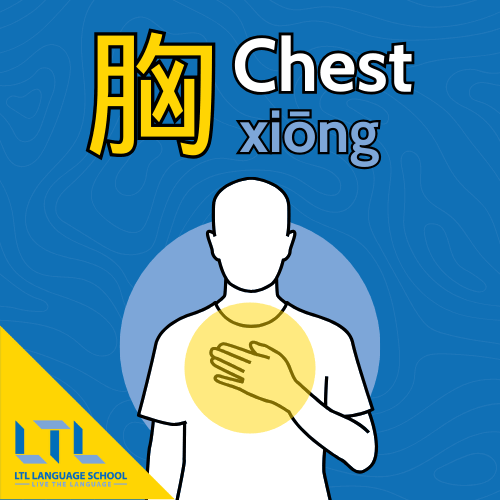
Body Parts in Chinese – Hands 手 (shǒu)
Hands play an important function in body language and sign language, so let’s be more specific and learn this wordlist of the parts of a hand:
| Body Part | Pinyin | Hanzi |
|---|---|---|
| Finger | shǒu zhǐ | 手指 |
| Knuckle | zhǐ guān jié | 指关节 |
| Fingernail | zhǐjiǎ | 指甲 |
| Thumb | mǔzhǐ / dà mǔzhǐ | 拇指 / 大拇指 |
| Index Finger | shí zhǐ | 食指 |
| Middle Finger | zhōng zhǐ | 中指 |
| Ring Finger | wú míng zhǐ | 无名指 |
| Pinky / Little Finger | xiǎo zhǐ / xiǎo mǔ zhǐ | 小指 / 小拇指 |
| Palm | shǒuzhǎng | 手掌 |
Let’s put these words into some sentences you might actually use:
| Hanzi | Pinyin | English |
|---|---|---|
| 我切到手指了。 | Wǒ qiē dào shǒuzhǐ le. | I cut my finger. |
| 你的指甲太长了。 | Nǐ de zhǐjiǎ tài cháng le. | Your fingernails are too long. |
| 他给我竖起了大拇指。 | Tā gěi wǒ shù qǐ le dà mǔzhǐ. | He gave me a thumbs up. |
| 他有一双大手。 | Tā yǒu yì shuāng dà shǒu. | He has big hands. |
Measure words for body parts
In Chinese you can’t just say “one hand”. You need a measure word between the number and the body part, and the right one depends on its shape or whether it comes in a pair.
| Measure word | Pinyin | Used for | Example |
|---|---|---|---|
| 只 | zhī | one of a pair: hand, eye, ear, foot | 一只手 (yì zhī shǒu) |
| 双 | shuāng | a pair | 一双眼睛 (yì shuāng yǎnjīng) |
| 条 | tiáo | long parts: leg, arm | 一条腿 (yì tiáo tuǐ) |
| 根 | gēn | thin, stick-like parts: finger, a single hair | 一根手指 (yì gēn shǒuzhǐ) |
| 颗 | kē | small, round things: teeth | 一颗牙 (yì kē yá) |
| 张 | zhāng | flat surfaces: face, mouth | 一张脸 (yì zhāng liǎn) |
我的指甲好长
My fingernails are so long用中指是不礼貌的
Using your middle finger is rude为什么无名指上没有戒指?
Why is the ring not on your ring finger?

Complete Guide to Basic Chinese Grammar & Sentence Structures
Chinese grammar is NOT as hard as you think. In fact it’s a lot easier than many other languages. Here we introduce some key points and show you the way.
Body Parts in Chinese – Internal organs – 脏腑 (zàngfǔ)
Imagine seeing a doctor in China and not knowing the words of the internal organs.
Not so easy to get your point across without the usage of body language!
The internal organ vocabulary below will come in handy in exactly these situations. One more word you’ll want is 肾 (shèn, kidney), often said in full as 肾脏 (shènzàng).
💡 The heading word 脏腑 (zàngfǔ) comes from Traditional Chinese Medicine (TCM). It groups the organs into the 五脏 (wǔzàng: heart, liver, spleen, lungs and kidneys) and the 六腑 (liùfǔ: gallbladder, stomach, small intestine, large intestine, bladder and the 三焦 sānjiāo, or “triple burner”).
You’ll hear these ideas at TCM clinics and pharmacies, so don’t be surprised if someone says you have too much 肝火 (gānhuǒ, “liver fire”) when you’re stressed or short-tempered.
| 脑 | nǎo | brain |
| 心脏 | xīn zàng | heart |
| 肝 | gān | liver |
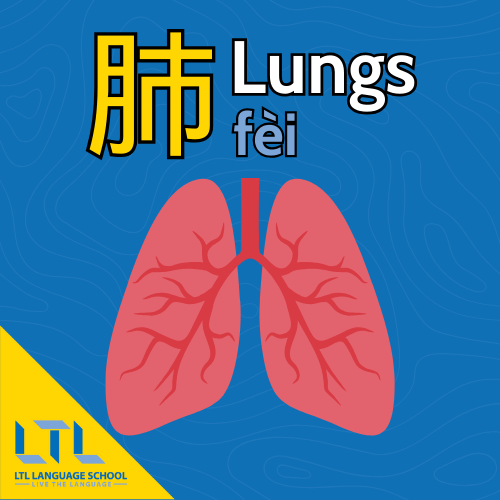
| 肺 | fèi | lungs |
| 胃 | wèi | stomach |
| 大肠 | dà cháng | large intestine |
| 小肠 | xiǎo cháng | small intestine |
| 胆囊 | dǎnnáng | gallbladder |
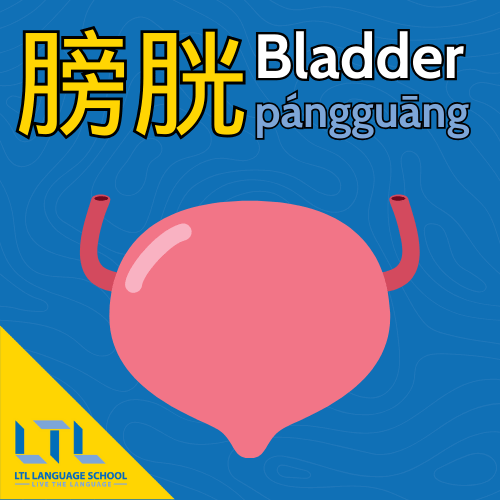
| 膀胱 | pángguāng | bladder |
| 尿道 | niàodào | urethra |
| 脾 | pí | spleen |
| 生殖器 | shēngzhíqì | eproductive organs |
… and some sentences with those words in action
| Sentence in English | Sentence in Pinyin | Sentence in Hanzi |
|---|---|---|
| My stomach is in a lot of pain | Wǒ de dùzi hěn tòng | 我的肚子很痛 |
| Smoking is bad for your lungs | Xīyān duì nín de fèi yǒuhài | 吸烟对您的肺有害 |
| My nan has heart problems | Wǒ nǎinai yǒu xīnzàng wèntí | 我奶奶有心脏问题 |

75 Useful Academic Vocabulary 🎓 Let’s Go back to School in Chinese
Thinking of coming to learn Chinese? Good! As a present, we are getting you ahead of the rest with our hugely useful set of Chinese school vocabulary.
Body Parts in Chinese || Lower Body 下半身 (xiàbànshēn)
Finally, let’s work our way down through the lower body parts in Chinese:
| Body Part | Pinyin | Hanzi |
|---|---|---|
| Bottom | tún bù / pì gu | 臀部 / 屁股 |
| Hip | kuà / kuān bù / yāo kuà | 胯 / 髋部 / 腰胯 |
| Pelvis | gǔ pén | 骨盆 |
| Genitals | yīnbù | 阴部 |
| Leg | tuǐ | 腿 |
| Thigh | dàtuǐ | 大腿 |
| Lower leg | xiǎotuǐ | 小腿 |
| Calf | tuǐdùzi | 腿肚子 |
| Shin | jìng | 胫 |
| Knee | xī gài | 膝盖 |
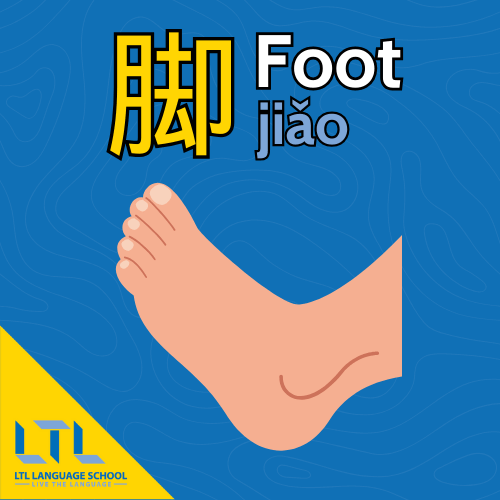
| Foot | jiǎo | 脚 |
| Soles of feet | jiǎodǐ | 脚底 |
| Heel | jiǎogēn | 脚跟 |
| Ankle | jiǎo huái / jiǎo bózi | 脚踝 / 脚脖子 |
| Toe | jiǎo zhǐ | 脚趾 |
| Toenail | jiǎo zhǐ jiǎ | 脚趾甲脚趾甲 |
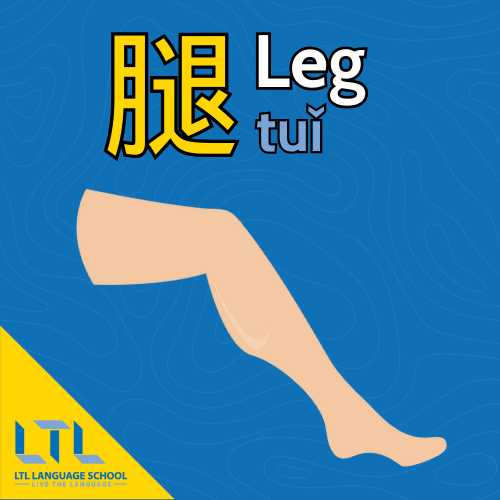
And finally, some sentences to match:
| Hanzi | Pinyin | English |
|---|---|---|
| 跑完步我的腿很酸。 | Pǎo wán bù wǒ de tuǐ hěn suān. | My legs ache after running. |
| 他踢球的时候伤了膝盖。 | Tā tī qiú de shíhou shāng le xīgài. | He hurt his knee playing football. |
| 我的脚踝扭了。 | Wǒ de jiǎohuái niǔ le. | I’ve sprained my ankle. |
| 我的脚很大,买鞋很难。 | Wǒ de jiǎo hěn dà, mǎi xié hěn nán. | My feet are big, so buying shoes is hard. |
他的腿很长
He has very long legs我踢足球时摔断了脚踝
I broke my ankle playing football我的脚不适合这双鞋
My feet do not fit into these shoes
How to Say What Hurts in Chinese // Body Part + 疼
Saying what hurts is where all that body parts vocabulary really pays off. The pattern is simple to build: 我 + body part + 疼 (téng). So 我头疼 (wǒ tóu téng) means “I have a headache”.
| Hanzi | Pinyin | English |
|---|---|---|
| 我头疼。 | Wǒ tóu téng. | I have a headache. |
| 我肚子疼。 | Wǒ dùzi téng. | My stomach (belly) hurts. |
| 我胃疼。 | Wǒ wèi téng. | My stomach hurts (the organ itself). |
| 我牙疼。 | Wǒ yá téng. | I have a toothache. |
| 我嗓子疼。 | Wǒ sǎngzi téng. | I have a sore throat. |
| 我腰疼。 | Wǒ yāo téng. | My lower back hurts. |
| 我这儿疼。 | Wǒ zhèr téng. | It hurts here. |
💡 疼 (téng) is the everyday spoken word, and you’ll hear it constantly in Beijing. 痛 (tòng) means the same thing but sounds a little more formal or written, which is why our organ example used 我的肚子很痛. Both 头疼 and 头痛 mean headache.
肚子 or 胃 for Stomach?
肚子 (dùzi) is your belly, the whole area you’d point to from the outside. 胃 (wèi) is the stomach organ itself.
If you’re not sure exactly where the pain is, 我肚子疼 is the safe choice. 我胃疼 tells a doctor the problem is higher up, usually linked to eating, like after one too many spicy hotpots in Chengdu.
At the Doctor or Pharmacy
| Hanzi | Pinyin | English |
|---|---|---|
| 医院 | yīyuàn | hospital |
| 医生 | yīshēng | doctor |
| 药店 | yàodiàn | pharmacy |
| 药 | yào | medicine |
| 发烧 | fāshāo | to have a fever |
| 感冒 | gǎnmào | a cold; to catch a cold |
| 你哪儿不舒服? | Nǐ nǎr bù shūfu? | What’s wrong? (literally: where do you feel unwell) |
| 我受伤了。 | Wǒ shòushāng le. | I’m injured. |
For more phrases on describing symptoms and illnesses, head over to our health guide.
Chinese Idioms with Body Parts
Once you know the body, many Chinese idioms (成语 chéngyǔ) start to make sense. Here are five you’ll actually hear:
| Hanzi | Pinyin | Literally | Meaning |
|---|---|---|---|
| 七手八脚 | qī shǒu bā jiǎo | seven hands, eight feet | lots of people pitching in at once, a bit chaotically |
| 心直口快 | xīn zhí kǒu kuài | straight heart, quick mouth | frank, says exactly what they think |
| 眼高手低 | yǎn gāo shǒu dī | high eyes, low hands | high standards but limited ability |
| 唇亡齿寒 | chún wáng chǐ hán | without the lips, the teeth get cold | two sides that depend closely on each other |
| 耳听为虚,眼见为实 | ěr tīng wéi xū, yǎn jiàn wéi shí | what the ear hears is empty, what the eye sees is real | seeing is believing |
Want a new one every day? Try our Chinese Proverb of the Day tool.
Body Parts in Chinese || FREE QUIZ
Think you know your head from your hips or your elbows from your ears?
Well it’s time to put that to the test with our FREE Body Parts Quiz in Chinese…!

Scored well? The fastest way to make these words stick is to use them every day.
When you study with LTL in cities like Beijing, Shanghai or Chengdu and live with a host family, you’ll be telling your host mum 我头疼 (wǒ tóu téng) and pointing at menus long before you realise you’re doing it.
Find your perfect Mandarin program
Fancy learning how to say the body parts of other languages? You’re in luck because we’ve also published a post on the body parts in Russian too. Check it out 😎
Body Parts in Chinese || FAQs
How do you say Body in Chinese?
身体 shēn tǐ.
How do you say Head in Chinese?
头 tóu.
How do you say Arm in Chinese?
胳膊 gē bo.
How do you say Leg in Chinese?
腿 tuǐ.
How do you say Finger in Chinese?
手指 shǒu zhǐ.
How do you say Toe in Chinese?
脚趾 jiǎo zhǐ.
How do you say Ankle in Chinese?
脚踝 jiǎohuái is the standard word. In everyday speech, especially in northern cities like Beijing, you’ll also hear 脚脖子 jiǎo bózi.
What is pelvis in Chinese?
Pelvis in Chinese is 骨盆 (gǔpén). It combines 骨 (gǔ, bone) with 盆 (pén, basin), so it literally means “bone basin”.
For the hip area, you can say 胯 (kuà) or the more formal 髋部 (kuānbù).
What is abdomen in Chinese?
Abdomen or belly in Chinese is 肚子 (dùzi), the whole area you would point to from the outside. The stomach organ itself is 胃 (wèi).
If you are not sure exactly where the pain is, 我肚子疼 (wǒ dùzi téng) is the safe way to say your belly hurts.
How do you say private parts in Chinese?
The neutral, anatomical word for genitals or private parts in Chinese is 阴部 (yīnbù). It is the kind of word you would use with a doctor or read on a medical form.
For the bottom, use 屁股 (pìgu) with friends and family, while 臀部 (túnbù) is the more formal choice.
Want more from LTL?
If you wish to hear more from LTL Language School why not join our mailing list? We give plenty of handy information on learning Chinese, useful apps to learn the language and everything going on at our LTL schools!
Sign up below and become part of our ever-growing community!
⭐ Download our free ebook, your starter pack of essential Mandarin learning resources!
BONUS || Want to study Chinese with us in China? Why not check out our group and individual classes here






[…] Here are the six Chinese measure words used for classifying body parts in Chinese. […]
Love the images! Really handy 🙂
Really chuffed to hear that Chen - more on Instagram if you want!
https://www.instagram.com/ltl_mandarin/
bra so I don't care at all
gogogogogogoggo
[…] you don’t know your body parts in Chinese, it might be a good idea to brush up on […]
[…] see here that the word for ring includes the character for finger 指 . To specify different kinds of rings, a description is added before just the same as it is in […]
Love the graphics!
Thanks Roz!
[…] Scopri tutte le parti del corpo in Cinese. […]
[…] sure to check out out blog about body parts in Chinese if you want to learn […]
[…] the virus over the course of 2020. 敬祝 jìng zhù means to wish, 身体 shēntǐ means health or body and 健康 jiànkāng means […]
[…] Bra – 胸罩 xiōng zhào (if you didn’t know that 胸 xiōng means chest, then you’ll need to brush up on your Chinese body parts.) […]
im studying chinese myself, and have a collection of advertsments , usefulbecause theyre everywhere i wanted to publish them are you interested
[…] Quote from the source: … […]