
How Long Does It REALLY Take To Learn Chinese? The Truth Revealed
Quick answer: The US Foreign Service Institute estimates it takes an English speaker around 2,200 class hours to reach professional working proficiency in Mandarin Chinese, placing it in FSI Category IV/V (the hardest tier).

Most learners hit HSK 3 (intermediate) in 6-14 months of consistent study, HSK 5 (advanced) in 1.5-4 years, and near-native fluency in 3-8 years, depending on study intensity, immersion, and language background.
If you’re considering signing up for Chinese classes, you might just be wondering:
How long does it take to learn Chinese?
Though the answer largely depends on your study habits and goals, most experts agree that it takes around 2,200 class hours for an English speaker to learn Chinese.
That is the figure from the US Foreign Service Institute for professional working proficiency.
The Defense Language Institute (DLI) independently corroborates this, classifying Mandarin as a Category IV language requiring a similar investment.
For context: Spanish takes roughly 600-750 class hours under the same FSI framework. Chinese requires roughly three times that. If you studied full-time at 5 class hours per weekday, you would be looking at 88 weeks of continuous study.
It is important to note, though, that the 2,200-hour figure only refers to class hours.
This is an important distinction to make as it does not include time spent outside of class doing homework, reading Chinese books, watching Chinese media, or otherwise preparing for class.
The Five Stages of Learning Chinese
Why Is Chinese Seemingly Harder?
How Many Hours Does Each HSK Level Take?
HSK 3.0 // What the New 9-Level System Means
Pinyin // Your First Step in the Timeline
What Affects How Fast You Learn Chinese?
How Your Language Background Changes the Timeline
Immersion // The Fastest Route to Fluency
How Long Does It Take // Goal-Based Timeline Guide
Can I Learn Chinese in a Year?
Common Mistakes That Slow Chinese Learners Down
Time to Learn Chinese || FAQs
If we consider 2-3 hours of outside prep, then the 2,200 hour figure balloons to 6,600-8,800 total study hours 🤯
If you are thinking about learning Chinese, do not panic.
Keep in mind that everyone has different Chinese learning objectives, and the 2,200 class-hour marker set by the FSI is meant for training US diplomats who will be doing official business on behalf of the US Government.
👉 While learning Chinese is indeed a hard language, it is far from impossible to learn. These days, there are countless resources and materials available to help you make real progress. Plus you probably won’t be doing diplomatic work just yet.
So, to get a more accurate idea of how long it will take you to learn Chinese, you must first define what your language goals are and then come up with the best study strategy for you.
The Five Stages of Learning Chinese
The 2,200 hour figure from the FSI indicates how long it will take someone to get to native proficiency. This may be well beyond what the average Chinese learner is trying to achieve.
This is why it is very important to figure out what your goals are before you commit to learning Chinese.
There is a big difference between wanting to learn a few essential Chinese phrases to get by on your trip to China and being able to have full-blown business negotiations.

The FSI has identified five different levels of proficiency:
- Elementary Proficiency
- Limited Working Proficiency
- Professional Working Proficiency
- Full Professional Proficiency
- Native/Bilingual Proficiency
The 2,200 class hour marker is meant to get you through the fifth level of Native/Bilingual Proficiency.
That means that if you are interested in having local Chinese-speaking friends, the second stage of Limited Working Proficiency should be good enough.
If you’re looking to do business in China, you should aim for the third stage of Professional Working Proficiency.
In either case, you should be able to achieve your target proficiency level in far fewer than 2,200 class hours.
BONUS || Love leanring languages? Find out how long it takes to learn Korean

(FREE) Pinyin Chart // Learn How To Read Pinyin in 5 Minutes
Get Your FREE Downloadable Pinyin Chart – We spend hours behind the scenes creating excellent tools and useful things for you to use every day.
Why Is Chinese Harder Than Other Languages?
The FSI has identified Mandarin Chinese (and Cantonese) as a Category V language, meaning it is in the absolute hardest category of languages to learn for English speakers.
There are many reasons why Chinese is so hard for English learners.
First, Chinese does not have a phonetic alphabet as English does.
That means that there is NOT a specific letter that corresponds to a specific sound.
Instead, Chinese speakers must memorise thousands of unique characters before being able to read and write.
The second biggest obstacle for English speakers is probably the Chinese tones.
Since Chinese is a tonal language, it can take some time for learners to get used to correctly identifying the tones when speaking and listening to Chinese.
This is why elementary and intermediate learners can get frustrated when natives can’t seem to understand what they are saying, even after months or years of study.
It can take a long time to work on improving listening comprehension before learners can identify and reproduce the Chinese tones.

Is Chinese Really That Hard?
Despite the difficulties of learning Chinese, it is not an impossible language to learn. Far from it in fact!
And once you get past the initial shock of tones and characters, you will discover several features of Mandarin that are genuinely less complicated than European languages.
No verb conjugation. In English, you say ‘I go, he goes, she went, they have gone.’ In Mandarin, the verb never changes: 我去 (wǒ qù) means ‘I go,’ and it is also ‘he goes’ and ‘they went.’ Context and time words do the work.
No grammatical gender. French learners must memorise whether a table is masculine or feminine. Mandarin has no grammatical gender at all.

No plurals. The word for ‘cat’ (猫, māo) is the same whether you mean one cat or a hundred. A number or context makes the meaning clear.
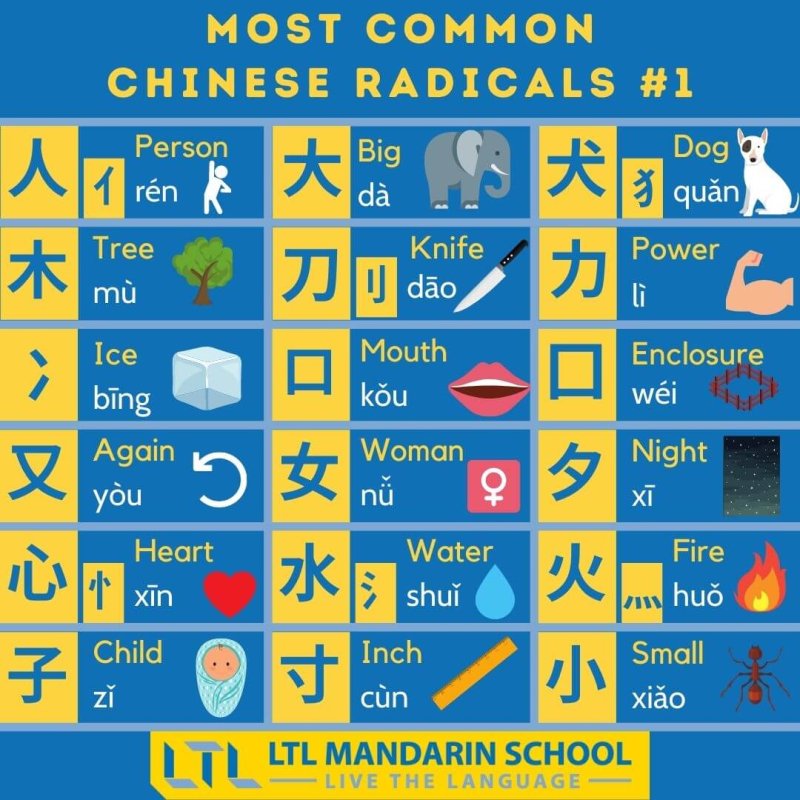
Logical character components. Many Chinese characters are built from radicals that hint at meaning.
The character for ‘forest’ (森, sēn) is three ‘tree’ characters (木, mù) stacked together. Once you learn the building blocks, new characters start to feel less random.
Consistent sentence structure. Mandarin follows a Subject-Verb-Object order, just like English. ‘I eat rice’ is 我吃饭 (wǒ chī fàn): subject, verb, object.
If it was truly impossible, then China’s literacy rate would not be amongst the highest in the world.
The truth is that some aspects of Chinese will seem very approachable to English speakers.
Chinese grammar is refreshingly straightforward, especially compared to grammar-heavy languages like Japanese or German.
Additionally, there are only just over 400 unique syllables in the entire Chinese language. That’s significantly fewer than the approximately 15,000 syllables in English.
Ultimately, learning any language involves some level of difficulty, but with patience and dedication, there is no need to fear.
How Many Hours Does Each HSK Level Take?
Breaking the 2,200-hour figure down by HSK level makes the journey far less daunting.
Here are the approximate class-hour ranges for each level under the classic HSK 1-6 framework (still widely used by schools and employers worldwide):
| HSK Level | Approximate Class Hours | Rough Equivalent |
|---|---|---|
| HSK 1 | 0-80 hrs | Basic survival phrases |
| HSK 2 | 80-160 hrs | Simple daily conversations |
| HSK 3 | 160-280 hrs | Intermediate: travel and social topics |
| HSK 4 | 280-480 hrs | Upper-intermediate: work and study |
| HSK 5 | 480-800 hrs | Advanced: newspapers, meetings |
| HSK 6 | 800-1,200 hrs | Near-native reading and writing |
These are class hours only. Add your self-study time on top and multiply by 1.5-2 to get total hours invested.
TIP💡 Most learners working toward professional fluency aim for HSK 5. You can realistically reach HSK 3 in 6-9 months of consistent part-time study, a genuinely achievable milestone for most people.
Curious where you currently stand?
Test your HSK knowledge with our free quiz and get an instant level estimate.
HSK 3.0 // What the New 9-Level System Means for Your Timeline
As of July 2026, the official HSK exam has expanded from 6 levels to 9 under the updated HSK 3.0 framework, introduced by Hanban / Chinese Testing International.
Here is how the new structure maps roughly to the classic levels:
| New HSK 3.0 Level | Approximate Vocabulary | Classic HSK Equivalent |
|---|---|---|
| HSK 1 | 500 words | HSK 1 |
| HSK 2 | 772 words | HSK 1-2 |
| HSK 3 | 973 words | HSK 2 |
| HSK 4 | 1,000 words | HSK 3 |
| HSK 5 | 1,071 words | HSK 3-4 |
| HSK 6 | 1,140 words | HSK 4 |
| HSK 7 | 5,456 words | HSK 5 |
| HSK 8 | 6,000+ words | HSK 5-6 |
| HSK 9 | 11,092 words | HSK 6+ |
What does this mean for your timeline? Practically, the lower levels are now more granular, so you will reach your first ‘pass’ milestone faster. Reaching HSK 3.0 level 4 (roughly the old HSK 3) still takes most learners around 200-350 class hours.
TIP💡 Many universities and employers still reference the classic HSK 1-6 scale for the time being. Always confirm which version a certificate requirement refers to before you register for an exam.
Pinyin // Your First Step in the Timeline
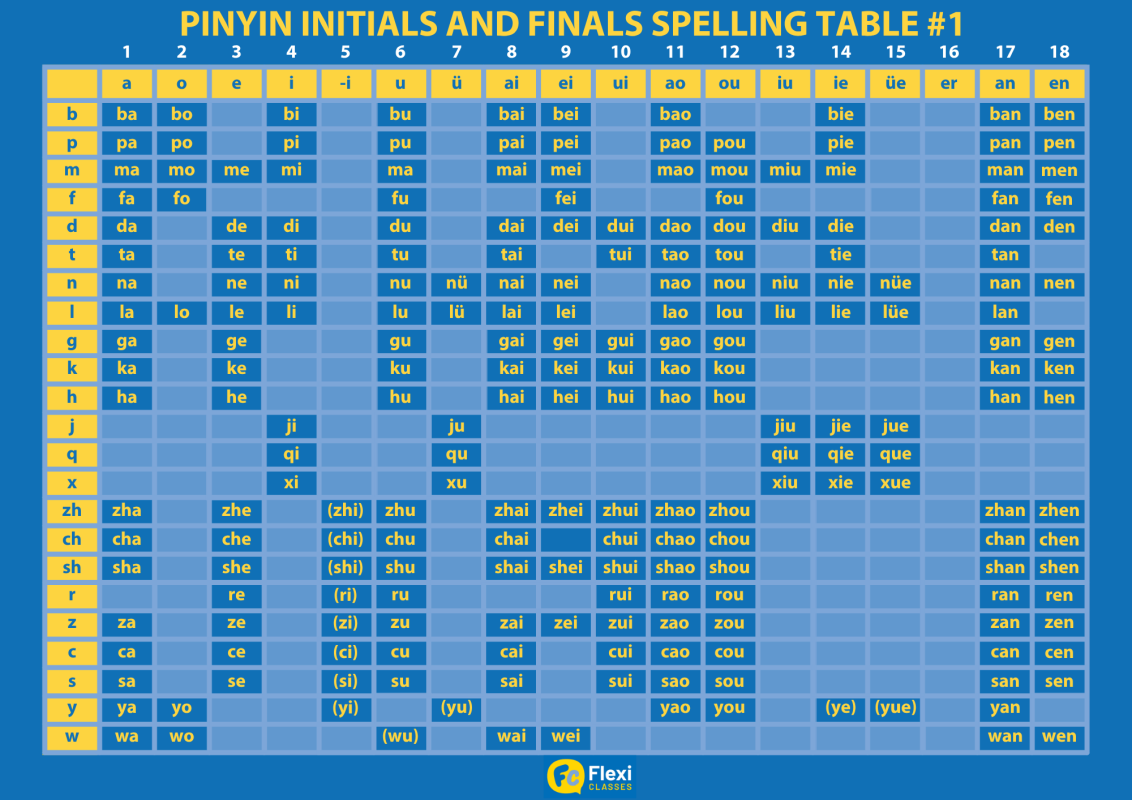
Before you tackle characters or tones in earnest, virtually every beginner starts with Pinyin (拼音).
Pinyin is the official romanisation system for Mandarin, mapping Chinese sounds onto the Latin alphabet with added tone marks.
Most learners can get comfortable with the Pinyin system in 2-4 weeks of daily practice. That is a genuinely quick win at the start of what can otherwise feel like a very long road.
Here is why it matters for your timeline:
- Pinyin lets you start reading and typing Mandarin before you know a single character.
- It gives you a visual anchor for the four tones (mā, má, mǎ, mà).
- Every reputable Chinese course, textbook, and app uses Pinyin as its scaffolding.
TIP💡 Do not skip Pinyin to ‘get to the real stuff’ faster. Students who rush past Pinyin almost always develop bad pronunciation habits that take far longer to fix later on. Spend the first few weeks nailing it.
What Affects How Fast You Learn Chinese?
The 2,200-hour figure is a useful anchor, but your actual timeline will depend on several personal factors.
Study intensity. Studying 4-5 hours a day in an immersive environment compresses timelines dramatically compared to 30 minutes a day at home. Someone putting in 20 hours a week will reach conversational level roughly four times faster than someone doing 5 hours a week.
Consistency over volume. Short, daily sessions beat occasional marathon sessions every time. 30 focused minutes every day beats three hours on a Sunday.
Study format. Classroom instruction with a native speaker, live online classes (like those on Flexi Classes), self-study apps, and immersion are not equally effective. A mix works best.
Not ready to move to Beijing? You can still get structured, live classes with native teachers from wherever you are. Start your 7-Day Free Trial on Flexi Classes and see how much you can progress in a week.
Your environment. Living in Beijing or Shanghai forces you to use Chinese every day: ordering food, navigating transport, chatting with a host family. That kind of daily exposure is irreplaceable.

Prior language experience. If you already speak Japanese or Korean, recognising Chinese characters will come faster. If you speak a tonal language like Thai or Vietnamese, the tone system will feel less alien.
Age and motivation. Adults often plateau in pronunciation but typically outperform younger learners in grammar acquisition speed. Motivation and a clear goal matter far more than age for most adults.
TIP💡 Write down your specific goal before you start: ‘I want to hold a 10-minute conversation about my job in Mandarin by March.’ A specific target shapes every study decision you make.
How Your Language Background Changes the Timeline
Not all learners start from the same place. Your mother tongue has a big effect on how quickly you pick up Chinese.
English or European language speakers. Starting from scratch with tones, characters, and a completely different grammatical structure. The FSI’s 2,200-hour estimate is aimed squarely at you. Realistically expect 1-2 years of intensive study to reach comfortable conversational level.
Japanese or Korean speakers. You already know thousands of Chinese-origin characters (kanji / hanja) and share some grammatical logic with Mandarin.
Expect your reading progress to accelerate significantly. Some Japanese speakers reach HSK 4 reading level in roughly half the time of an English speaker.
Tonal language speakers (Thai, Vietnamese, Cantonese). The four Mandarin tones feel far more natural if you already use pitch to distinguish meaning. Pronunciation milestones arrive earlier, though characters and vocabulary still require the same investment.
Cantonese speakers. Shared characters (especially in traditional form) give a head start in reading, but spoken Mandarin still requires dedicated practice because the two are not mutually intelligible.
🤔 Already speak one of these languages? Tell us when you enquire and our team will build a timeline estimate tailored to your background.
Immersion // The Fastest Route to Fluency
If you want to compress that 2,200-hour timeline as much as possible, immersion is the most powerful tool available.
When you study Chinese in China, you are not just learning in a classroom for 4-5 hours a day.
You are living the language: ordering your morning breakfast in Mandarin, chatting with your host family over dinner, navigating the metro, arguing prices at the market. Every waking hour becomes a potential study hour.
LTL students who combine daily group or 1-on-1 classes with a host family homestay regularly tell us they cover more ground in 3 months in Beijing or Shanghai than they did in a full year of evening classes at home.
Here is a rough comparison:
| Format | Hours per Week | Time to Conversational Level |
|---|---|---|
| Casual self-study at home | 3-5 hrs | 3-5 years |
| Evening classes (part-time) | 5-8 hrs | 2-3 years |
| Intensive online classes | 10-15 hrs | 1-2 years |
| Full immersion in China | 30-50 hrs | 6-12 months |
TIP💡 Even a single month of full immersion in China early in your studies can rewire your ear for tones and give you a confidence boost that months of remote study cannot replicate.
Our Chinese program is Chengde is built for immersive language learning. Our students here progress faster than any other.

How Long Does It Take // Goal-Based Timeline Guide
Here is a practical breakdown based on common learner goals and study intensity levels.
| Goal | Part-Time (5 hrs/wk) | Intensive (15 hrs/wk) | Full Immersion (35 hrs/wk) |
|---|---|---|---|
| Basic travel phrases | 1-3 months | 2-4 weeks | 1-2 weeks |
| HSK 2 (simple conversations) | 4-6 months | 6-8 weeks | 3-4 weeks |
| HSK 3 (intermediate) | 10-14 months | 3-4 months | 6-8 weeks |
| HSK 5 (advanced) | 3-4 years | 12-18 months | 6-10 months |
| Professional / near-native | 6-8 years | 3-4 years | 18-30 months |
Can you learn Chinese in 3 months?
Honestly? It depends entirely on what ‘learn’ means to you.
In 3 months of intensive full-time study (think 5 hours of class plus daily real-world practice), you can realistically reach HSK 2-3 level: enough to hold basic daily conversations, order food, give directions, and make local friends.
You will not be reading a newspaper or conducting business meetings. But you will be able to live and breathe the language in a way that surprises most people, including yourself.
Is 1 year enough to learn Mandarin?
For most learners studying intensively (10+ hours per week), one year is enough to reach solid HSK 3-4 level.
In an immersive setting, some students reach HSK 5 within a year. It is ambitious, but very achievable with the right structure and consistency.
Can you learn Chinese in 2 years?
Two years of dedicated, consistent study puts most learners in the HSK 4-5 range at minimum, and potentially HSK 6 with immersion.
That level covers the vast majority of everyday professional and social situations you will encounter.
Can I Learn Chinese in a Year?
Though many people may be super eager to learn Chinese, either because they have a huge business opportunity or because they want to attend a specific educational program, it is generally not a good idea to rush through your Chinese classes.
Since learning a language involves more than just memorising vocabulary and a few grammar patterns, it is best to adopt a consistent study schedule that allows enough time for language absorption.
That is, you do not want to spend 8+ hours a day in a classroom if you want to achieve proficiency as soon as possible.
You also need to spend time on passive activities like listening to Chinese music, watching Chinese dramas, reading Chinese graded readers, and otherwise developing your 语感 yǔgǎn, your sense of the language.

How to Learn Chinese Faster?
If you’re looking to learn Chinese as soon as possible, the best thing you can do is work with an individual tutor.
Taking 1-on-1 classes will ensure that you maximise your class time while a professional teacher helps plan out your study roadmap and helps you hammer out your weaknesses.
👉 If you’re serious about learning Chinese as fast as possible, you should consider our immersion program, where you’ll be exposed to Chinese virtually 24/7 – no foreigners, no English!
Regardless, the most effective study plan is a consistent one. Make sure that you are setting sustainable goals for yourself that will prevent burnout.
Diversify your study plans and incorporate fun activities into your schedule to keep things interesting. Most importantly, make sure you enjoy the process and Live The Language!
Common Mistakes That Slow Chinese Learners Down
We see the same patterns repeatedly at LTL, across all our cities. Here are the mistakes that add the most unnecessary time to your Chinese learning journey.
1. Ignoring tones early on. Tones are not an optional extra you can add later. Getting them wrong from the start creates habits that are genuinely painful to unlearn. Prioritise tones in week one.
2. Skipping character study. Many learners rely entirely on Pinyin and avoid characters. This works until about HSK 2-3, then becomes a hard ceiling. Start building your character recognition early, even if slowly.
3. Studying alone. Chinese is a social language. Practising in isolation, without real conversation partners or live feedback, slows progress dramatically. Find a native speaker, join a class, or book sessions on Flexi Classes.
4. Inconsistency. Taking two weeks off because life got busy is far more damaging in Chinese than in most European languages. The tonal and character memory fades quickly. Short daily sessions protect your progress far better than occasional long ones.
5. Setting vague goals. ‘I want to learn Chinese’ is not a plan. ‘I want to pass HSK 3 by December’ is. Specific goals create specific study habits.
6. Only using one resource. Apps alone will not get you to fluency. Neither will classes alone. A mix of structured lessons, reading practice (try The Chairman’s Bao for graded articles), and real conversation is what moves the needle.

Time to Learn Chinese || FAQs
Is Chinese harder than other languages?
Chinese Mandarin is classified as a Category V language by the US Foreign Service Institute (“FSI”) meaning it is in the hardest category of languages to learn for English speakers.
Is Mandarin Chinese hard to learn?
While Chinese has a reputation for being difficult to learn, in truth, with dedication and the proper instruction learning Chinese can be a straightforward process.
Particularly with immersion into the language learners (of all ages) can progress at a steady speed.
Is it very hard to learn Chinese?
Chinese is genuinely one of the most challenging languages for English speakers, classified as Category IV/V by the FSI, requiring around 2,200 class hours to professional proficiency.
That said, many aspects of Mandarin grammar are straightforward: no verb conjugation, no grammatical gender, and a logical sentence structure. The difficulty is real, but so is the progress you will make with consistent study.
Can I learn Mandarin in a year?
YES!
Here at LTL, we’ve seen both part-time and full-time students make tremendous progress both online and in person.
For immersion programs, we typically advise that students can reach HSK 4 in 12 months and possibly even HSK 5 with outside classroom study such as homestay programs.
Can you learn Chinese in 2 years?
Two years of consistent, structured study puts most learners at HSK 4-5 level, covering the vast majority of everyday and professional situations.
With full immersion, some students reach HSK 5-6 within two years. It is an ambitious but realistic goal with the right approach.
What is a rough timeline to become very proficient in Chinese?
Though the answer largely depends on your study habits as well as your goals, most experts agree that it takes around 2,200 class hours for an English speaker to learn Chinese.
Considering full-time study of 5 class-hours per weekday, this would come out to 88 weeks of continuous full-time study.
How can I learn Chinese faster?
The fastest way to learn Chinese is to be immersed with guidance from qualified language instructors.
A good language instructor will work with you at your level and give you valuable instant feedback to make sure you’re always on track with your learning.
The immersion into Chinese is where students begin to excel as they’re able to gain confidence and live the language in real-world situations.
How do you say 1, 2, 3, 4, 5, 6, 7, 8 in Chinese?
Numbers in Mandarin are logical and easy to learn: 一 (yī) = 1, 二 (èr) = 2, 三 (sān) = 3, 四 (sì) = 4, 五 (wǔ) = 5, 六 (liù) = 6, 七 (qī) = 7, 八 (bā) = 8. Once you know 1-10, you can build almost any number by combining them.
How do Chinese say ‘sorry’?
The most common word for ‘sorry’ in Mandarin is 对不起 (duìbuqǐ), used for genuine apologies. For a lighter ‘excuse me’ or ‘pardon,’ you would say 不好意思 (bù hǎo yìsi). Both are worth learning in your very first week.