Chinese Pinyin Converter – Add Tones To Mandarin Pinyin
A Chinese Pinyin translator instantly converts Mandarin syllables or Chinese characters into Pinyin with the correct tone marks (ā á ǎ à).
Struggling to type Mandarin pinyin with tones? Don’t worry, you’re in the right place!
Type your Pinyin and select tones as you go, and the tool outputs clean, tone-marked Hanyu Pinyin you can copy anywhere: flashcards, worksheets, slides, or blog posts.
It’s free, works in your browser, and is designed for Chinese learners, teachers, and HSK candidates who need pinyin with tone marks to be exactly right.
Chinese Pinyin Translator:
How to Use the Pinyin Translator
It’s straightforward to use: type your pinyin as you normally would, then select the tones as you go.
If you’ve seen interlinear format elsewhere (where pinyin appears directly above or below Chinese characters), that’s a popular layout for teachers creating worksheets.
Our translator outputs clean tone-marked pinyin text you can copy and paste anywhere, including into word processors or slide decks where you can position it above characters manually.
💡 For a full interlinear layout, tools like Microsoft Word’s Ruby text feature work well alongside the pinyin you generate here.
DOWNLOAD OUR FREE EBOOK
Looking for reliable tools to boost your Mandarin? We’ve gathered our favourite websites, extensions, and learning platforms into one handy ebook, completely free! It’s perfect for beginners or anyone looking to refresh their skills.
👉 Get your free Mandarin Resource Pack and take your studies to the next level.
Why Use a Pinyin Translator?
Mandarin Chinese is a tonal language, which means the meaning of a word can change entirely depending on the tone used.
Without tone marks, it’s easy to misread or misunderstand what a word is supposed to mean.
You might also come across numbered tones (e.g., ma1, ma2, ma3, ma4) as a quick alternative used in typing and digital communication.
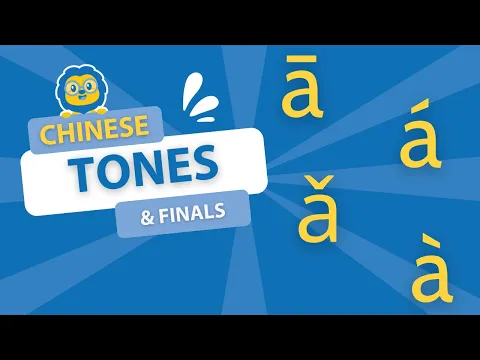
The number simply follows the syllable and maps to the same four tones: 1 = ā (flat), 2 = á (rising), 3 = ǎ (dip-and-rise), 4 = à (falling).
Tone marks like ā á ǎ à are the standard used in textbooks, exams, and formal study materials because they sit directly over the vowel and are easier to read at a glance. Numbered tones are handy shortcuts, but tone marks are what you’ll see in every HSK textbook and most learning apps.
TIP💡 Our pinyin translator outputs tone marks, the format used in official study materials and the one your teachers will expect.
Take the word “xiong mao” for example. If you’re thinking of a panda, the correct Pinyin is xióng māo (熊猫). But without tones, xiong mao could also mean chest hair (胸毛, xiōng máo), not exactly the same vibe! 🐼
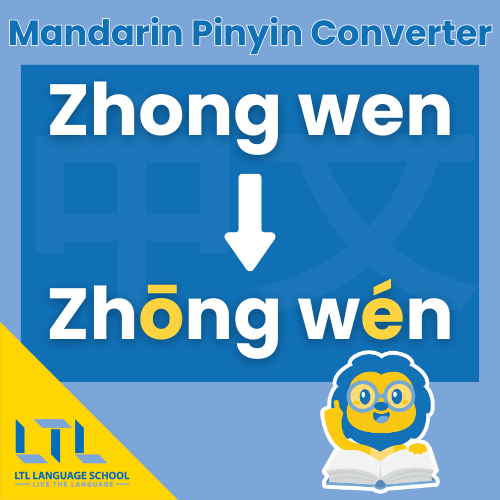
A Pinyin translator ensures your text includes the correct tone marks, helping you avoid awkward mix-ups and speak Chinese more clearly and accurately.
In our Beijing and Shanghai classrooms, the first thing every new student learns is that getting tones wrong doesn’t just sound odd, it can completely change what you’re saying.
Our teachers spend a lot of time drilling tone accuracy in week one, and having a reliable tool to check your written pinyin between classes makes a real difference. Whether you’re sitting in a classroom in Beijing or studying from home, this translator keeps your pinyin honest.
Don’t forget to check out these other Chinese language resources:
- FREE HSK Vocab Tests
- Test your HSK knowledge
- Generate Your Own Chinese Name
- Practice your Chinese pronunciation
- Pinyin for every Chinese number
- Discover Your Chinese Zodiac
We hope you find the resource useful.

WHY CREATE A CHINESE PINYIN CONVERTER
Good question! Let’s get straight to it:
#1 It helps many people, hugely
Not being able to type out the Chinese pinyin is incredibly irritating and we know that more than anyone else given the amount of content we write on our blogs.
Having to switch over to Google translate to grab the pinyin is just a pain, so being able to type normally and just use the auto-select feature we created is a major benefit not just to us but to you also.
#2 There aren’t enough tools like these
We want to provide you with the most useful Mandarin tools on the web, simple as that.
Alongside this, we’ve created a host of other useful tools that are designed to be a range of fun, useful and handy which you can use day to day to make your experience with Chinese that bit easier.
Of course, tools only take you so far. If you’re serious about becoming fluent as fast as possible, nothing replaces time in the classroom with native-speaking teachers.
LTL has been helping students across Beijing, Shanghai, Taipei, and Singapore do exactly that since 2007, with a 98% HSK pass rate to show for it.

Chinese Pinyin Translator – FAQs
What is a Pinyin Translator?
A Pinyin Translator is a tool that automatically adds the correct tone marks to Chinese Pinyin text.
Instead of writing “ni hao,” the tool converts it to “nǐ hǎo,” helping learners pronounce words correctly.
Why are tone marks important in Mandarin Chinese?
Mandarin is a tonal language, meaning a word’s tone changes its meaning.
For example, “ma” can mean mother (mā), hemp (má), horse (mǎ), or scold (mà), depending on the tone. Tone marks help clarify pronunciation and meaning.
Is this Pinyin Translator accurate?
Yes, the translator uses a dictionary-based system to accurately identify words and assign the correct tones.
However, for very uncommon names or slang, double-checking with a native speaker or teacher is always a good idea.
What is Pinyin and why is it used?
Pinyin is the official romanization system for Standard Mandarin Chinese.
It uses the Latin alphabet to represent Chinese sounds, making it easier for learners to read, pronounce, and type Chinese characters. Pinyin is an essential tool for beginners and is widely used in dictionaries, textbooks, and language apps.
Does learning Pinyin mean I don’t need to learn Chinese characters?
Not quite.
Pinyin is a fantastic starting point for learning pronunciation, but it’s only a phonetic guide.
To fully read and write in Chinese, you’ll eventually need to learn Chinese characters (汉字). That said, mastering Pinyin early on will make the transition to reading characters much smoother.
What is Bopomofo (Zhuyin) and how does it differ from Pinyin?
Bopomofo, also called Zhuyin (注音符號), is a phonetic system used primarily in Taipei and other cities in that region. Instead of the Latin alphabet, it uses 37 symbols derived from Chinese characters.
Pinyin uses familiar Roman letters, which makes it the more accessible starting point for most international learners. Both systems represent the same sounds, but if you’re studying in Beijing or Shanghai, your teachers will almost certainly use Pinyin. If you’re studying in Taipei, you may encounter both.
Is this tool useful for HSK exam preparation?
Absolutely.
HSK (the official Mandarin proficiency exam) requires you to read and write Pinyin accurately, particularly at HSK 1-3 where Pinyin appears in reading and listening sections.
Using this translator to double-check the tone marks on your HSK vocabulary is a practical study habit. LTL has a 98% HSK pass rate, and getting tones right from the start is one of the reasons our students do so well.
Who is this tool designed for?
Three groups get the most out of it.
— Learners use it to check their pinyin before a class or to prepare flashcards with correct tone marks.
— Teachers use it to create accurate worksheets, slides, or reading materials without switching between multiple tools.
— Content creators, bloggers, and translators working with Chinese text use it to ensure every pinyin reference in their writing is tonally correct. If you fall into any of those categories, you’re in the right place.