
Chinese Food || Dining in China: What You Need to Know 🥢
Dining in China means following table etiquette that centers on respect for elders, chopstick rules, tea customs, and toasting protocol, while enjoying eight major regional cuisines that range from Shandong seafood to fiery Sichuan hotpot.
The word ‘china’ for dinnerware also traces back to the country itself, since Europe imported porcelain from Chinese kilns from the 16th century onward. This guide covers both: how to eat like a local in China, and what you need to know about fine china tableware.
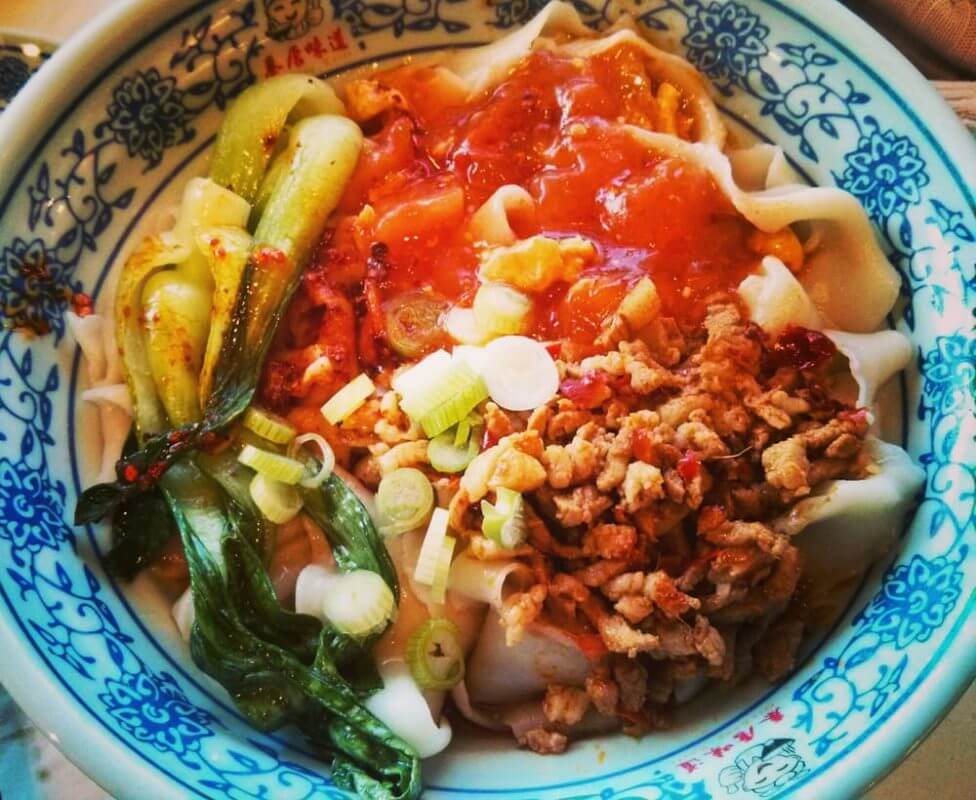
Most people love Chinese food and it’s not hard to see why.
But what’s it actually like dining in China?
The answer changes completely depending on where you are. A hotpot dinner in Chengdu 🌶️, a hand-pulled noodle lunch in Xi’an, a xiaolongbao brunch in Shanghai, or a Peking duck feast in Beijing: each city has its own rules, rhythms, and flavours.
Wherever there’s a Chinese community in a city, there will also be several Chinese restaurants. And if you’re planning a trip to China yourself, why not start with something fun: get your free Chinese name before you go. 🎉
While the popularity of wontons and egg fried rice is undeniable, there’s also a new wave of restaurants in foreign countries creating fusion food, carefully blending Chinese flavours with a country’s traditional cuisine.
You might think that eating in a Chinese restaurant makes you an expert in Chinese cuisine, but if you take a trip to China, you’ll quickly discover the differences in tastes and dishes, even if you’re ordering the same thing. Curious about what to order? We’ve rounded up the traditional dishes to try in China that you really shouldn’t miss.
Dining in China vs. China Dinnerware
Dining in China || Etiquette
Dining in China || The Taste
Dining in China || Chinese Food by Region
Dining in China || FAQs
Dining in China vs. China Dinnerware // Two Very Different Things
If you landed here researching fine china dinnerware, plates, or porcelain tableware, you are in the right place for a quick answer before we dive into the restaurant etiquette guide below.
So why is dinnerware called ‘china’? The name comes directly from the country. For centuries, China was the only place in the world producing high-quality porcelain. European traders imported it from the 16th century onward and simply called it ‘china’ after its origin. The name stuck, even as European manufacturers learned to replicate the craft.
Fine china vs. porcelain vs. bone china: All three are ceramic, but the differences matter. Standard porcelain dinnerware is fired at high temperatures from kaolin clay. Fine china is a refined, thinner version of porcelain. Bone china adds calcined bone ash (typically 30-45%) to the clay mixture, producing the translucent, ivory-toned finish most associated with English dinnerware brands.
What’s in a full dinnerware set? A standard dinnerware collection includes the dinner plate, salad plate, bread and butter plate, soup bowl, and cereal bowl, usually sold as service for 4 or service for 8. Larger sets add a platter, serving bowls, and cups and saucers.
Well-known fine china brands include Bernardaud, Ginori 1735, Herend, Royal Crown Derby, Rosenthal, Haviland, and Mikasa. For collectible value, Herend and Royal Crown Derby consistently rank among the most sought-after. Patterns like Royal Crown Derby’s ‘Imari’ and Herend’s ‘Queen Victoria’ are among the most recognised in the collector market.
Is fine china worth money? Antique and discontinued patterns from heritage manufacturers can hold or appreciate in value, especially complete sets in excellent condition. Modern mass-produced sets from brands like Mikasa are beautiful but typically not investment pieces.
Now, if you’re heading to China itself and want to know how to eat, drink, and behave at the table like a local, read on.
Dining in China || Etiquette
Every country has its own set of unwritten rules when it comes to dining.
China, being one of the oldest countries in the world, is a traditionalist.
Despite the modernity and westernization that you can see in its sprawling metropole, elders and young ones still follow their traditions.
1. Seating Protocol
So first things first when dining in China. Whether you’re sitting down to a family meal with your host family in Beijing or joining a business dinner in Shanghai, the rules below apply everywhere.
DO make sure to pay particular attention to your appearance if you’re a dinner guest in China and bring good wine or a small gift to demonstrate how deep your relationship is with your host.
DON’T be late. Being punctual is essential. You can either introduce yourself or allow the host to introduce you.
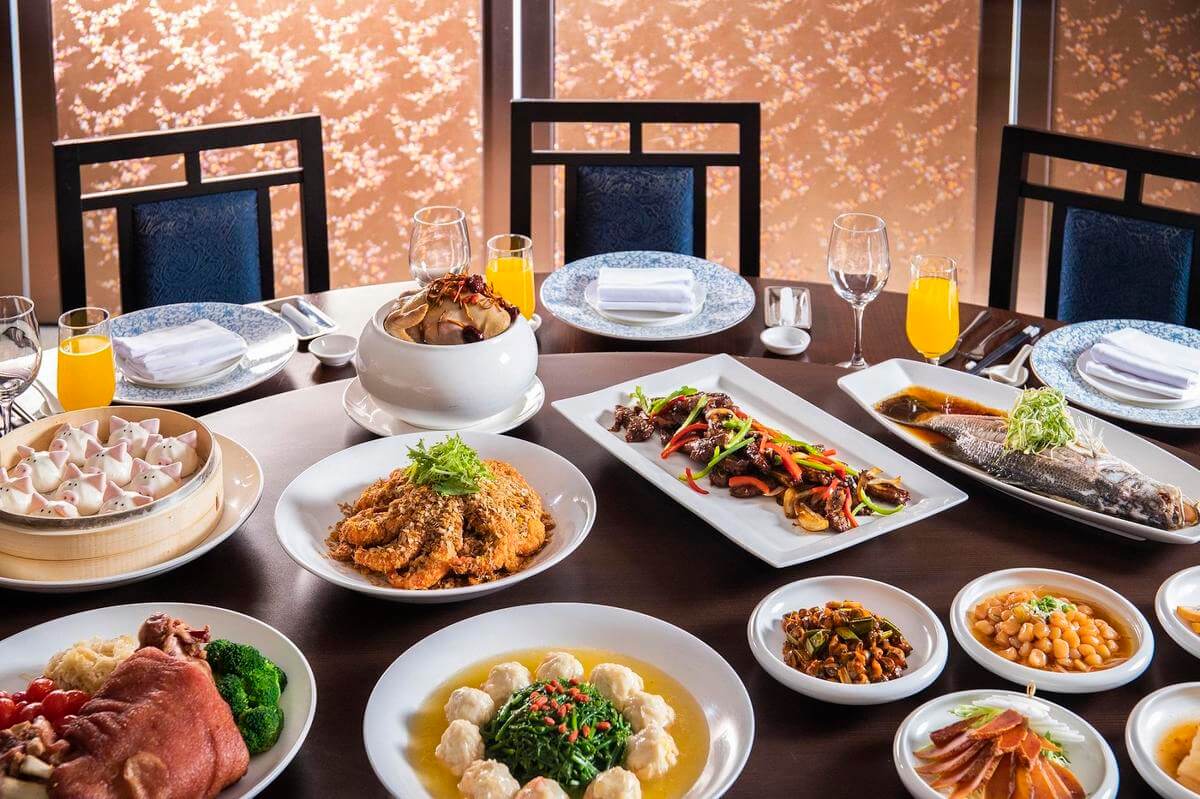
DO wait to be seated. In China, the host, the special guest, or the most senior (in age and position) should be seated first.
So if the most senior guests are not yet seated, you have to remain standing. It’s the same when eating.
You must wait until the seniors start eating before you do the same, even if your nose is twitching and your stomach grumbling from the delicious aromas of the good food on the table.
Sometimes, you’ll hear the most senior say “let’s eat” before you can begin.
2. Rice Bowl
DO hold the bowl of rice with your left hand, with the thumb resting near the mouth of the bowl and the other fingers supporting the side and bottom of the bowl, and not your palm.
DON’T bend over your bowl, it’s impolite. Moreover, bending over while eating will compress your stomach and restrict your digestion.
DO hold chopsticks in your right hand (unless you’re left-handed). In a shared meal, rice is served individually in small bowls, while the vegetable and meat dishes are placed on serving bowls or plates in the middle of the table.

Living in China as a Vegetarian or Vegan // Is It Possible?
Vegan or Vegetarian in China? Can a Vegan or Vegetarian survive in China? Here’s our top dishes for Vegans and Veggies and some great tips to help you.
3. Elegance
You might have seen several movies showing local restaurant scenes where diners talk loudly and slurp their food as quickly as possible. You might mistake this for showing a total lack of social rules when dining.
On the contrary, dining with Chinese people requires exhibition of proper table manners.
DO take food from the serving plates in front of you rather than from the middle of the table, or from plates that are far from you.
DON’T use your chopsticks to dig through the food. Usually serving plates are placed on a lazy Susan, so you just have to wait your turn. Always be considerate of others when dining in China.

DO use a side plate when removing inedible parts from ingredients, or bones from your mouth. You can use your chopsticks or your fingers.
DON’T use your tongue to wipe or remove food from around you mouth. Use napkins or tissues to wipe or remove food from your mouth instead.
DO respectfully accept food if an elder or the host adds rice to your bowl or places food on your plate. This means that they consider you a friend, so give thanks.
TIP💡 Living with a host family through LTL puts you at a real Chinese dinner table every evening. You’ll pick up these customs naturally, without overthinking it. Build your dream Gap Year and make dining in China part of your daily life.
4. Appreciation for Tea
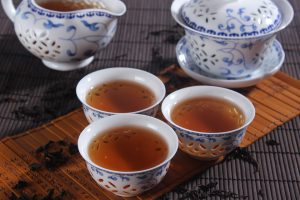
A serving of tea is part of Chinese dining. Here are a few words you’ll hear at the table:
- 茶 (chá) = tea
- 筷子 (kuàizi) = chopsticks
- 米饭 (mǐfàn) = rice
- 干杯 (gānbēi) = cheers (literally: dry cup)
- 好吃 (hǎochī) = delicious
Want to work on your tones before your first dinner in China? Practice your Chinese pronunciation with our free Pronunciation Trainer.
Tea is normally served as soon as you are seated, with a server pouring the tea for you.
Afterwards the teapot is left with you and you can serve yourself. Piece of cake!
DO show your appreciation for the server who’s pouring you tea by tapping your index and middle fingers two or three times on the table.
It’s also an indication that enough tea has been poured in your cup.
5. Chopsticks
When dining in China, it’s hard to avoid chopsticks!
DO put chopsticks on their holders when not in use. They are not to be waved around in the air, played with, or used to stab food.
DON’T stick your chopsticks vertically into a bowl of rice, this is deeply disrespectful and is associated with death. Instead, allow them to rest over the bowl.
TIP💡 The best way to really learn these customs is to live them. When you study with LTL in Beijing, Chengdu, or Shanghai, you’ll have dinners with local host families where these rules become second nature fast.
Find your perfect Chinese language program and start experiencing Chinese culture from the inside.
DO use a serving spoon or serving chopsticks to transfer food from the serving plate onto your own plate. If you’re not adept at using chopsticks, it is better to request a spoon and fork rather than risk dropping food onto the table.
DON’T use a table knife in Chinese restaurants as it’s considered a violent thing.
This is one of the reasons why Chinese dishes are very tender and ingredients are cut into small, bite-size pieces.
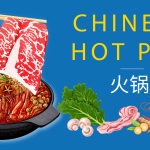
A Beginners Guide on How to Eat and Order Chinese Hot Pot
Chinese hot pot (火锅 huǒguō) literally means fire-pot. It’s history goes back over 1,000 years. It is one of the most traditional and popular meals in China.
6. Drinking etiquette
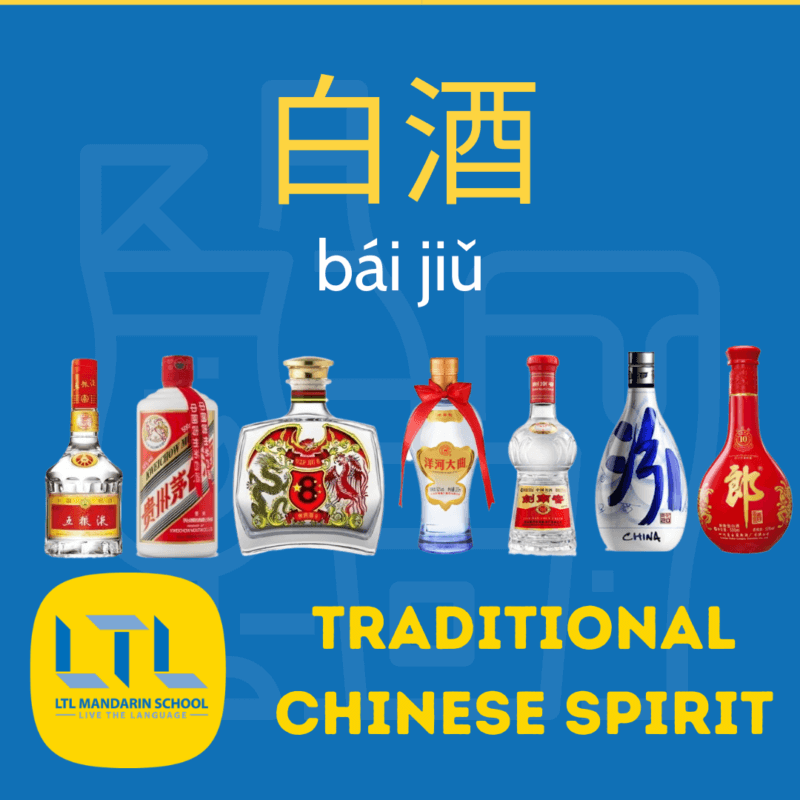
If you’ve living in or have lived in China, you’ve almost certainly heard of the infamous baijiu (白酒).
Whilst its name means ‘white alcohol’, it’s actually a colourless drink, that can have an alcohol level of up to 60%.
Whilst you might not remember too many of these rules after a shot of baijiu, it’s at least worth trying to learn some of them whilst you’re still sober!
So…
DO finish your drink if you hear 干杯 gānbēi! This is usually translated to ‘cheers’, but it literally means ‘dry glass’, so you’ll be expected to down your drink!
Top tip: if you don’t want to pile on the pressure, you could instead say 我干了,你随意 (wǒ gàn le, nǐ suí yì), which means I’ll finish my drink, you drink as much as you like.
DON’T raise your glass higher than the glass of someone considered more senior than you, like a friend’s parent or your manager, this is considered disrespectful. Always aim your glass lower than theirs, this shows your humility.
Sometimes you might even find yoursel in a competition to have the lowest glass!
DON’T refuse a toast. This could cause someone to ‘lose face’ and would be seen as very disrespectful! If you don’t want to drink alcohol, it’s much better to toast with tea than to not drink at all.
DON’T toast to everybody, this is the role of the host and (you guessed it) it would be disrespectful take this away from them.

7. Paying the Bill
Figuring out who’s paying for dinner in any culture can be a social minefield! But don’t worry, we’re here to break it down in China for you.
DO offer, even argue a little, to pay the bill. This will show you’re grateful for the experience. BUT, make sure that you…
DON’T insist too much. Your host will almost certainly want to pay the bill and you should graciously accept, otherwise you may risk causing the host to lose face as it may look as though you believe your host cannot afford to pay the bill.
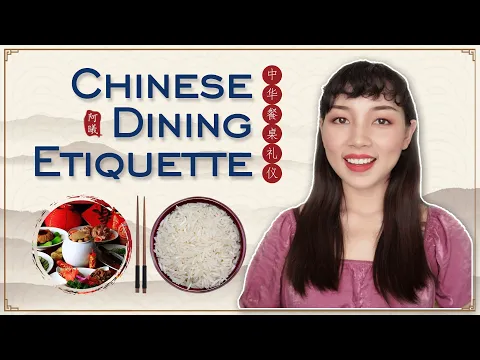
8. Chinese Food
Now we’ve come to the fun part, having a taste of authentic Chinese dishes!
China’s regions have different cooking styles, ingredients and specializations, which in itself is a pleasurable (and very filling) adventure.
Chinese dishes are already well seasoned, so no pepper or saltshakers are on the table. However, it is usual to find chilli paste, vinegar and soy sauce.
Here are some things to remember.
All vegetables are cooked. Vegetables are never just boiled in water in China. Bones in meat and fish are not removed.
Some of the ingredients used in Chinese cuisine are rarely seen in cuisines from the West, such as lotus pods, tree fungi, yams and winter melons. Chinese cooks often use dried or fresh spices, such as chillis, garlic, pepper, mint, spring onion and ginger.
In a nutshell:
DO be adventerous!
DON’T pass up an opporunity to try something new!
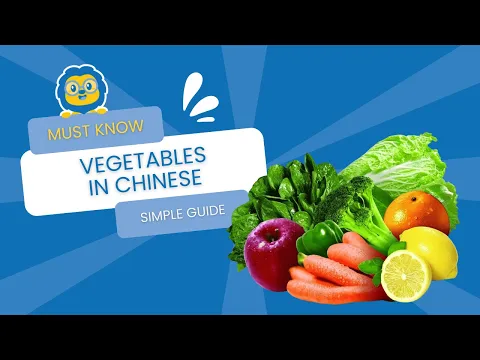
Dining in China || The Taste
Dining in China is so diverse!
Chinese food can be categorized based on the region where the cuisine originates. There are 8 famous ones in total which we’ve come to shortly.
The foods in Eastern China are predominantly light and sweet. Those from Central China have plenty of seasoning. They’re also quite spicy.
In the region of Western China where most are Chinese Muslims, you’ll find halal food, with lamb as the main ingredient.
In Northern China, the cuisine uses less vegetables and the cooking method is simple, although the food tends to be salty.
The 8 famous Chinese cuisines are:
- Shandong Cuisine 山东菜
- Sichuan Cuisine 四川菜
- Cantonese Cuisine 粤菜
- Fujian Cuisine 福建菜
- Anhui Cuisine 安徽菜
- Zhejiang Cuisine 浙江菜
- Jiangsu Cuisine 江苏菜
- Hunan Cuisine 湖南菜
Dining in China || Chinese Food by Region
Northern Chinese Cuisine
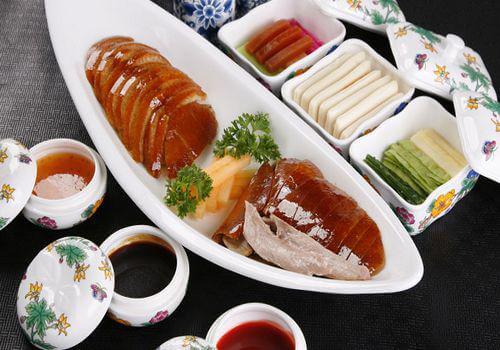
Northern China includes Inner Mongolia, Xi’an and Beijing.
Cuisine here is a bit salty and doesn’t have too many vegetables, with simpler cooking preparation.
Beijing, being the capital, inherited the tradition of royal cuisine from the imperial kitchens.
Most famous of course is the Peking Roast Duck.
Shandong on the other hand is known for its seafood dishes. Chefs in Shandong are very particular when preparing creamy soups and clear broths.
Eastern Chinese Cuisine
This region is popular for its fish and seafood with light and sweet flavours.
This is the region where Anhui, Jiangsu, Zhejiang, Fujian and Guangdong belong.
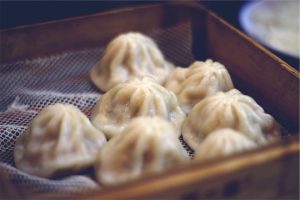
Most of you will be familiar with Cantonese cuisine, which has mild flavours, very fresh and natural ingredients and less spices.
Sweet sauces are part of Eastern Chinese cuisine. Cantonese cuisine is the most widely served type of Chinese cuisine worldwide.
The most popular is dim sum (steamed or fried dumplings).
Fujian cuisine meanwhile is known for its sweet and sour taste. Less salt is used on ingredients coming from the mountains and the sea.
The area is famous for its beautiful culinary art, broths and soups, and the fine slicing techniques used for food presentation.
The cuisine in Taiwan is very much like Fujian cuisine.
Anhui cuisine employs native style of cooking, using wild ingredients harvested from the mountains.
Chefs here are experts at controlling cooking time and moderating heat when cooking.
Jiangsu cuisine includes ingredients coming from its freshwater and saltwater sources. Their various cooking methods and delicate and precise carving techniques add more than just fresh and natural flavours to their dishes.
Western Chinese Cuisine
Western Chinese regions such as Gansu, Tibet and Xinjiang are known for their ethnic and halal food.
Tibetan cuisine is a mix of flavours and cooking styles borrowed for Sichuan, Indian and Nepalese cuisines.
Central Chinese Cuisine
This is the hottest and spiciest dishes in China are those served in Central China, particularly in Sichuan and the regions of Hunan and Chongqing.
Sichuan cuisine is known for its liberal use of chilli peppers, garlic and the unique spiciness of the local peppercorns.
The degree of numbing spiciness increases if you’re in Hunan, which is also known for its sour food, as pickles very popular here.
There are so many facets of China that are worth exploring, but one of the best ways to learn about its rich culture and language is through its food.
The West may only know about dim sum, chow mein, egg fried rice and Peking duck, but visit the country and you’ll discover an entirely different world, where almost everything is about food.

BONUS || Fancy seeing how Japanese table manners compares to Chinese? Check out our post.
Dining in China || FAQs
What are China’s 8 famous cuisines?
China’s 8 Great Cuisines – 八大菜系 ba da caixi
Shandong Cuisine 山东菜
Sichuan Cuisine 四川菜
Cantonese Cuisine 粤菜
Fujian Cuisine 福建菜
Anhui Cuisine 安徽菜
Zhejiang Cuisine 浙江菜
Jiangsu Cuisine 江苏菜
Hunan Cuisine 湖南菜
Do I have to use chopsticks in China?
In many restaurants yes, but every big brand or western restaurant will have both options. The more local you go, the less chance there is of seeing a knife and fork.
Is Chinese food spicy?
It really depends on the region.
Central China has the spiciest food but the food in southern regions like Guangdong and Hong Kong is generally much less spicy.
Is there western food in China?
Absolutely yes. In the bigger cities there are worldwide cuisines at your fingertips from French bakeries to Italian Pizza specialists and American Steakhouses.
Is food expensive in China?
This depends how local you go and where you are based.
Western brands in Beijing and Shanghai would be more expensive but generally you can eat out super cheap in China if you are willing to stick to Asian cuisine.
Why is dining china called china?
The term ‘china’ for fine dinnerware comes from the country of origin.
China was producing superior-quality porcelain long before the rest of the world knew how.
When European traders began importing it from the 16th century onward, they simply referred to the goods by where they came from.
The name became generic over time, just as other product-origin words did in English. So when someone says ‘the good china’, they mean the fine porcelain tableware that traces its craft roots back to Chinese kilns.
What is the best brand of china dinnerware?
That depends on your budget and style.
For luxury European heritage pieces, Bernardaud (French), Ginori 1735 (Italian), Herend (Hungarian), and Rosenthal (German) are consistently rated at the top.
For English bone china, Royal Crown Derby and Wedgwood are classics. For more accessible everyday fine china, Mikasa and Haviland offer excellent quality at a lower price point.
What brand of china is worth money?
Antique and discontinued patterns from Herend, Royal Crown Derby, and Meissen tend to hold the strongest resale value.
Complete sets in original condition, especially with provenance or prestigious past ownership, can fetch significant sums at auction. If you’re buying for investment, stick to established heritage manufacturers and avoid modern mass-market ranges.
What is the most sought-after china pattern?
Some of the most recognised and collected patterns include Royal Crown Derby’s Imari (in production since 1806), Herend’s Queen Victoria pattern, and Blue Willow, which has been produced by dozens of manufacturers since the 18th century.
Meissen’s Blue Onion pattern is another long-standing favourite with serious collectors.
Why don’t people use fine china anymore?
Lifestyle shifts are the main reason.
Fewer households have formal dining rooms, dishwashers can damage delicate glazes, and modern life is faster and more casual. Many people inherit fine china but never use it day-to-day.
That said, there’s a growing movement to actually use the good stuff rather than save it for occasions that never come.
What’s more expensive, china or porcelain?
The terms overlap, which causes confusion.
All fine china is porcelain, but not all porcelain is fine china. Bone china, which adds bone ash to the clay body, is generally the most expensive category because of the extra materials and the demanding firing process. Standard porcelain is typically less costly. Ultimately, brand, pattern, age, and craftsmanship matter far more than the category label.
Want more from LTL?
If you wish to hear more from LTL Mandarin School why not join our mailing list? We give plenty of handy information on learning Chinese, useful apps to learn the language and everything going on at our LTL schools!
Sign up below and become part of our ever-growing community!






1 comments
[…] you’ve been dining in a Chinese restaurant before you should be no stranger to people shouting “fú wù yuán” across the […]