
Chinese Radicals || The Complete 214 Radical List (FREE PDF, Poster and Quiz Included)
WANT YOUR FREE CHINESE RADICALS PDF DOWNLOAD – get it here
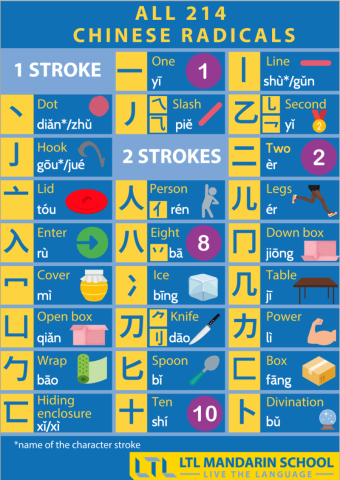
What are Chinese radicals? In Chinese, radicals are called 部首 (bùshǒu), literally ‘section headers’.
A radical is the root component used to classify a Chinese character in a dictionary.
There are 214 official Kangxi radicals, and recognising them is one of the fastest ways to decode unfamiliar characters.
Think of them as the building blocks that give you a foothold into the meaning, and sometimes the sound, of thousands of characters.
This is your complete guide to understanding how they work.
With the tones, and the characters, and the various dialects (or hua) that practically every place has, many people get the urge to simply give up.
A lot of people also say that there is no logic when learning Chinese. However, in reality, there is real structure, and understanding radicals in Chinese characters is exactly where that logic starts to click.
If your mother tongue is English or German and if you studied, for example, a Romance language, of course Chinese will seem difficult and often incomprehensible.
But you shouldn’t give up…
Instead, you should find different methods to learn the characters faster and better. Learning the Chinese radicals is one of them.
Start Here: Top 20 for Beginners
What They Won’t Always Tell You
Have They Changed and What’s Their Meaning?
Simplified vs. Traditional Variants
How to Actually Use Them (Study Tips)
FREE DOWNLOAD || FREE CHINESE RADICALS PDF
FREE DOWNLOAD || FREE CHINESE RADICALS POSTER
BONUS QUIZ || Radicals Quiz | How Many Do You Know?
Want to learn some more basics?
Check out our blog about the most frequently used Chinese measure words!
Chinese Radicals || A Brief History
Radicals didn’t appear overnight. The earliest Chinese characters were pictographs carved onto oracle bones (甲骨文, jiǎgǔwén) during the Shang Dynasty, around 1200 BCE. You could see a sun, a moon, a tree. Meaning was visual.
Fast-forward to around 100 AD. A Han Dynasty scholar named Xu Shen (許慎) compiled the first systematic Chinese dictionary: 说文解字 (Shuōwén Jiězì, ‘Explaining Simple and Analysing Compound Characters’).
He organised roughly 9,000 characters under 540 classifying components, the earliest radical system.
Then in 1716, the Kangxi Dictionary (康熙字典, Kāngxī Zìdiǎn), commissioned under the Qing Dynasty, refined that system down to 214 radicals. That number has stuck. The 214 Kangxi radicals remain the international standard today, used in dictionaries from Beijing to Taipei to Singapore.
💡 TIP: Next time you look up a character in Pleco, notice that the dictionary entry groups it under one of these 214 radicals. That’s Xu Shen’s logic, still working for you 1,900 years later.
Chinese Radicals || Start Here: The 20 Most Useful for Beginners
Before you work through all 214, here are 20 radicals that appear in characters you’ll encounter in your very first weeks of study. Recognising these will give you a foothold fast.
| Radical | Pinyin | Meaning | Appears in… |
|---|---|---|---|
| 人 亻 | rén | person | 你, 他, 休, 们 |
| 口 | kǒu | mouth | 吃, 喝, 叫, 说 |
| 水 氵 | shuǐ | water | 河, 海, 洗, 泳 |
| 女 | nǚ | woman | 妈, 她, 姐, 好 |
| 手 扌 | shǒu | hand | 打, 拿, 找, 把 |
| 木 | mù | tree/wood | 树, 桌, 椅, 林 |
| 日 | rì | sun/day | 时, 明, 晚, 早 |
| 月 | yuè | moon/month | 朋, 期, 明 |
| 心 忄 | xīn | heart | 想, 忘, 怕, 情 |
| 火 灬 | huǒ | fire | 烧, 热, 炒 |
| 土 | tǔ | earth | 地, 城, 坐 |
| 山 | shān | mountain | 岁, 岛, 峰 |
| 金 钅 | jīn | metal | 钱, 铁, 银 |
| 言 讠 | yán | speech | 说, 话, 请, 谢 |
| 目 | mù | eye | 看, 眼, 睡 |
| 足 ⻊ | zú | foot | 跑, 跳, 路 |
| 门 | mén | gate | 间, 问, 闹 |
| 草 艹 | cǎo | grass | 花, 茶, 草, 药 |
| 虫 | chóng | insect | 蛇, 蜂, 蚊 |
| 食 饣 | shí | eat | 饭, 饿, 饮 |
🤔 Notice how many characters you already recognise in the ‘Appears in’ column?
That’s the radical system working for you.
Chinese Radicals || The Full List
1 Stroke Radicals
| Radical Number | Chinese | Variants | English | Pinyin | Strokes |
|---|---|---|---|---|---|
| 1 | 一 | one | yī | 1 | |
| 2 | 丨 | line | shù*/gǔn | 1 | |
| 3 | 丶 | dot | diǎn*/zhǔ | 1 | |
| 4 | 丿 | 乀,⺄ | slash | piě | 1 |
| 5 | 乙 | 乚,乛 | second | yǐ | 1 |
| 6 | 亅 | hook | gōu*/jué | 1 |
2 Stroke Radicals
| Radical Number | Chinese | Variants | English | Pinyin | Strokes |
|---|---|---|---|---|---|
| 7 | 二 | two | èr | 2 | |
| 8 | 亠 | lid | tóu | 2 | |
| 9 | 人 | 亻 | person | rén | 2 |
| 10 | 儿 | legs | ér | 2 | |
| 11 | 入 | enter | rù | 2 | |
| 12 | 八 | 丷 | eight | bā | 2 |
| 13 | 冂 | down box | jiǒng | 2 | |
| 14 | 冖 | cover | mì | 2 | |
| 15 | 冫 | ice | bīng | 2 | |
| 16 | 几 | table | jī, jǐ | 2 | |
| 17 | 凵 | open box | qiǎn | 2 | |
| 18 | 刀 | ⺈,刂 | knife | dāo | 2 |
| 19 | 力 | power | lì | 2 | |
| 20 | 勹 | wrap | bāo | 2 | |
| 21 | 匕 | ladle | bǐ | 2 | |
| 22 | 匚 | right open box | fāng/xǐ | 2 | |
| 23 | 匸 | hiding enclosure | xǐ | 2 | |
| 24 | 十 | ten | shí | 2 | |
| 25 | 卜 | divination | bǔ | 2 | |
| 26 | 卩 | 㔾 | seal | jié | 2 |
| 27 | 厂 | cliff | hǎn | 2 | |
| 28 | 厶 | private | sī | 2 | |
| 29 | 又 | again | yòu | 2 |
3 Stroke Radicals
| Radical Number | Chinese | Variants | English | Pinyin | Strokes |
|---|---|---|---|---|---|
| 30 | 口 | mouth | kǒu | 3 | |
| 31 | 囗 | enclosure | wéi | 3 | |
| 32 | 土 | earth | tǔ | 3 | |
| 33 | 士 | scholar | shì | 3 | |
| 34 | 夂 | go | zhī | 3 | |
| 35 | 夊 | go slowly | suī | 3 | |
| 36 | 夕 | night | xī | 3 | |
| 37 | 大 | big | dà | 3 | |
| 38 | 女 | woman | nǚ | 3 | |
| 39 | 子 | child | zǐ | 3 | |
| 40 | 宀 | roof | mián | 3 | |
| 41 | 寸 | inch | cùn | 3 | |
| 42 | 小 | ⺍,⺌ | small | xiǎo | 3 |
| 43 | 尢 | lame | yóu | 3 | |
| 44 | 尸 | corpse | shī | 3 | |
| 45 | 屮 | sprout | chè | 3 | |
| 46 | 山 | mountain | shān | 3 | |
| 47 | 巛 | 川 | river | chuān | 3 |
| 48 | 工 | work | gōng | 3 | |
| 49 | 己 | oneself | jǐ | 3 | |
| 50 | 巾 | towel | jīn | 3 | |
| 51 | 干 | dry | gān | 3 | |
| 52 | 幺 | 么 | thread | yāo | 3 |
| 53 | 广 | shelter | guǎng | 3 | |
| 54 | 廴 | stride | yǐn | 3 | |
| 55 | 廾 | hands joined | gǒng | 3 | |
| 56 | 弋 | shoot with a bow | yì | 3 | |
| 57 | 弓 | bow | gōng | 3 | |
| 58 | 彐 | 彑 | snout | jì | 3 |
| 59 | 彡 | hair | shān | 3 | |
| 60 | 彳 | step | chì | 3 |
4 Stroke Radicals
| Radical Number | Chinese | Variants | English | Pinyin | Strokes |
|---|---|---|---|---|---|
| 61 | 心 | 忄,⺗ | heart | xīn | 4 |
| 62 | 戈 | spear | gē | 4 | |
| 63 | 戶 | 户,戸 | door | hù | 4 |
| 64 | 手 | 扌,龵 | hand | shǒu | 4 |
| 65 | 支 | branch | zhī | 4 | |
| 66 | 攴 | 攵 | tap | pū | 4 |
| 67 | 文 | script | wén | 4 | |
| 68 | 斗 | struggle | dǒu | 4 | |
| 69 | 斤 | axe | jīn | 4 | |
| 70 | 方 | square | fāng | 4 | |
| 71 | 无 | 旡 | not | wú | 4 |
| 72 | 日 | sun | rì | 4 | |
| 73 | 曰 | say | yuē | 4 | |
| 74 | 月 | moon | yuè | 4 | |
| 75 | 木 | tree | mù | 4 | |
| 76 | 欠 | lack | qiàn | 4 | |
| 77 | 止 | stop | zhǐ | 4 | |
| 78 | 歹 | 歺 | death | dǎi | 4 |
| 79 | 殳 | weapon | shū | 4 | |
| 80 | 毋 | 母 | mother, do not | mǔ/wú | 4 |
| 81 | 比 | compare | bǐ | 4 | |
| 82 | 毛 | fur | máo | 4 | |
| 83 | 氏 | clan | shì | 4 | |
| 84 | 气 | steam | qì | 4 | |
| 85 | 水 | 氵,氺 | water | shuǐ | 4 |
| 86 | 火 | 灬 | fire | huǒ | 4 |
| 87 | 爪 | 爫 | claw | zhǎo | 4 |
| 88 | 父 | father | fù | 4 | |
| 89 | 爻 | lines on a trigram | yáo | 4 | |
| 90 | 爿 | 丬 | half of a tree trunk | qiáng | 4 |
| 91 | 片 | slice | piàn | 4 | |
| 92 | 牙 | tooth | yá | 4 | |
| 93 | 牛 | 牜,⺧ | cow | niú | 4 |
| 94 | 犬 | 犭 | dog | quǎn | 4 |
5 Stroke Radicals
| Radical Number | Chinese | Variants | English | Pinyin | Strokes |
|---|---|---|---|---|---|
| 95 | 玄 | profound | xuán | 5 | |
| 96 | 玉 | 王,玊 | jade | yù | 5 |
| 97 | 瓜 | melon | guā | 5 | |
| 98 | 瓦 | tile | wǎ | 5 | |
| 99 | 甘 | sweet | gān | 5 | |
| 100 | 生 | life | shēng | 5 | |
| 101 | 用 | use | yòng | 5 | |
| 102 | 田 | field | tián | 5 | |
| 103 | 疋 | ⺪ | cloth | pǐ | 5 |
| 104 | 疒 | ill | bìng | 5 | |
| 105 | 癶 | foot steps | bō | 5 | |
| 106 | 白 | white | bái | 5 | |
| 107 | 皮 | skin | pí | 5 | |
| 108 | 皿 | dish | mǐn | 5 | |
| 109 | 目 | ⺫ | eye | mù | 5 |
| 110 | 矛 | spear | máo | 5 | |
| 111 | 矢 | arrow | shǐ | 5 | |
| 112 | 石 | stone | shí | 5 | |
| 113 | 示 | 礻 | spirit | shì | 5 |
| 114 | 禸 | ⽱ | track | róu | 5 |
| 115 | 禾 | grain | hé | 5 | |
| 116 | 穴 | cave | xuè | 5 | |
| 117 | 立 | stand | lì | 5 |
6 Stroke Radicals
| Radical Number | Chinese | Variants | English | Pinyin | Strokes |
|---|---|---|---|---|---|
| 118 | 竹 | ⺮ | bamboo | zhú | 6 |
| 119 | 米 | rice | mǐ | 6 | |
| 120 | 糸 | 糹,纟 | silk | sī | 6 |
| 121 | 缶 | jar | fǒu | 6 | |
| 122 | 网 | 罓,⺳,⺫ | net | wǎng | 6 |
| 123 | 羊 | ⺶,⺷ | sheep | yáng | 6 |
| 124 | 羽 | feather | yǔ | 6 | |
| 125 | 老 | 耂 | old | lǎo | 6 |
| 126 | 而 | and | ér | 6 | |
| 127 | 耒 | plow | lěi | 6 | |
| 128 | 耳 | ear | ěr | 6 | |
| 129 | 聿 | ⺺,⺻ | brush | yù | 6 |
| 130 | 肉 | ⺼ | meat | ròu | 6 |
| 131 | 臣 | minister | chén | 6 | |
| 132 | 自 | oneself | zì | 6 | |
| 133 | 至 | arrive | zhì | 6 | |
| 134 | 臼 | mortar | jiù | 6 | |
| 135 | 舌 | tongue | shé | 6 | |
| 136 | 舛 | contrary | chuǎn | 6 | |
| 137 | 舟 | boat | zhōu | 6 | |
| 138 | 艮 | mountain | gèn | 6 | |
| 139 | 色 | color | sè | 6 | |
| 140 | 艸 | ⺿,艹 | grass | cǎo | 6 |
| 141 | 虍 | tiger | hǔ | 6 | |
| 142 | 虫 | insect | chóng | 6 | |
| 143 | 血 | blood | xuě | 6 | |
| 144 | 行 | walk | xíng | 6 | |
| 145 | 衣 | ⻂ | clothes | yī | 6 |
| 146 | 襾 | 西,覀 | west | yà/xī | 6 |
7 Stroke Radicals
| Radical Number | Chinese | Variants | English | Pinyin | Strokes |
|---|---|---|---|---|---|
| 147 | 見 | 见 | see | jiàn | 7 |
| 148 | 角 | ⻇ | horn | jiǎo | 7 |
| 149 | 言 | 讠 | speech | yán | 7 |
| 150 | 谷 | valley | gǔ | 7 | |
| 151 | 豆 | bean | dòu | 7 | |
| 152 | 豕 | pig | shǐ | 7 | |
| 153 | 豸 | badger | zhì | 7 | |
| 154 | 貝 | 贝 | shell | bèi | 7 |
| 155 | 赤 | red | chì | 7 | |
| 156 | 走 | walk | zǒu | 7 | |
| 157 | 足 | ⻊ | foot | zú | 7 |
| 158 | 身 | body | shēn | 7 | |
| 159 | ⾞ | 车 | cart | chē | 7 |
| 160 | 辛 | bitter | xīn | 7 | |
| 161 | 辰 | morning | chén | 7 | |
| 162 | 辵 | 辶,⻍,⻎ | walk | chuò | 7 |
| 163 | 邑 | ⻏ | city | yì | 7 |
| 164 | 酉 | wine | yǒu | 7 | |
| 165 | 釆 | distinguish | biàn | 7 | |
| 166 | 里 | village | lǐ | 7 |
8 Stroke Radicals
| Radical Number | Chinese | Variants | English | Pinyin | Strokes |
|---|---|---|---|---|---|
| 167 | 金 | 钅,釒 | metal | jīn | 8 |
| 168 | 長 | 镸,长 | long | cháng | 8 |
| 169 | 門 | 门 | gate | mén | 8 |
| 170 | 阜 | ⻏ | mound | fù | 8 |
| 171 | 隶 | slave | lì | 8 | |
| 172 | 隹 | short-tailed bird | zhuī | 8 | |
| 173 | 雨 | ⻗ | rain | yǔ | 8 |
| 174 | 靑 | 青 | blue | qīng | 8 |
| 175 | 非 | wrong | fēi | 8 |
9 Stroke Radicals
| Radical Number | Chinese | Variants | English | Pinyin | Strokes |
|---|---|---|---|---|---|
| 176 | 面 | 靣 | face | miàn | 9 |
| 177 | 革 | leather | gé | 9 | |
| 178 | 韋 | 韦 | soft leather | wěi | 9 |
| 179 | 韭 | leek | jiǔ | 9 | |
| 180 | 音 | sound | yīn | 9 | |
| 181 | 頁 | 页 | page | yè | 9 |
| 182 | 風 | 风 | wind | fēng | 9 |
| 183 | 飛 | 飞 | fly | fēi | 9 |
| 184 | 食 | 飠,饣 | eat | shí | 9 |
| 185 | 首 | head | shǒu | 9 | |
| 186 | 香 | fragrant | xiāng | 9 |
10 Stroke Radicals
| Radical Number | Chinese | Variants | English | Pinyin | Strokes |
|---|---|---|---|---|---|
| 187 | 馬 | 马 | horse | mǎ | 10 |
| 188 | 骨 | bone | gǔ | 10 | |
| 189 | 高 | 髙 | high | gāo | 10 |
| 190 | 髟 | long hair | biāo | 10 | |
| 191 | 鬥 | 斗 | fight | dòu | 10 |
| 192 | 鬯 | sacrificial wine | chàng | 10 | |
| 193 | 鬲 | cauldron | lì | 10 | |
| 194 | 鬼 | ghost | guǐ | 10 |
11 Stroke Radicals
| Radical Number | Chinese | Variants | English | Pinyin | Strokes |
|---|---|---|---|---|---|
| 195 | 魚 | 鱼 | fish | yú | 11 |
| 196 | 鳥 | 鸟 | bird | niǎo | 11 |
| 197 | 鹵 | 卤 | salty | lǔ | 11 |
| 198 | 鹿 | deer | lù | 11 | |
| 199 | 麥 | 麦 | wheat | mài | 11 |
| 200 | 麻 | hemp | má | 11 | |
| 201 | 黄 | yellow | huáng | 11 |
12 Stroke Radicals
| Radical Number | Chinese | Variants | English | Pinyin | Strokes |
|---|---|---|---|---|---|
| 202 | 黍 | millet | shǔ | 12 | |
| 203 | 黑 | black | hēi | 12 | |
| 204 | 黹 | embroidery | zhǐ | 12 | |
| 205 | 黽 | 黾 | frog | mǐn | 12 |
| 206 | 鼎 | tripod | dǐng | 12 |
13–17 Stroke Radicals
| Radical Number | Chinese | Variants | English | Pinyin | Strokes |
|---|---|---|---|---|---|
| 207 | 鼓 | drum | gǔ | 13 | |
| 208 | 鼠 | rat | shǔ | 13 | |
| 209 | 鼻 | nose | bí | 14 | |
| 210 | 齊 | 斉,齐 | even | qí | 14 |
| 211 | 齒 | 齿 | tooth | chǐ | 15 |
| 212 | 龍 | 龙 | dragon | lóng | 16 |
| 213 | 龜 | 龟 | turtle | guī | 16 |
| 214 | 龠 | flute | yuè | 17 |
Chinese Radicals || What’s All The Fuss?

What’s so radical about this method?
Take 刀, the knife/sword radical. By understanding the meaning of this radical we can guess what the character might be related to…!
Studying radicals enables you to do this and it also makes it possible for you to look up a character in the dictionary.
I know, I know, who uses paper dictionaries anymore? Good skill to have though!
Think about it!
Learning Chinese radicals will also allow you to group characters with similar components according to their semantic (meaning) or phonetic (pronunciation) characteristics.
Imagine radicals as building blocks in the larger scheme of the Chinese language.
They can help you learn characters easier and faster, and, eventually, you will be able to use them to swiftly memorise new words by knowing how different characters are combined.
During the Ming Dynasty, Mei Ying Zuo developed the radical and stroke method which was published in the first Lexicon (zì huì).

What does this mean?
Well, that characters in the dictionary are actually listed by radical and then ordered by the number of strokes.
Stroke order is also very important in Chinese.
Have you ever noticed that, when you write a character in Pleco, the app sometimes doesn’t recognise it?
This is because your stroke order is wrong! But that’s a different topic.
Similar Chinese Characters 🤷🏽♀️ The Ones You Must Know (Plus FREE Quiz)
How many Chinese characters? Too many! In this guide we cover the ones that foreigners often get confused.
Chinese Radicals || Sound Clues, Not Just Meaning
Here’s something that surprises a lot of beginners: radicals don’t only hint at meaning. Many Chinese characters are phono-semantic compounds (形声字, xíngshēngzì), roughly 80–90% of all characters fall into this category.
That means one component (often the radical) signals the semantic field (meaning area), and another component signals the approximate sound.
For example:
- 清 (qīng, clear), 情 (qíng, emotion), 请 (qǐng, please), 晴 (qíng, sunny), all share the phonetic component 青 (qīng). Notice the similar sounds!
- The radical changes to indicate the semantic field: 氵(water) for 清, 忄(heart) for 情, 讠(speech) for 请, 日 (sun) for 晴.
💡 TIP: This is genuinely useful. When you encounter a new character, look at the phonetic component. It may give you a rough guide to pronunciation even before you check a dictionary. It won’t always be exact (tones and initials can drift over centuries), but it’s a real shortcut.
Chinese Radicals || Where Do They Belong?
DEFINITION – So, a radical or key 部首 , bùshǒu is a graphic component of a Chinese character.
This means that every character contains a radical. Some radicals can in fact also be characters, like the word for mouth 口 , kǒu, and they are used in the formation of other characters.
So, you should rather think of radicals as components of a character.
How many radicals are there in the Chinese language?
There are 214 radicals in the Chinese language and they can appear just about anywhere in a character.
For example, in the character 好, the radical 女 (nǚ, meaning female, woman) is on the left side of the character and in the character 闯 (chuăng; to rush, to break through) the radical 门 (mén, door) is outside.
FUN WAY TO LEARN – So let’s look at the 闯 character more closely: you will see that it shows a horse (马, mă) breaking through the door.
Hence the meaning “to break through”. Makes sense, right?
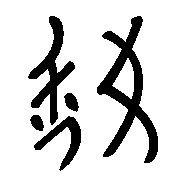
Let’s see another example. The verb 取 (qǔ, to take) consists of the components for hand 又 and an ear 耳, meaning a hand that is taking an ear.
Ear removal was a common way of counting casualties after a battle, so the character’s meaning makes sense, in a gross kind of way.

It won’t always be possible to apply this method (of making sense of a character) when learning them though.
Why?
Mainly because some of them changed drastically from pictograms, they lost their original meaning or their etymology is connected to something you simply don’t understand.
Maybe the character changed significantly during its simplification. However, this method will definitely help you a lot to make connections between various components and characters.
Chinese Radicals || Radicals vs. Components
Here’s a distinction that trips up a lot of learners, so let’s clear it up now.
A Chinese character can be made up of multiple components (部件, bùjiàn), visual building blocks. But only one of those components is designated the radical (部首, bùshǒu), the one used to classify the character in a dictionary.
Take 清 (qīng, ‘clear/clean’): it has two components, 氵(the water radical, 3 strokes) and 青 (qīng, meaning ‘blue/green’). The water radical 氵is the radical used for dictionary lookup. 青 is a component, but not the radical here.
🤔 Why does this matter? Because when you’re looking up a character you don’t know, you need to identify the radical specifically, not just any component, to find it in a dictionary. With practice, this becomes second nature.
Chinese Radicals || What They Won’t Always Tell You
Radicals are genuinely helpful, but let’s be honest about their limits.
Meaning isn’t always obvious. The radical for ‘knife’ (刀/刂) appears in 分 (fēn, divide), 别 (bié, separate) and 到 (dào, arrive). The knife connection makes sense in some cases, but it won’t always give you an instant meaning.
Sound clues can be approximate or misleading. Phonetic components reflected ancient Chinese pronunciation. Over thousands of years, sounds shifted. So 青 (qīng) gives you qīng/qíng/qǐng today, but other characters with 青 may have drifted further.
Simplified characters changed some radicals. When simplified characters were introduced, some radicals were merged or altered. 言 (yán, speech) became 讠in simplified characters. 金 (jīn, metal) became 钅. The radical system still works, but you’ll find differences depending on whether you’re studying simplified or traditional characters (more on that below).
None of this means radicals aren’t worth learning. They are. Just go in with realistic expectations, they’re a powerful heuristic, not a perfect decoder.
How have Chinese Radicals changed and what is their meaning?
The radicals are also distorted and changed when they are combined in characters. These are called the variants of the radical.

So, let’s see what some of the most common Chinese radicals are and how they change:
- 人 “man” → 亻 on the left (used in 你 – you and 他– he)
- 心 “heart” (used in the meaning of feeling, mental activities) → 忄on the left (used in 情 – emotion and 忙 – busy)
- 手 “hand” → 扌on the left (used in 推 – push and 拉 – pull)
- 水 “water” → 氵 on the left (used in 河 – river and 海 – ocean)
- 行 “going” (literally ‘left step’) → stays unchanged on the left (used in 行 – to walk and 往 – towards, bound to)
You can also group Chinese Radicals by their phonetic component or by their meaning, for example, characters can be connected to nature (such as 土, meaning Earth, 日 meaning Sun or月 meaning Moon), people (the previously mentioned 女, 手 or 心 / 忄) or maybe animals (马 meaning horse, 虫 meaning insect or犭meaning animal).
Chinese Radicals || Simplified vs. Traditional Variants
You’ll notice the table above has a ‘Variants’ column. Many of those variants reflect the split between simplified Chinese (used in mainland cities like Beijing, Shanghai, Chengdu) and traditional Chinese (used in Taipei and Kaohsiung, as well as Hong Kong and Singapore’s older texts).
When the simplified character reform was introduced in the mid-20th century, some radicals were streamlined significantly:
| Traditional Radical | Simplified Variant | Meaning |
|---|---|---|
| 言 (yán) | 讠 | speech |
| 金 (jīn) | 钅 | metal |
| 食 (shí) | 饣 | eat |
| 門 (mén) | 门 | gate |
DID YOU KNOW || At LTL’s Beijing and Shanghai schools, lessons use simplified characters and their corresponding radical forms. At our Taipei and Kaohsiung schools, teachers work in traditional characters.
If you’re studying in Beijing or Shanghai, you’ll primarily work with simplified radicals. If you’re in Taipei or Kaohsiung, traditional forms are the standard. Both systems use the same underlying 214 Kangxi classification logic, the shapes just differ.
💡 TIP: If you plan to be functionally literate across both systems (useful for business professionals working across the region), learn the simplified form first, then map the traditional equivalents. It’s much easier that direction than the reverse.
Chinese Radicals || How to Actually Use Them (Study Tips)
Knowing the 214 radicals is one thing. Using them actively to accelerate your learning is another. Here’s how we’d recommend approaching it:
1. Learn radicals before characters, not alongside them.
Spend your first week deliberately memorising the 20 high-frequency radicals above. Then, when a new character comes up, your brain already has a hook.
2. Use Pleco’s radical search every time you look up a character.
Don’t just copy-paste or use handwriting input. Identify the radical, count its strokes, and look it up that way at least once. This builds a mental filing system.
3. Group new characters by radical in your flashcard decks.
In Skritter or Pleco, tag characters by radical. Reviewing 水-family characters (河, 海, 泳, 洗) together reinforces the semantic connection.
4. When you see a character you don’t know, do a quick 3-step check:
- What is the radical? (semantic field)
- What is the phonetic component? (approximate sound)
- What does the combination suggest?
This won’t give you the answer every time, but it trains your pattern recognition fast.
5. Take classes where your teacher actively uses radicals.
At LTL, our teachers in Beijing, Shanghai, Taipei and online via Flexi Classes integrate radicals into character lessons from day one. When a teacher points out the connection in real time, in context, in a sentence, it sticks far better than self-study alone.
💡 TIP: Try our HSK vocabulary quizzes, many HSK characters become much easier once you can spot their radicals.
Ready to put radicals into practice with a real teacher?
Reading about radicals is one thing, using them in a live class conversation is where they really stick. At LTL, our native-speaker teachers integrate characters and radicals into every lesson, whether you’re studying in Beijing, Shanghai, Taipei, or online.
👉 Find your perfect Mandarin program
👉 Start your 7-Day Free Trial on Flexi Classes
LTL students achieve a 98% HSK pass rate. We’re accredited by IALC, the Swedish CSN, and the German Ministry of Education, and recognised by Michigan State University among others. Learn more about LTL.
Chinese Radicals || Learning Them in Real Life
One thing our students consistently tell us, whether they’re studying in Beijing, Shanghai, Chengdu, or Taipei, is that radicals stop being abstract the moment you’re surrounded by them.
You walk out of class and there’s a restaurant sign, a metro station, a shop front. You spot 水 (water) on a drinks menu. You see 木 (wood) on a furniture shop. The city becomes your textbook.
That’s exactly why immersive study accelerates character learning in a way that classroom-only study rarely matches. When you’re living and breathing the language, radicals go from memorised facts to genuine pattern recognition, usually within a few weeks.
So there you go. I hope we managed to persuade you to have some fun while studying Chinese.
Because that’s what it is all about!
Feeling ready to tackle a quiz on the Chinese Radicals? Check it out below!
Chinese Radicals || FREE PDF
Two amazing downloads for you here!
First we’ve got our beautifully designed Radicals PDF which you can save to your computer and also print out if you wish.
A great way to get familiar with the radicals of Chinese.


So clearly you enjoy learning Chinese but ever been curious about Korean and Japanese as well? If you check these out:
- Japanese vs Korean vs Mandarin – Find out which is really the hardest and how they relate (if at all). This is a fascinating read.
- The Korean Alphabet – Unlike Mandarin Korean does have an alphabet and it’s actually really easy to learn. Find out how.
Chinese Radicals || FREE Quiz
Want to put your knowledge of Chinese radicals and their variants to the test?
Then have a go at our Free Radical Quiz!!
It’s multiple choice so it’s worth a try even if you’re not sure. You’ll also be able to see which ones you got right and wrong.
Why not let us know your score below?

Chinese Radicals || Key Takeaways
Here’s what to hold onto from this guide:
- Chinese radicals are called 部首 (bùshǒu), the root component used to classify characters in dictionaries.
- There are 214 official Kangxi radicals, standardised in 1716 and still in use today.
- Radicals hint at meaning, but they’re not the whole character. One character has many components; only one is the radical.
- Many characters are phono-semantic compounds, one component (often the radical) signals meaning, another signals sound.
- Radicals are not perfect decoders. They’re a powerful heuristic, not a guaranteed translation.
- Simplified and traditional Chinese use the same 214-radical system, but some radical shapes differ between the two.
- The fastest way to use radicals: learn the top 20 first, then expand your vocabulary in radical families.
- Consistent study, especially with a teacher who actively uses radicals in class, beats memorisation-only approaches every time.
Chinese Radicals || FAQs
What is a Chinese Radical?
DEFINITION – A Chinese radical or key (部首, bùshǒu) is a graphic component of a Chinese character.
Does every single character contain a Chinese Radical?
Yes. Some radicals can in fact also be characters, like the word for mouth (口, kǒu),
How many Chinese Radicals are there in total?
There are 214 radicals in the Chinese language and they can appear just about anywhere in a character.
Where do Radicals normally appear in a character?
Anywhere!
In the character 好, the radical 女 (nǚ, meaning female, woman) is on the left side of the character.
However, in the character 闯 (chuăng; to rush, to break through) the radical 门 (mén, door) is outside.
Want more from LTL?
If you wish to hear more from LTL Language School why not join our mailing list? We give plenty of handy information on learning Chinese, useful apps to learn the language and everything going on at our LTL schools!
Sign up below and become part of our ever-growing community!
⭐ Download our free ebook, your starter pack of essential Mandarin learning resources!
BONUS || Want to study Chinese with us in China? Why not check out our group and individual classes here






35 comments
[…] we talked about the Chinese language, it’s alphabet and how to use radicals and combining characters when studying this […]
Hi, Matea. IMHO, 取 (qǔ, to take) consists of the components for again 又 and an ear 耳, meaning an ear again. Sincerely, Lubo
Thanks for your comments Lubomir, interesting angle!
What’s the radical of 娶?
It's the 女 character CJ.
This is a really interesting character actually because 娶 means to marry (a woman). The character at the top means to take, the radical underneath means woman.
Therefore when you break this character down it means "to take a woman" - doesn't get anymore logical than that!
Hope this helps.
[…] follow a similar pattern in the sense they both look the same on the right hand side but have a different radical on the […]
[…] Chinese characters are made up of one, two, or several radicals. […]
[…] the meantime, you can check out our posts on Chinese radicals, language learning tips or 100 most common Chinese […]
[…] Chinese Radicals: An Introduction […]
Wow this blog was so useful, hopefully it will help me remember characters better now I understand the radicals!
Thanks Stephanie! Yes, learning all the characters can be so hard, really hope that this helps you on your learning journey.
LTL
This is slightly different than other tables
Wikipedia for example - https://bit.ly/3r244ka
2 丨 line shù is gǔn in multiple other sources. 3 丶 dot diǎn is zhǔ in multiple other sources. 6 亅 hook gōu is jué in multiple other sources.
Haven't checked all the other ones but within the first 10 words. I found some differences.
Hi Martin,
Yes, you are right there is different pinyin for some of the radicals. This is because some are the pinyin for the dictionary radical name and some are the pinyin for what the stroke is called. For example with丨the radical is gǔn and shù is the name of a stroke. Gǔn as a dictionary radical and is a homograph of the character stroke shù, which just means vertical (line). Thank you for pointing this out, to help other learners such as yourself we will update the blog to include both of the pinyin.
Thanks,
LTL
The articles is very informative. Thanks a lot. I especially love the radicals graphics, so pretty and useful.
Karol
Hi Karol,
Thanks, we do try our best to make useful graphics for students to use, really appreciate your feedback.
The LTL Team
Love this content, thanks LTL
Thanks for your kind words Sam!
In fact there is less than 214 because in PRC some 15 (rare or complicated, or both) have been left over Remain "only" 201 Hei I'm wrong in math of those 201 two were not part of the 214 of the Kangxi Zidian: 业 yé and 龺zhuó. 214 - 15 = 199 199 + 2 = 201
[…] may prefer to use the radical input method, if you are unsure about how to spell the pinyin of the […]
[…] give plenty of handy information on learning Chinese, useful apps to learn the language and everything going on at our LTL […]
The poster is 💙
Thanks Steph, really appreciate it!
I used the poster to write the 214 radicals on my study whiteboard about a month ago. I got 24/30 for the quiz, so that's a good start.
That's an excellent effort Kelly, very well done.
Score 28 Mistakes 2 Time 2:35 I will work harderrrrrr. I don't believe I can't memorize these freaking radicals. They said it will only take 6000 for foreigners to memorize them to be fluent but thinking about memorizing 2000+ of them makes my head bleed. 😭 I hope it won't take me forever. I mean the Chinese themselves took them a decade to study and I just started like months ago and I'm still stuck with the radicals 😭😭😭💔
Angel that's a great score. You will absolutely get there!
Come and take a couple of Flexi Classes (https://flexiclasses.com/3-free-hours/) and we'll get you on the road to glory!
Hi, how are you doing? You shouldn't start learning/memorizin radicals to study Chinese. I don't know them all, but I can read Chinese without them.
[…] Chinese Radicals […]
[…] Chinese language has a way of describing things that sound very poetic in most western languages. And that caused […]
28 correct, 2 incorrect. Not bad for a beginner!
Well done!!
does it really help to know all the kangxi radical though? I have already memorize them all but I don't think it help much, maybe only 5% boost to my undersanding of chinese character. like, 不 你 他, where do they belong in the kangxi radical?
Wow, I never knew there were so many Chinese Radicals! Thank you for creating such a comprehensive resource with video, PDF, and quiz. This will definitely help me improve my Chinese language skills.
You're most welcone 🙂
correct 30 (100%)