
Learn How to Say 48 Different Fruits in Mandarin Chinese

Want to learn all the different kinds of fruit in Chinese? Then you’ve come to the right place.
Fruit in Chinese is 水果 (shuǐguǒ), which literally means “water fruit”. Most fruit names are short words you can drop straight into a sentence, such as 苹果 (píngguǒ) for apple, 香蕉 (xiāngjiāo) for banana and 芒果 (mángguǒ) for mango. This guide covers 48 fruits with Hanzi, pinyin and audio, plus the measure words and market phrases you need to buy fruit in China.
Time to get fruity!
What better way to get started than to fill up the shopping basket with some fruit and vegetables?
When you’re done learning fruit in Chinese, fill the rest of your basket with all your veggies in Chinese!
First things first, fruit in Chinese is 水果 shuǐguǒ.
The word 水果 is built from 水 (shuǐ, water) and 果 (guǒ, fruit on a tree), so it literally means “water fruit”, a handy reminder of how juicy fresh fruit is.
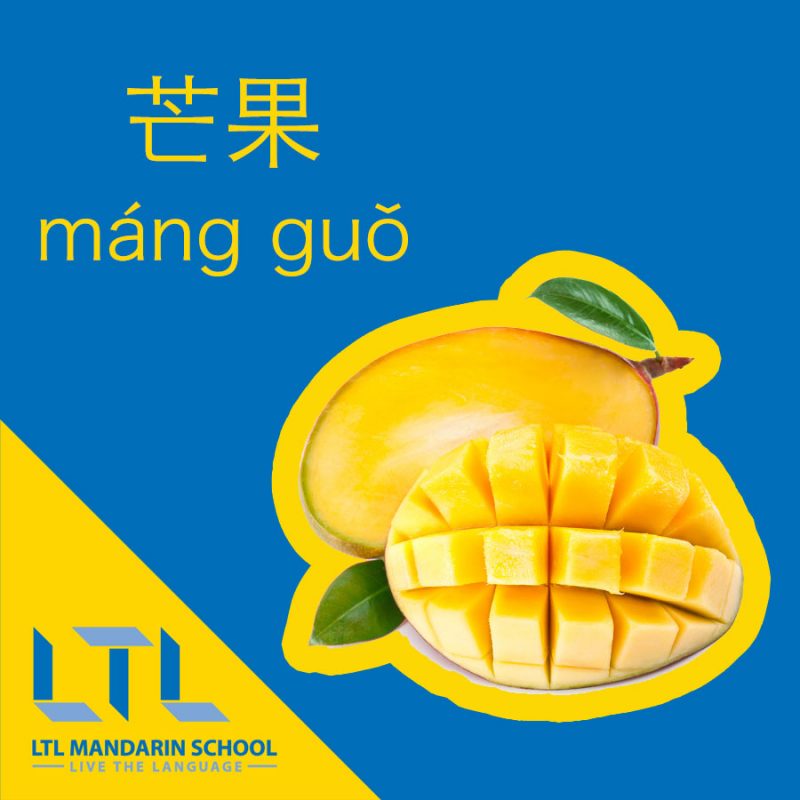
Here’s your first fruit sentence: 我喜欢吃水果 (wǒ xǐhuan chī shuǐguǒ), “I like eating fruit.” Swap 水果 for any fruit below, like 我喜欢吃芒果 (wǒ xǐhuan chī mángguǒ, “I like eating mango”), and you’ve built a brand new sentence 💡
Fruits in Chinese || Most Common
Fruits in Chinese || Long List
Fruits in Chinese || Strange Chinese Fruits
Fruits in Chinese || Measure Words and Market Phrases
Fruits in Chinese || Most Common
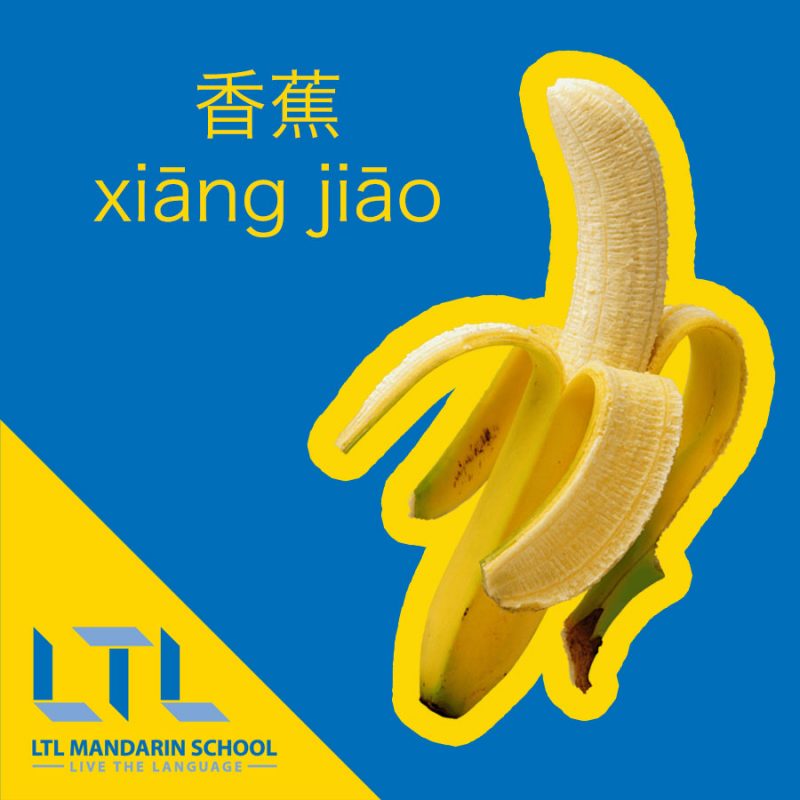
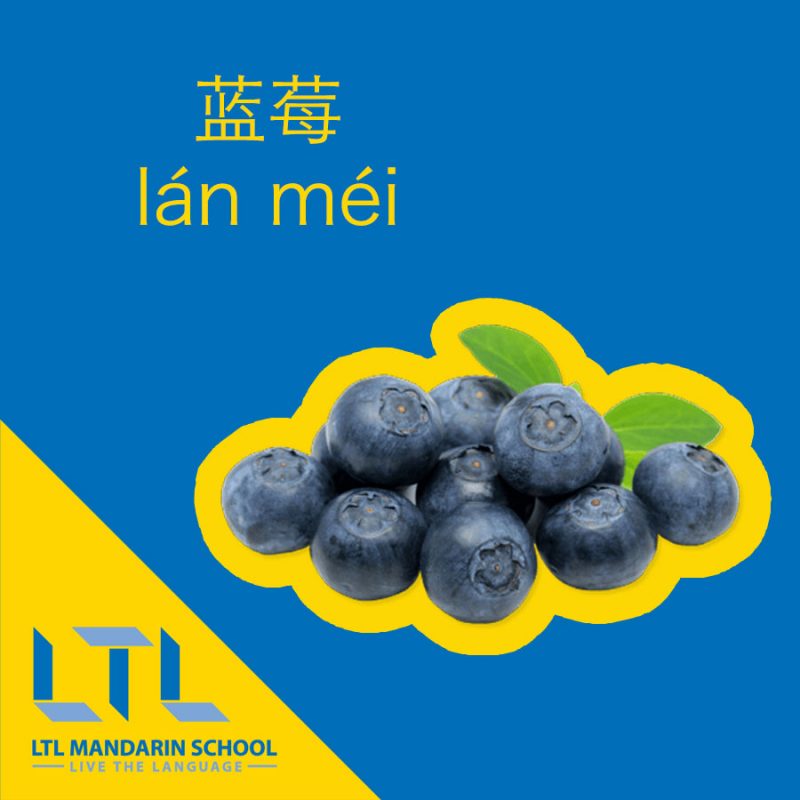
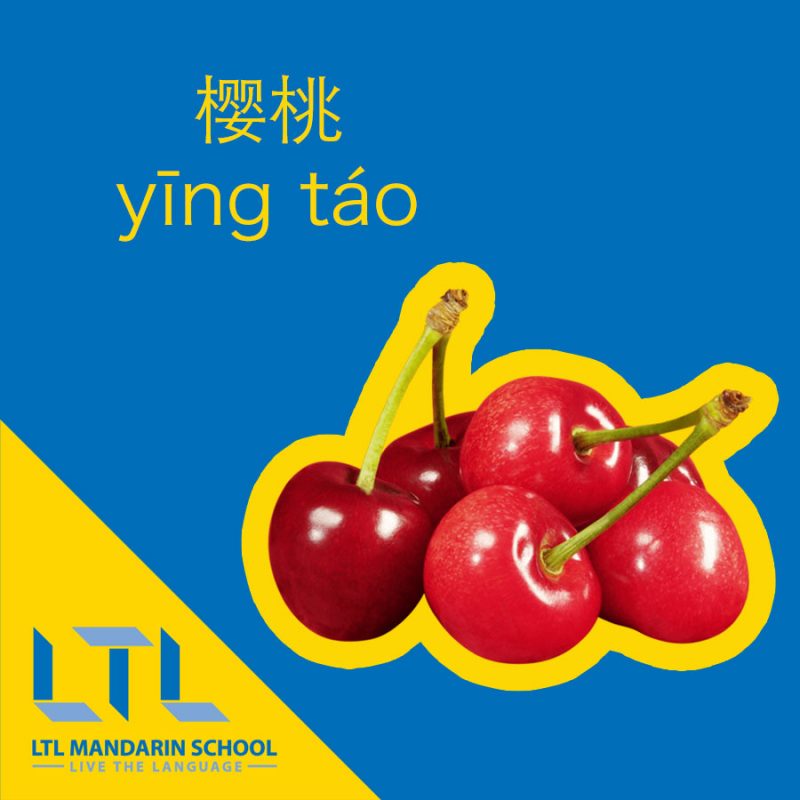
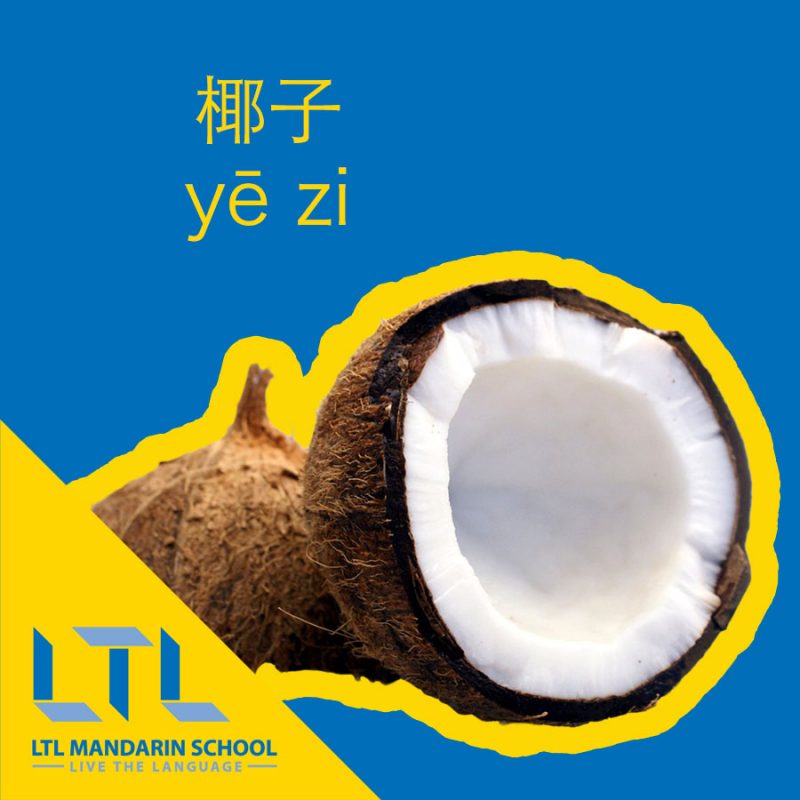
Check the top 20 most common fruit in Chinese with these simple flashcards!
Didn’t see what you’re looking for?
Search below for our full guide to learning all fruit in Chinese.
Are you a vegan or vegetarian living in China?
Being a vegan in China is not without its challenges. Thankfully there are others who have paved the way to show how it’s possible.
Check out our blog on being Vegetarian in China and some stories from our students who have “been there done that”!
Enjoying these flashcards of fruit in Chinese?
You might also be interested in what a traditional breakfast in Taiwan looks like.
Fruits in Chinese || Long List
Didn’t find the fruit you were looking for?
Not to worry we’ve translated them all with this helpful mega list of fruit in Chinese.
| Fruit in English | Hanzi | Pinyin |
|---|---|---|
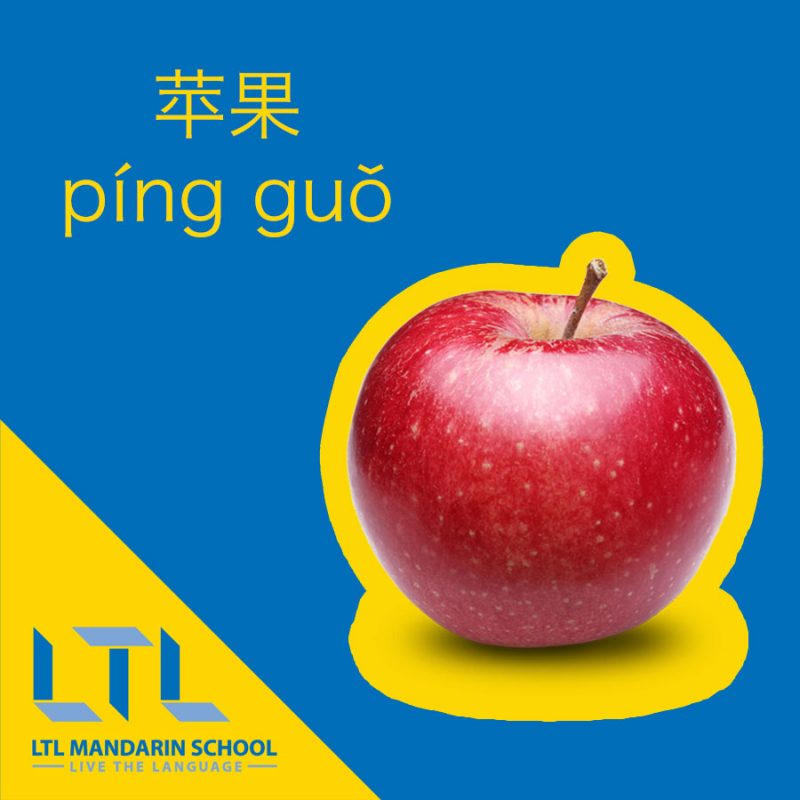
| Apple | 苹果 | píng guǒ |
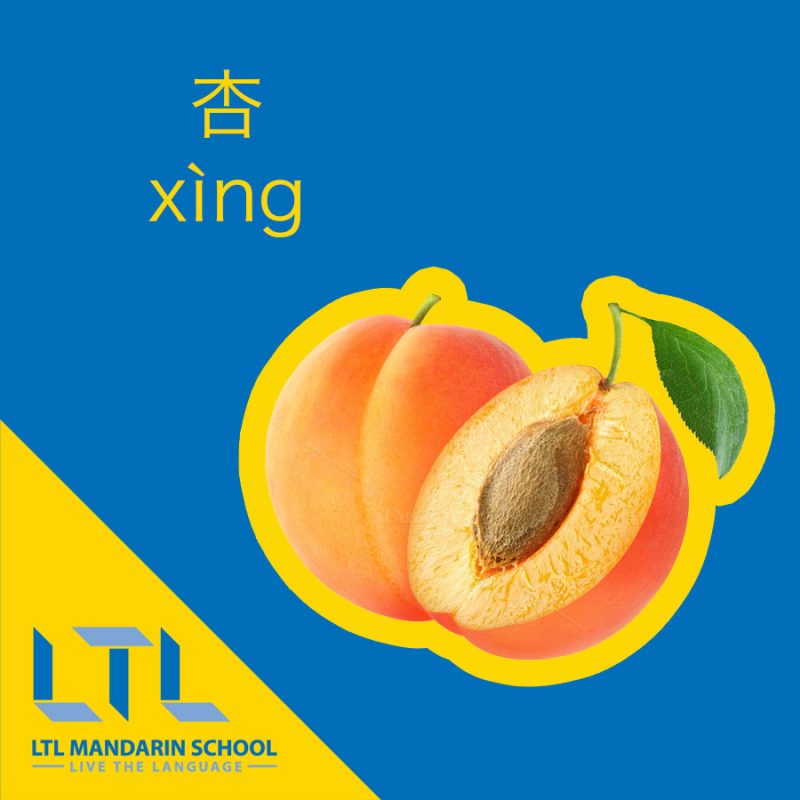
| Apricot | 杏 | xìng |
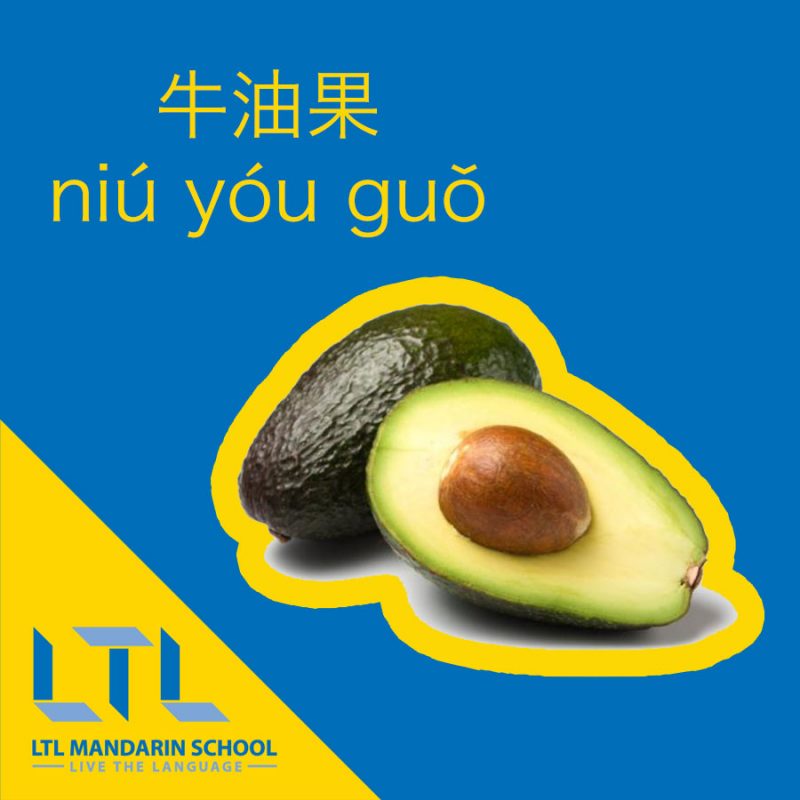
| Avocado | 牛油果 | niú yóu guǒ |
| Banana | 香蕉 | xiāng jiāo |
| Blackberry | 黑莓 | hēi méi |
| Blackcurrant | 黑树莓 | hēi shù méi |
| Blueberry | 蓝莓 | lán méi |
| Cherry | 樱桃 | yīng táo |
| Coconut | 椰子 | yē zi |
| Cranberry | 蔓越莓 | màn yuè méi |
| Date | 枣 | zǎo |
| Dragonfruit | 火龙果 | huǒ lóng guǒ |
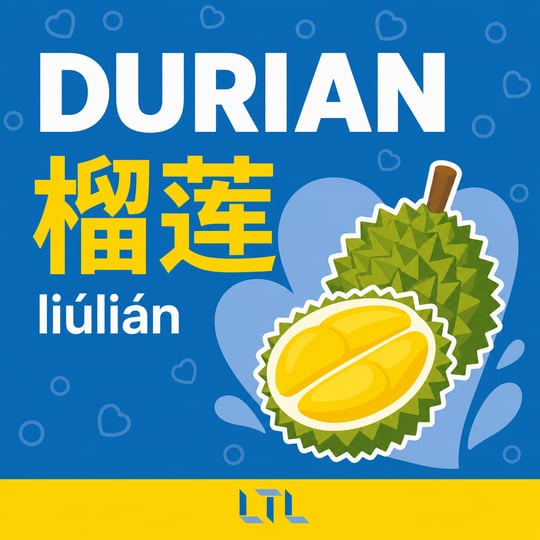
| Durian | 榴莲 | liú lián |
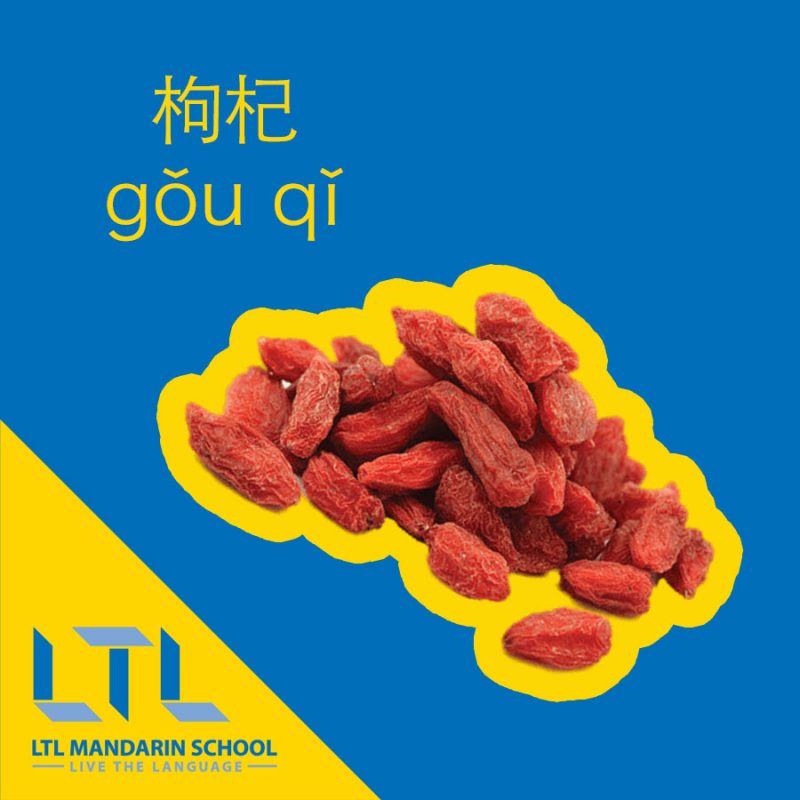
| Goji Berry | 枸杞 | gǒu qǐ |
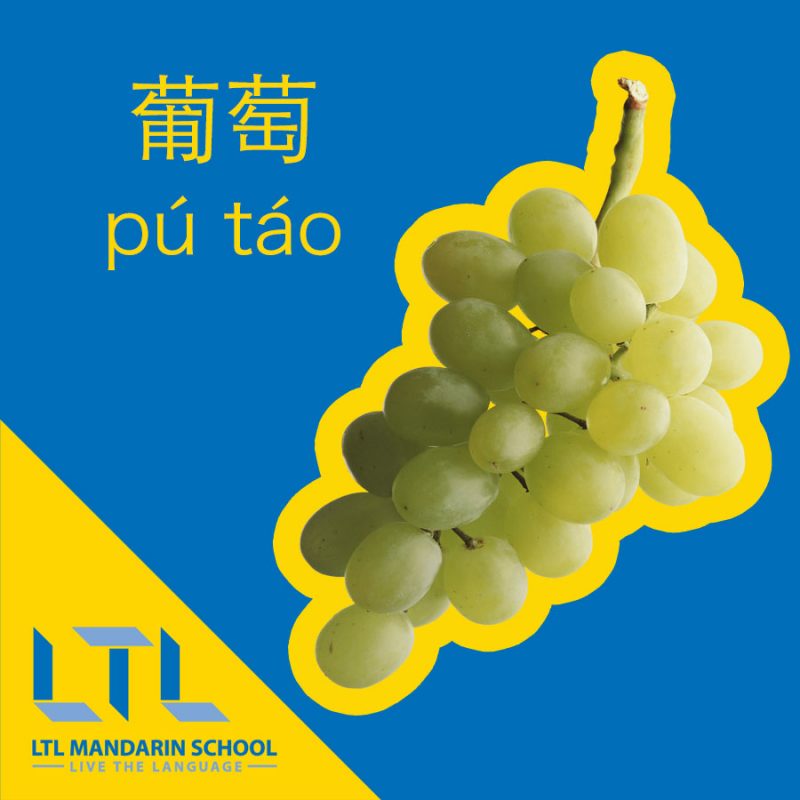
| Grape | 葡萄 | pú táo |
| Pomelo | 柚子 | yòu zi |
| Guava | 番石榴 | fān shí liu |
| Jackfruit | 菠萝蜜 | bō luó mì |
| Jujube | 枣 | zǎo |
| Kiwifruit | 猕猴桃 | mí hóu táo |
| Kumquat | 金橘 | jīn jú |
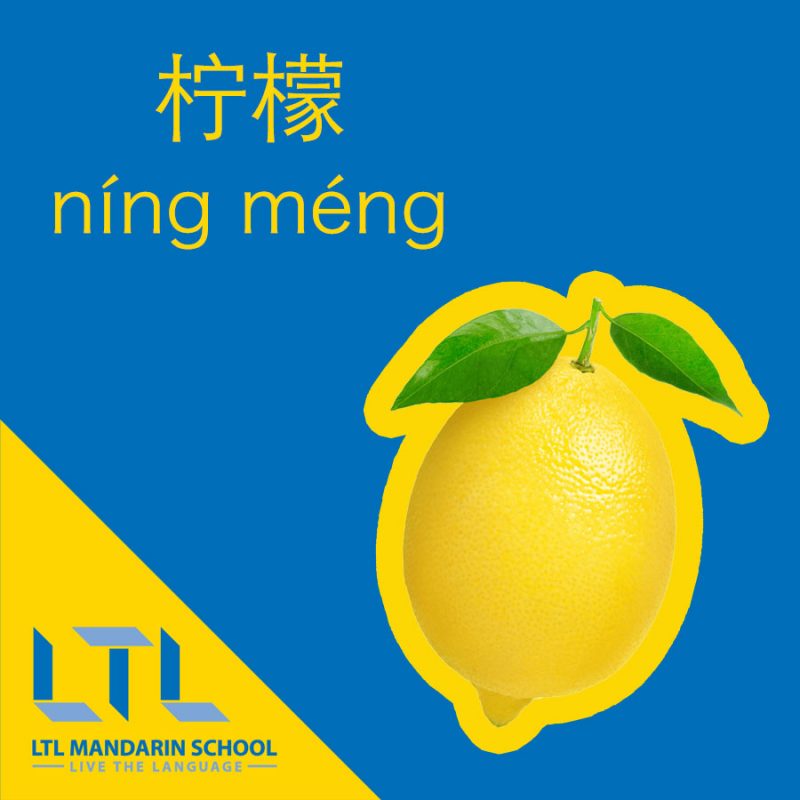
| Lemon | 柠檬 | níng méng |
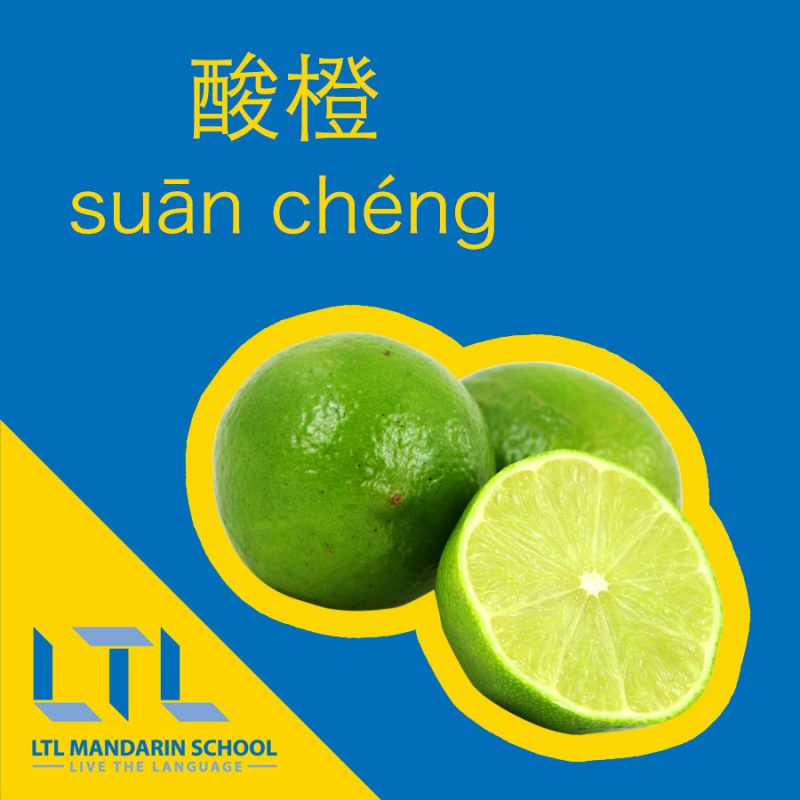
| Lime | 酸橙 | suān chéng |
| Loquat | 枇杷 | pí pá |
| Longan | 龙眼 | lóng yǎn |
| Lychee | 荔枝 | lì zhī |
| Mango | 芒果 | máng guǒ |
| Mangosteen | 山竹 | shān zhú |
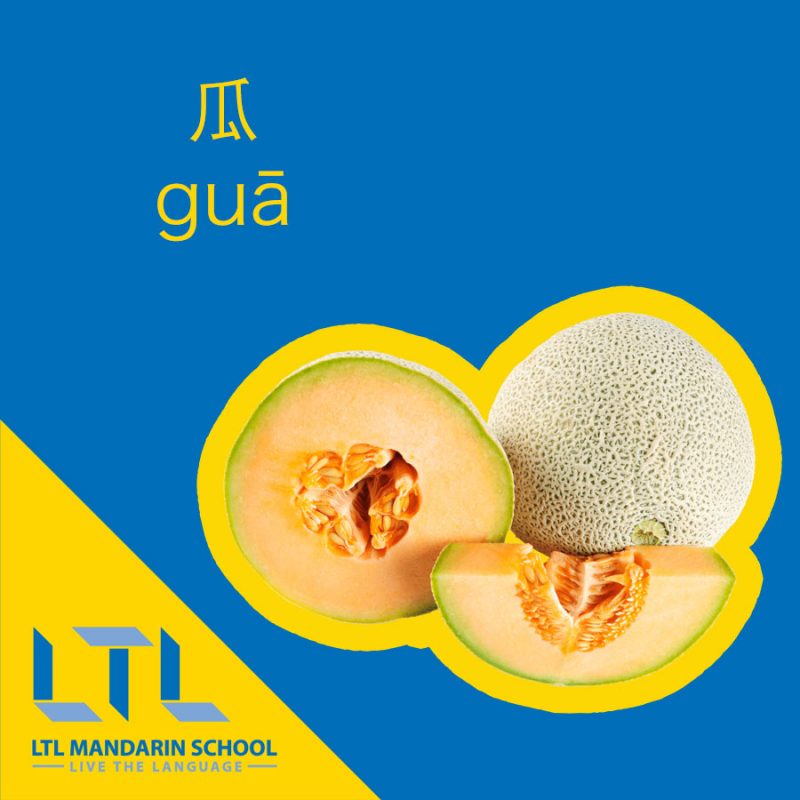
| Melon | 瓜 | guā |
| Cantaloupe | 哈密瓜 | hā mì guā |
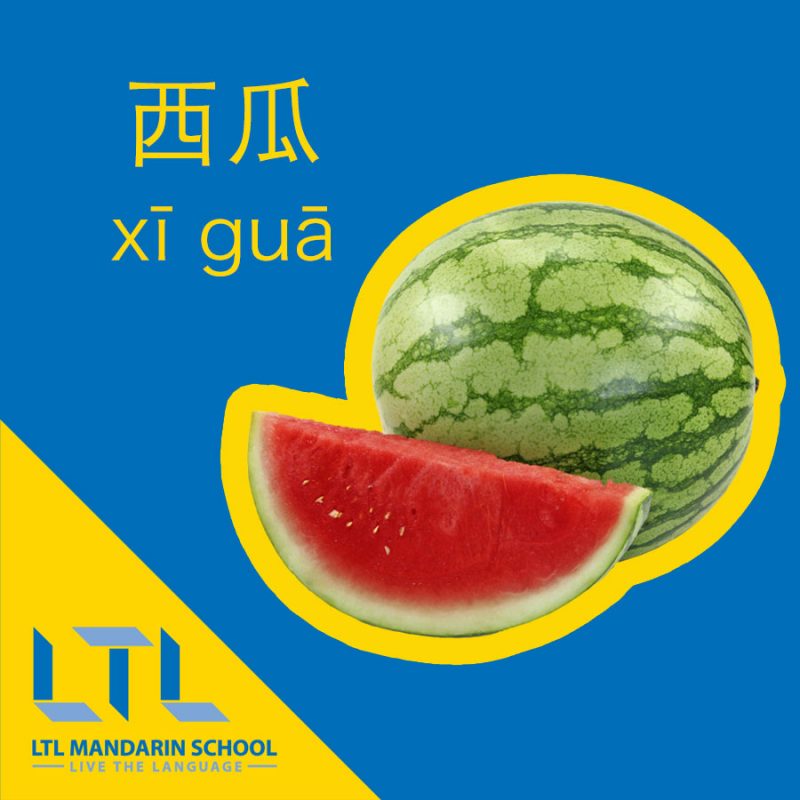
| Watermelon | 西瓜 | xī guā |
| Mulberry | 桑葚 | sāng shèn |
| Nectarine | 油桃 | yóu táo |
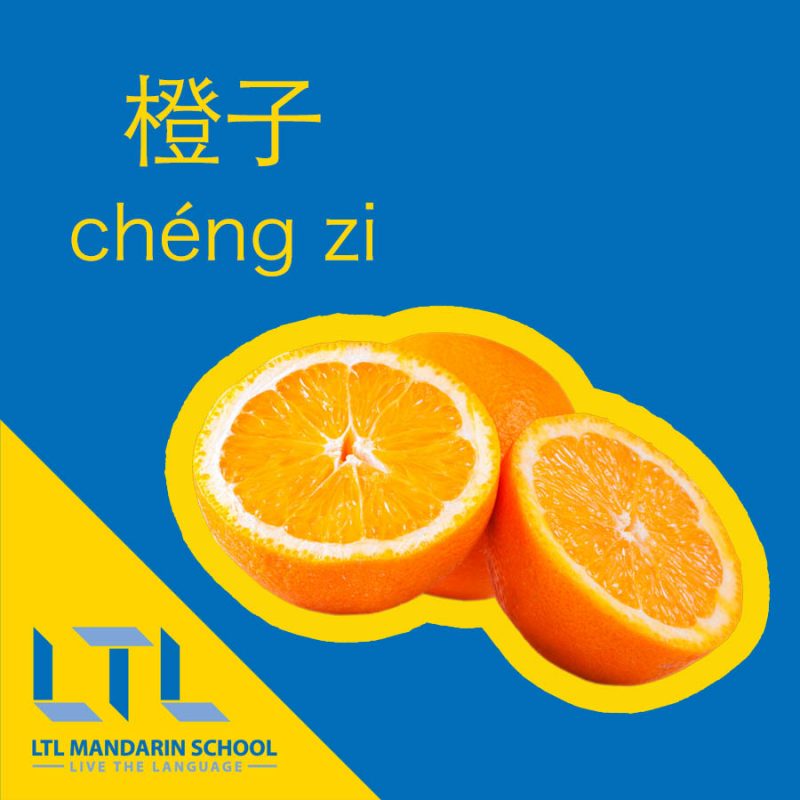
| Orange | 橙 | chéng |
| Tangerine | 柑橘 | gān jú |
| Papaya | 番木瓜 | fān mù guā |
| Passion fruit | 百香果 | bǎi xiāng guǒ |
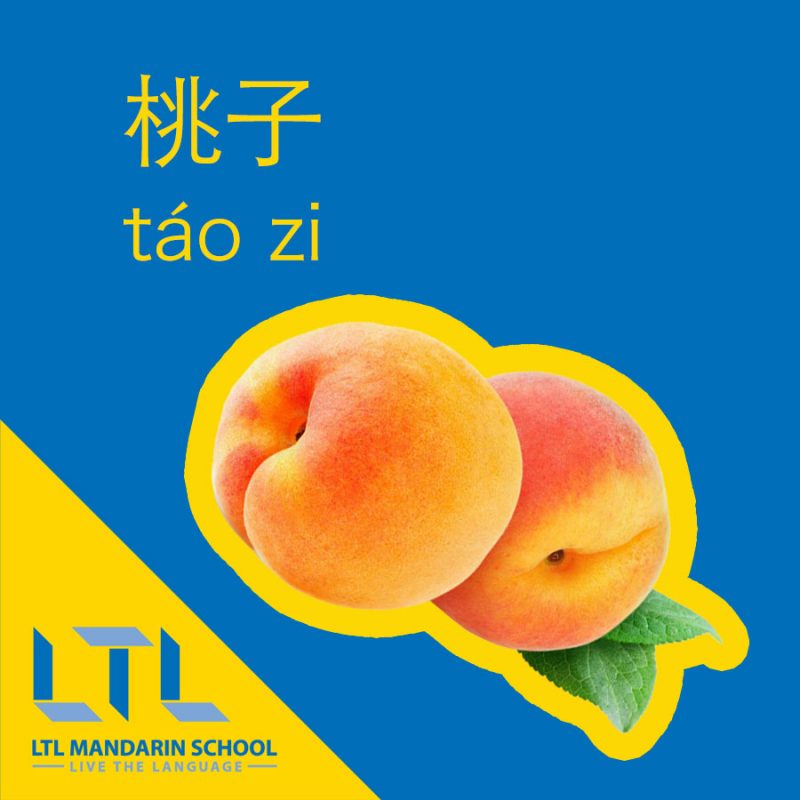
| Peach | 桃子 | táo zi |
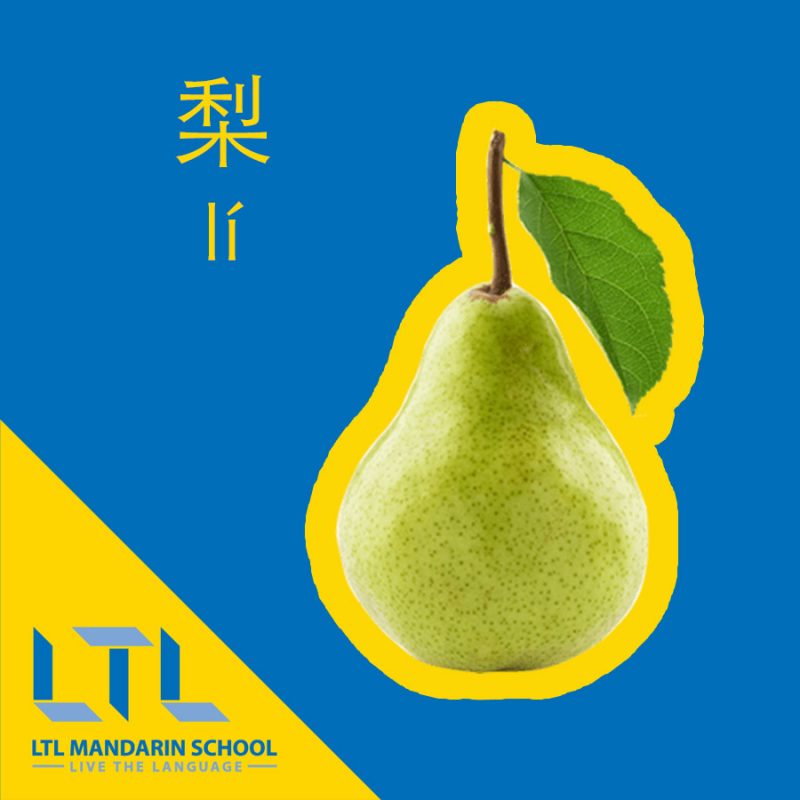
| Pear | 梨 | lí |
| Persimmon | 柿子 | shì zi |
| Plantain | 芭蕉 | bā jiāo |
| Plum | 李子 | lǐ zi |
| Prune | 西梅 | xī méi |
| Pineapple | 菠萝 | bō luó |
| Pomegranate | 石榴 | shí liu |
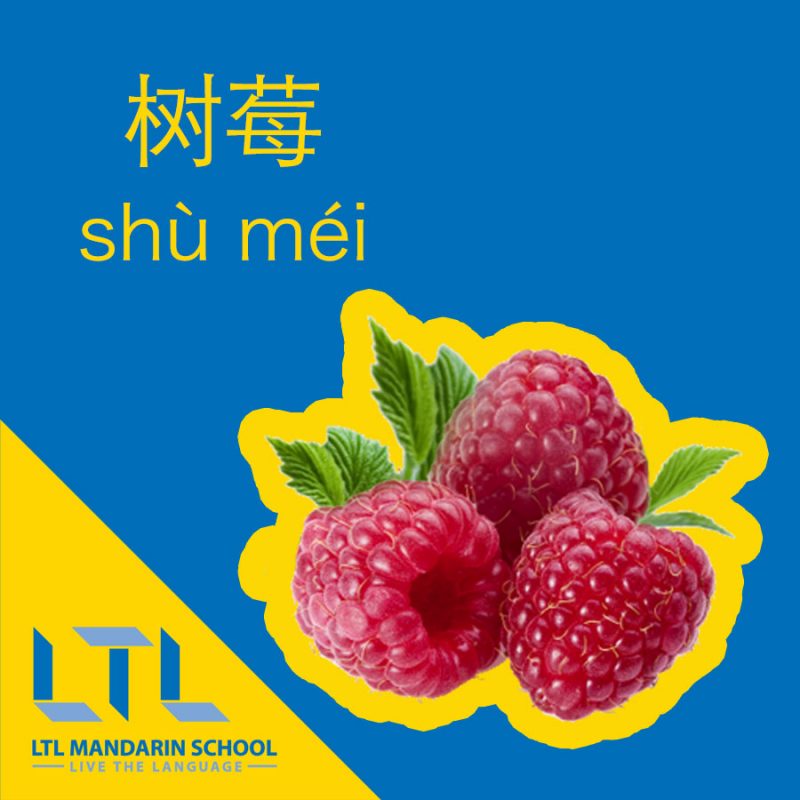
| Raspberry | 树莓 | shù méi |
| Rambutan | 红毛丹 | hóng máo dān |
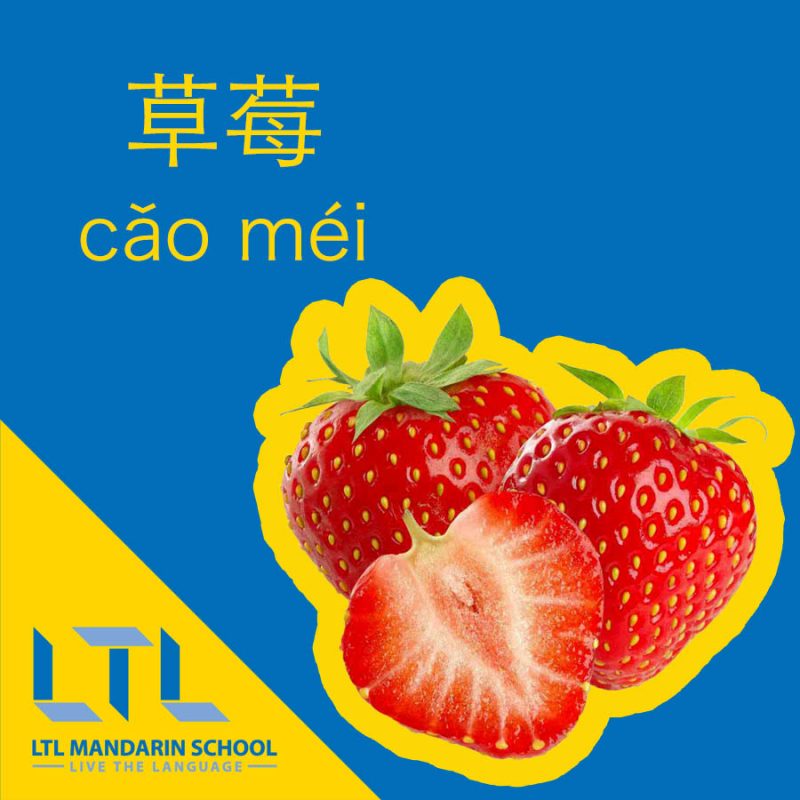
| Strawberry | 草莓 | cǎo méi |
TIP💡 Orange or mandarin? In the table, 橙 (chéng) and 柑橘 (gān jú) are the short and general forms. At the fruit stall you’ll mostly hear the two words below.
| Hanzi | Pinyin | Meaning |
|---|---|---|
| 橙子 | chéngzi | orange (round, tight-skinned, usually sliced) |
| 橘子 | júzi | mandarin, tangerine or clementine (loose skin, peels by hand) |
| 柑橘 | gānjú | citrus fruit in general |
You’ll also see 橘子 written as 桔子, with the same pronunciation. And don’t let the English trip you up: the fruit called a mandarin is 橘子, while the Mandarin language is 普通话 (pǔtōnghuà) or simply 中文 (zhōngwén).
BONUS || Strange Chinese Fruits
Think we are done with Chinese Fruit? Not yet!
Now that you know how to name all of your favourite fruit in Chinese, let’s have a look at some unusual and strange fruits you might stumble upon during your stay in China.
China is a weird and wonderful place for many reasons, and Chinese fruit is another thing you can add to that list.
Want apples, pears and oranges? Sure no problem, but why have those when you can have…
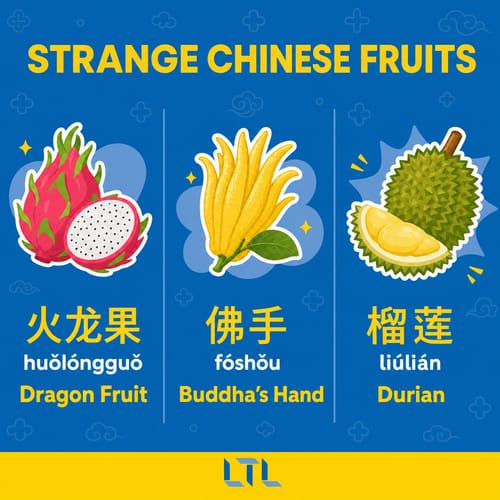
Dragon Fruit, A Buddha’s Hand, and the much maligned Durian!

Chinese Fruit || What’s the Deal
Chinese fruit is BROAD, there are so many, some with familiar names, and some not! To be brutally honest, a lot of these fruits, despite an odd look to them, have wonderful flavour that is worth tucking into.
For example, let’s take the Mangosteen (which actually originated from Indonesia funnily enough).
Despite the mangosteen looking not so fruit like upon first glance, get peeling and you’ll discover a lovely fragrant smell, which gives off a tangy, rather sweet taste. Not so bad right?
The same cannot be said for Durian however.
The curse of many a foreigner, but why?
There is rarely a food, let alone Chinese fruit, that can split opinion so much like the Durian can.
Loved by locals and hated by foreigners. Let’s try and discover why.
Why is Durian hated? The odour itself is not pleasant, not pleasant at all to be frank. Trust us when we say that too. Take Singapore as an example. They have actually banned Durian from their Metro! THAT’S how bad it is
Despite this, a large portion of Chinese can’t get enough of its fleshy texture and taste. The Durian, in fact, is so loved in China that you can even get your hands on Durian sweeties and (cover your eyes Italian readers) Durian PIZZA.
Again trust us when we say, DO NOT TOUCH THEM!
They might all look a little bit weird, sure, but they actually are very tasty! Well…except maybe for the durian, people either hate it, or love it. But you’ll have to try to know 😉
Enjoyed our guide to Chinese fruit blog? We make weekly content to help you learn mandarin and get an understanding of Chinese culture, history, food, religion, travel and much more!
Buying Fruit in Chinese || Measure Words and Market Phrases
Knowing the names is step one. To actually buy fruit, you need a few measure words for fruit and some phrases for the stall. Most fruit at Chinese markets is priced by weight, not by piece.
| Hanzi | Pinyin | Meaning |
|---|---|---|
| 个 | gè | general measure word for single fruits (apples, oranges, mangoes) |
| 斤 | jīn | the market unit of weight, 500 g in Beijing or Shanghai |
| 公斤 | gōngjīn | kilogram |
| 串 | chuàn | a bunch (grapes, lychees on the branch) |
| 盒 | hé | a box or punnet (strawberries, blueberries) |
| 箱 | xiāng | a crate (oranges, apples when you buy in bulk) |
Now put them to work at the stall:
| Hanzi | Pinyin | Meaning |
|---|---|---|
| 这个多少钱一斤? | Zhège duōshao qián yì jīn? | How much is this per jin? |
| 我要两斤苹果。 | Wǒ yào liǎng jīn píngguǒ. | I’d like two jin (1 kg) of apples. |
| 给我一串葡萄。 | Gěi wǒ yí chuàn pútao. | Give me a bunch of grapes. |
| 可以尝一下吗? | Kěyǐ cháng yíxià ma? | Can I try one? |
| 能便宜一点吗? | Néng piányi yìdiǎn ma? | Can you make it a bit cheaper? |
TIP💡 Before a measure word, use 两 (liǎng) for “two”, never 二 (èr): 两斤, not 二斤. In Taipei the 斤 is 600 g, so the same order gets you a little more fruit.
The fastest way to make all this stick is to use it. Take this list to a local market or supermarket, read the price labels (always per 斤) and order one fruit you’ve never tried.
Fruit in Chinese || Quiz

Fruit in Chinese || FAQs
How to say Fruit in Chinese?
Fruit in Chinese is pronounced “shuǐ guǒ” and the Chinese characters for fruit are 水果.
How to say Apple in Chinese?
Apple in Chinese is 苹果 píng guǒ.
How to say Mango in Chinese?
Mango in Chinese is 芒果 máng guǒ.
How to say Banana in Chinese?
Banana in Chinese is 香蕉 xiāngjiāo.
What is Chinese hawthorn fruit?
Chinese hawthorn is 山楂 (shānzhā), the small red fruit of Crataegus pinnatifida, also called mountain hawthorn. It’s native to East Asia, from northern and eastern China to Korea and the Russian Far East.
In Beijing in winter you’ll see it coated in sugar on sticks as 糖葫芦 (tánghúlu), one of the city’s classic street snacks.
It’s the fruit that comes from a small tree that is bright red. It’s used in desserts, jelly, jam and wine as well as a digestive aid in traditional Chinese medicine.
What fruit represents luck and prosperity in Chinese New Year?
Fruits considered to bring luck and prosperity in Chinese New Year are oranges (abundance and happiness), pomelos (good luck and family unity), grapes, plums, jujube and kumquats (good luck and prosperity).
What fruits are grown in China?
Fruit is one of China’s biggest farming sectors, ranking 3rd in production after grain and vegetables.
China produces most of the fruits seen on this list but can be restricted geographically as more tropical fruit such as pineapple, mangos and bananas are grown in the Guangdong region, while more resilient fruits can be grown in other regions.
More exotic fruits commonly grown and consumed in China are durian, dragonfruit, rambutans, bayberries, mangosteens, persimmons, lychees, pomelos and jujubes.
Want more from LTL?
If you wish to hear more from LTL Language School why not join our mailing list? We give plenty of handy information on learning Chinese, useful apps to learn the language and everything going on at our LTL schools!
Sign up below and become part of our ever-growing community!
⭐ Download our free ebook, your starter pack of essential Mandarin learning resources!
BONUS || Want to study Chinese with us in China? Why not check out our group and individual classes here





[…] can buy durian as a whole, fresh fruit from some stores or fruit stands, although cutting it open and preparing it is no small […]
[…] like toilet paper. There is also a specific section for fresh food (生鲜 shēng xiān) such as fruits and […]
[…] with a number of other vocabulary blogs, many of the sports hinge on learning a couple of key […]
[…] than sitting down for brunch in Beijing with a stack of pancakes topped with syrup, fresh fruit, ice cream and a dollop of […]
[…] – (literal) deep-rooted and as firmly attached as fruit is to the […]
[…] measure words for fruit and vegetables tend to describe the size and shape of them. There are also some fruit or vegetables […]
This is super helpful! Thank you for this, I always struggle in remembering the names for different fruits in Chinese.
[…] Scopri più frutti in Cinese. […]
[…] with various dishes that are seen as lucky to eat at New Year, there are also certain fruits that are also considered to bring good […]
[…] adding pineapple a criminal act or a genius […]
[…] Watch now : https://ltl-beihai.com/fruit-in-chinese/ […]
Way more fruits than I imagined!
There really are Jef!
Very useful 🙂
Many thanks 🙂
Rambutan is not 荔枝(Lychee) which was already listed. Rambutan is actually called 红毛丹 (Hóng Máo Dān).
Good spot! We made the edit Charlie. Many thanks
I like these topics very much.
Thanks Julia 🙂
[…] And what about some of the most important fruits in Chinese. […]
[…] https://ltl-beihai.com/fruit-in-chinese/ […]
Thank's a lot , so great. Xièxeie.
Yay!
[…] Can refer to What is the Chinese name of papaya? […]
Dragon Fruit, A Buddha’s Hand, Durian, Rambutan, Mangosteen, Dragon Fruit, Lychee, Longan graphics and pics do not display. We are not able to see these.
Dragon fruit and durian are not Chinese fruit. Durian originates from Borneo and dragon fruit originates from South America.
[…] fruits are used in traditional Chinese medicine. For example, lychees are thought to have cooling properties, while dates are believed to boost […]