
The Great Wall Guide || Everything You Need To Know
Welcome to the Great Wall Guide with LTL.
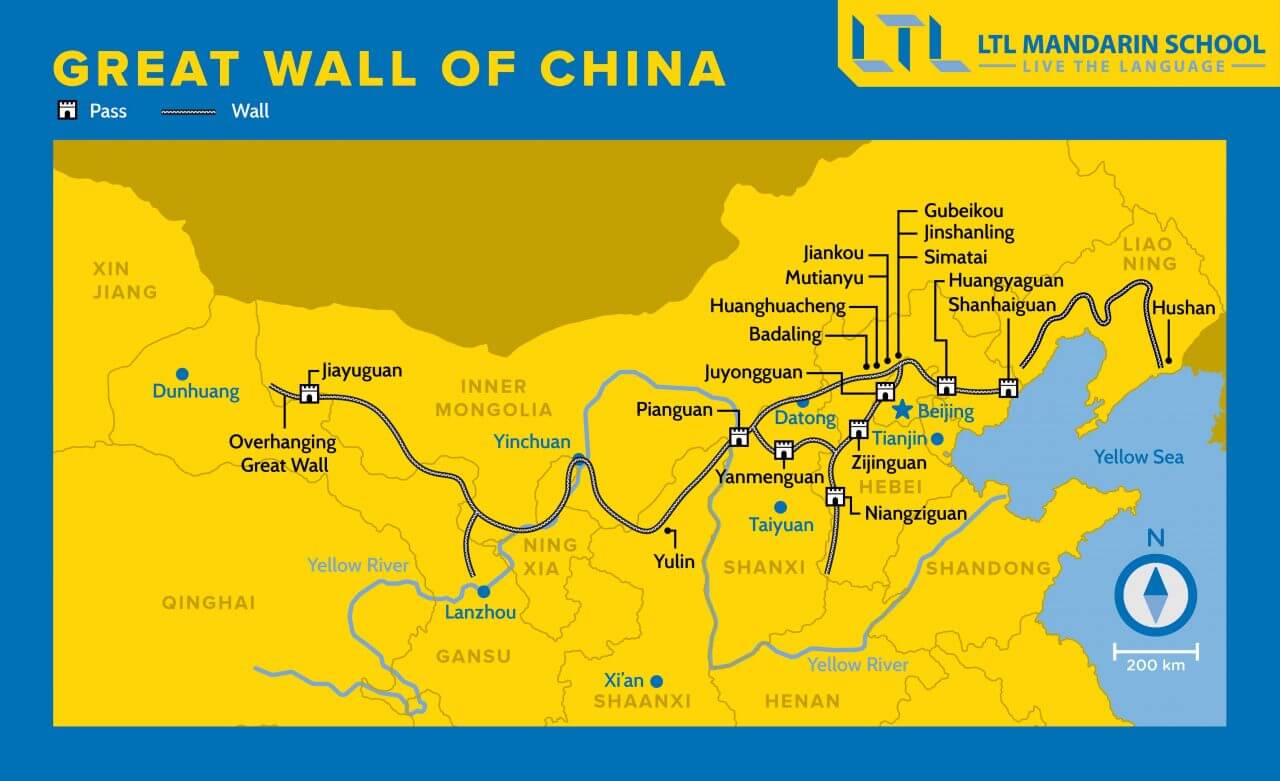
The Great Wall of China (长城, Chángchéng) is a network of fortifications, with walls, watchtowers, trenches and natural barriers, built across northern China over more than 2,500 years, mainly to keep out nomadic peoples from the northern steppe.
China’s 2012 national survey puts its total length at 21,196 km (13,170 miles). Most of the best-preserved sections near Beijing, such as Badaling and Mutianyu, date from the Ming Dynasty (1368 to 1644).
It goes without saying that most students who come to LTL ask us about the Great Wall within the first few days, sometimes hours, even minutes, of arriving at school!
It isn’t one of the New Seven Wonders of the World for no reason after all.
With questions flying around, we’ve put together this Great Wall Guide covering everything relating to the Great Wall of China, including a unique opportunity you won’t find anywhere else: studying Chinese on the Wall itself. We’ll tell you all about it below.
In Chinese, the Great Wall is simply 长城 (Chángchéng), the “Long Wall”.
| Chinese | Pinyin | Meaning |
|---|---|---|
| 长城 | Chángchéng | Great Wall (literally “long wall”) |
| 万里长城 | Wànlǐ Chángchéng | the Ten-Thousand-Li Great Wall (a lǐ is a traditional unit of about 500 metres) |
Great Wall Guide || Great Wall Guide – 8 Great Wall Facts
Great Wall Guide || Great Wall Guide – The Weather
Great Wall Guide || Great Wall Guide – When should I visit the Great Wall?
Great Wall Guide || Great Wall Guide – Can I Study Chinese on the Great Wall?
Great Wall Guide || Great Wall Guide – What else can I discover about the Great Wall?
Great Wall Guide || BONUS – A Student’s Story
Before getting stuck into that, here are some more things you need to know!
Great Wall Guide – 8 Great Wall Facts
Time for eight (it’s a lucky number after all) quick-fire facts you probably didn’t know about the Great Wall of China!
1 – 33% of the Great Wall has disappeared
Crazy right! There’s still plenty left but the parts of the wall in Inner Mongolia, Ningxia and Gansu are the areas under the most threat.
2 – Total Length – 21,196.18 km (13,170.70 miles)
Just to put that in perspective, that’s a little more than half the length of the equator! You’d have to drive about 36 miles every day for a whole year to cover the Great Wall of China in its entirety.
Why do you see different lengths quoted? The 21,196 km figure comes from China’s national survey, published in 2012, and it counts walls from every dynasty plus trenches and natural barriers. The Ming Dynasty wall on its own measures about 8,850 km (5,500 miles).
💡 Long doesn’t mean visible. The wall is usually under 10 metres (33 feet) wide and built from local earth and stone that blends into the landscape, so you can’t see it from space with the naked eye. China’s first astronaut, Yang Liwei, said he couldn’t spot it from orbit in 2003.

Mastering Mandarin || 9 Proven Ways To Learn Chinese FAST⚡️
What is the Best Way to Learn Chinese as fast as possible? Here are 9 killer tips for (2020-21). We have access to more resources than ever before.
3 – Built to Keep Out Invaders
The Great Wall’s main job was defence against the nomadic peoples of the northern steppe, from the Xiongnu in the Qin and Han eras to the Mongols in the Ming era. During its peak in the Ming dynasty, the wall was guarded by more than 1 million soldiers.
The Great Wall also worked as a border control line. Its gates and passes let officials check travellers, collect duties on goods and protect trade caravans on the Silk Road routes in the west.
Watchtowers and beacon towers turned the wall into an early warning system. Guards sent smoke signals by day and lit fires by night, and Ming garrisons also fired cannon, so news of an attack passed from tower to tower far faster than a rider could carry it.
| Chinese | Pinyin | Meaning |
|---|---|---|
| 烽火台 | fēnghuǒtái | beacon tower |
| 敌楼 | dílóu | watchtower |
| 关 | guān | pass, fortified gate |
Quite the opposite of its original purpose, today the Great Wall welcomes millions of visitors every year. The Badaling section alone received more than 9.9 million visitors in 2018, according to Xinhua.
4 – Longest Cemetery on Earth
The Great Wall is sometimes called the longest cemetery on Earth because so many people died during its construction, which spanned thousands of years. The labour came from soldiers, conscripted peasants and convicts, and many of them never made it home.
That human cost lives on in China’s best-known Great Wall legend. Meng Jiangnü (孟姜女, Mèng Jiāngnǚ) travelled north to bring her husband winter clothes, only to learn he had died building the wall. The story says she wept so bitterly that a stretch of the wall collapsed and revealed his bones.
5 – One of China’s first UNESCO Sites
The Great Wall of China was one of the first six sites in China to be given the prestigious UNESCO World Heritage title in 1987. Today, China has a whopping 61 World Heritage Sites, the latest being the Jingdezhen Handicraft Porcelain Industry Sites, added in July 2026. See the full list in our guide to UNESCO World Heritage Sites in China.
6 – Its History is More Than 2500 Years Old
The first walls went up from around the 7th century BC, when rival states in the Spring and Autumn and Warring States periods built their own earth walls to keep out neighbours and northern raiders. Qin Shi Huangdi, the emperor who unified China to found the Qin dynasty (221 to 207 BC), linked many of the northern walls into one defensive line and tore down the walls between the old states.
So who came first, Jesus or the Great Wall? The Great Wall, by several centuries. The Han dynasty (206 BC to AD 220) then pushed the wall far west into the Gansu desert to guard the Silk Road, and much of that work was finished before Jesus was born.
Even after Qin Shi Huangdi, the Great Wall was never one single unbroken wall. It’s a network of fortifications: overlapping walls from different dynasties, plus trenches, forts, watchtowers and natural barriers such as cliffs and rivers.
7 – Popular Parts of the Wall are Much Younger
Although construction of the wall began thousands of years ago, most of the popular and intact parts date back to the Ming Dynasty (1368 to 1644). The Ming wall’s famous passes include Shanhaiguan (Shanhai Pass) in the east, where the wall meets the Bohai Sea, and Jiayuguan Pass in Gansu province in the west.
Earlier walls were mostly tamped earth: layers of soil and gravel, sometimes mixed with reeds, pounded hard inside wooden frames. Ming builders switched to cut stone and kiln-fired bricks bound with lime mortar mixed with sticky rice, which is a big reason their sections have survived so well.
Even the Ming wall couldn’t hold forever. In 1644 the general Wu Sangui opened the gates at Shanhaiguan to the Manchu army, which went on to found the Qing dynasty. Large-scale building stopped with the end of the Ming. The Qing, like the Mongol-led Yuan dynasty before the Ming, ruled land on both sides of the wall, so it carried out only limited repairs.
8 – Great Wall Bricks Used in Cultural Revolution
During the Cultural Revolution era (1966 to 1976), people were encouraged to dismantle bricks from the Great Wall for construction purposes. The bricks were used in the building of houses, farms and even reservoirs.
Today the wall is protected by national rules. Since December 2006, State Council regulations have banned taking bricks or soil from the wall, carving names into it and other damaging behaviour, with heavy fines for offenders. Popular sections such as Badaling and Mutianyu have been restored, while many wild stretches stay unrestored and officially closed to the public to protect them.

Best Places to Visit in China … for Scenery
Best Places to Visit in China … for Scenery Studying in Beijing or Shanghai and want to take a break? Or just travelling around China? There are so many things to see and do in China, we thought we’d help…
Great Wall Guide – The Weather
The weather will play a key factor in deciding when you should visit the Great Wall. AVOID THE SUMMER AT ALL COSTS! It’s HOT, it makes an already tough job, much harder!
Here’s a quick guide into the weather in and around Beijing typically all year round
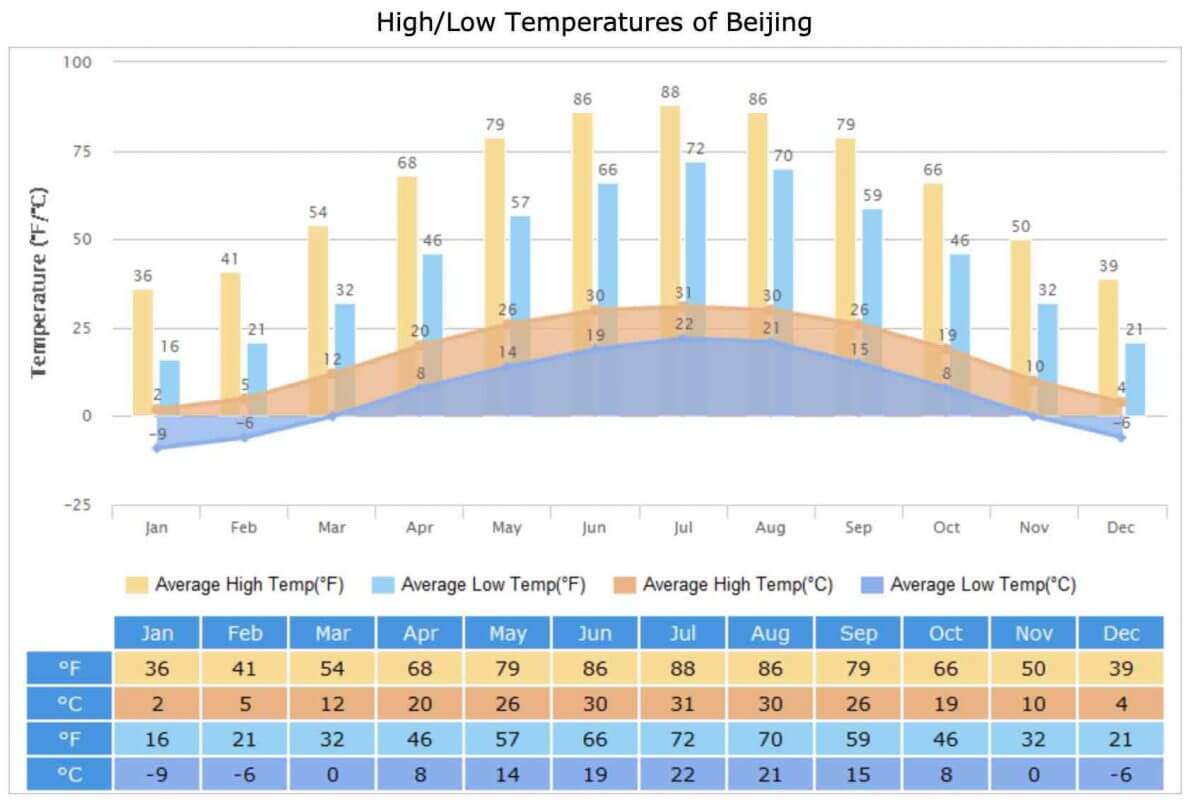
Pick the time of year that suits you best but typically, living in Beijing myself, I’d advise March/April/October/November time.
Great Wall Guide – When should I visit the Great Wall?
Sometimes coming to this decision is best done by process of elimination. Firstly…
Avoid the peak Summer and Winter.
On the flipside, you can get some incredible shots with clear blue skies and Sun in the Summer, and if you are (un)lucky during the Winter, you might even be treated to a snowy Great Wall. Although this is incredible for pictures, navigating it safely is another issue, it can be done though!
Still though, I’d tread very carefully (excuse the pun) with going in peak seasonal times which leads us onto our next avoidance point…
Avoid Chinese Holidays AT ALL COSTS
Just trust us here. I dare you, Google “Busy Great Wall”
Do you want that? Thought not! Crowds like that generally build up during Chinese Holidays. If you can also, avoid weekends for the obvious reasons.
The perfect time to go would be Spring/Autumn in the middle of the week, with a mild and calm blue sky. Perfection.
Great Wall Guide – Can I Study Chinese on the Great Wall?
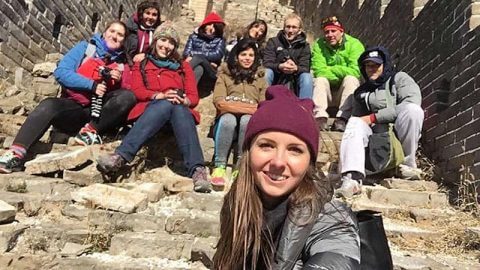
Sounds stupid right, beyond the realms of possibility… not so!
We aren’t just dreamers at LTL, we make things happen and that’s exactly what our Great Wall Program is all about.
So you’ve decided you want to learn Chinese in China. Great, you’ve made the right move.
Now how about if we said rather than study Chinese in the classroom or in the streets of China, you can study in a rural part of the Great Wall instead? An amazing, once in a lifetime experience!
Find out more: Study Chinese on the Great Wall, or read our guide to studying Chinese in Beijing, where every Great Wall trip begins.
Great Wall Guide – What else can I discover about the Great Wall?

Visit our Beijing Blog as we cover the Great Wall in further detail.
We give you the full lowdown on the different areas of the Great Wall, where to go, where to avoid, the costs, the facts – everything you’d need to know.
- Great Wall of China – Facts and History : Our blogger Zoe covers a number of frequently asked questions in this blog including a brief history, how much the entrance fee will set you back and the different areas of the Wall.
- Where does the Great Wall of China end? It’s a big wall, we know that already but where on earth does it end. Time to put you out of your misery thanks to a great and informative post from Matea.
- The Top 10 sections of the Great Wall to visit: “Go to Badaling, it’s busy but the most popular with Chinese”. “Mutianyu is the best, it’s peaceful and much less touristy”. “You have to go to Simatai, there’s a great water town located there also”. So many options, but where is the best part of the Great Wall to visit? We narrow it down to the top 10 and tell you which section suits you, whether you’re a hiker or just desperate for that Instagram winner!
Here’s our quick comparison of the main sections near Beijing:
| Section | Rough distance from central Beijing | Best for | Access |
|---|---|---|---|
| Badaling | 60 to 70 km northwest | First visits, classic Ming architecture | Cable car; high-speed train to Badaling Great Wall station |
| Mutianyu | about 70 km northeast | Families and a quieter restored wall | Cable car, chairlift and toboggan |
| Juyongguan | about 60 km northwest | A short trip to a historic mountain pass | Steep steps, close to the city |
| Jinshanling | about 130 km northeast | Hiking and photography on partly restored wall | Cable car to part of the ridge |
| Simatai | about 120 km northeast | Evening visits, with Gubei Water Town next door | Cable car; book ahead |
| Gubeikou | about 130 km northeast | Quiet, crumbling wild wall | Hiking trails only |
| Jiankou | about 80 km north | Dramatic, unrestored wild wall for experienced hikers | Steep, unmaintained paths; not officially open |
TIP💡 Most sections ask you to book tickets in advance under your real name, so bring your passport. If you have limited mobility or are travelling with kids, Mutianyu and Badaling are the easiest choices thanks to their cable cars. Check opening times and cable car schedules before you go, as they change with the seasons.
BONUS – A Student’s Story
It’s always comforting to hear what others thought about their experiences before you go. One of our students spent a weekend on the Great Wall with us and was happy to document her experience!
This story was contributed by LTL student Eleanor.

I really enjoyed the Great Wall trip.
It was one of the highlights of my trip to Beijing.
My favourite parts were exploring the wild wall the first day and eating the night’s amazing dinner.
I really appreciated staying in a place far from tourists and loved that after we started hiking up the mountain, we didn’t see any other tourists.
I had so much fun exploring the great wall, and was glad that we were able to take a different route down. I wish I had had even more time to explore the wall.
TOP TIP || start out a little earlier in the day, ask the hotel people to pack a lunch, and then carry it up the mountain and eat on the great wall. Picnics are fun.
As for the food, I just loved the dinner we had (and the breakfast was simple but tasty).
I really liked that we were eating vegetables grown very close by.
I also liked how vegetable-heavy the meal was. The lunch on the first day was good, but didn’t stand out to me.
I did really enjoy getting to gut a fish, and watching the man butcher the rabbit was a unique and interesting experience. He, along with everyone we met on the trip, was friendly and accommodating.
Day Two on the Great Wall
While I didn’t enjoy the great wall the second day quite as much as I did the first day (mostly because of the tourists), I’m still very glad we went.
It was nice to see what the wall was like when it was whole. And, I went into the wild, non-tourist sections again so I got to explore the wild wall some more.
Ellen (our trip leader) was absolutely right about having to get up early to beat the crowds.
When I was coming down, I noticed how many people were around. I do wish I could have had an hour or two to take it all in though.
Ellen was a fantastic trip leader. She hiked up the mountain even though it was an arduous trip, and she was very patient when we wanted more time to explore.
She asked us our preferences and was flexible when we suggested a change of plans. The trip was very well planned and ran smoothly.
I would recommend this trip to anyone. I had a wonderful time and am so glad I got to experience the great wall in this way!
Great Wall of China Schedule
8:30AM – Receive a packed lunch and depart LTL school by car.

10AM – Arrive at Gubeikou, where we will meet our guide and begin hiking.
We will spend 5-6 hours (including lunch) hiking to Jinshanling.
5PM – At Jinshanling we will have dinner of traditional local Chinese food in a farm house.
We will spend the evening camping next to the Great Wall. Tents and sleeping bags will be provided and there will be washing facilities nearby. In the event of bad weather, we will stay at a nearby guest house (with air conditioning).
DAY II
7:30AM – Breakfast and preparing for the day.
8:30AM – Hike to the Simatai area of the Great Wall.
12:30PM – Return to Beijing by car.
Useful tips for Hiking on the Great Wall
- Please wear appropriate shoes and clothing
- Please bring a rain coat in case of bad weather
- Please also bring your fully charged mobile phone
Great Wall FAQs
How long is the Great Wall of China?
Roughly half the length of the Equator! That measures in at 21,196.18 km (13,170.70 miles).
When is the best time to visit the Great Wall of China?
The weather should play a key factor in deciding when you come to visit the Great Wall.
AVOID THE SUMMER AT ALL COSTS!
It’s HOT, it makes an already tough job, much harder! Stick to Spring and Autumn months for the best temperatures.
Why was the Great Wall built?
Chiefly, the Great Wall has been used as a military defence throughout most of its long history.
During its peak in the Ming dynasty the wall was guarded by more than 1 million soldiers.
What are 5 facts about the Great Wall of China?
China’s 2012 national survey puts the Great Wall’s total length at 21,196 km (13,170 miles), though about a third of it has disappeared. It was one of the first six sites in China named a UNESCO World Heritage Site, in 1987.
The wall cannot be seen from space with the naked eye, because it is usually under 10 metres wide and built from local materials. Most of the popular, intact sections date from the Ming Dynasty (1368 to 1644), when more than 1 million soldiers guarded it.
Who came first, Jesus or the Great Wall of China?
The Great Wall came first, by several centuries. The earliest walls went up from around the 7th century BC, and Qin Shi Huangdi linked many of the northern walls into one defensive line during the Qin dynasty (221 to 207 BC).
The Han dynasty (206 BC to AD 220) then pushed the wall far west into the Gansu desert to guard the Silk Road. Much of that work was finished before Jesus was born.
Want more from LTL?
If you wish to hear more from LTL Mandarin School why not join our mailing list? We give plenty of handy information on learning Chinese, useful apps to learn the language and everything going on at our LTL schools!
Sign up below and become part of our ever-growing community!






3 comments
[…] The Great Wall of China – LTL’s Ultimate Guide (2020-21) […]
[…] out our amazing Great Wall Guide to know more about this super famous […]
This is a really good website, but you COULD add some more facts about the great wall of china... RiGHt?