
Halloween in Chinese 🎃 Your Go-To Guide
Hallowe’en night is coming!
This is the perfect time to talk about masks, costumes, and monsters, with our Halloween in Chinese guide.
Here you will find some typical, wicked words and phrases you’ll need to talk about Halloween in Chinese.
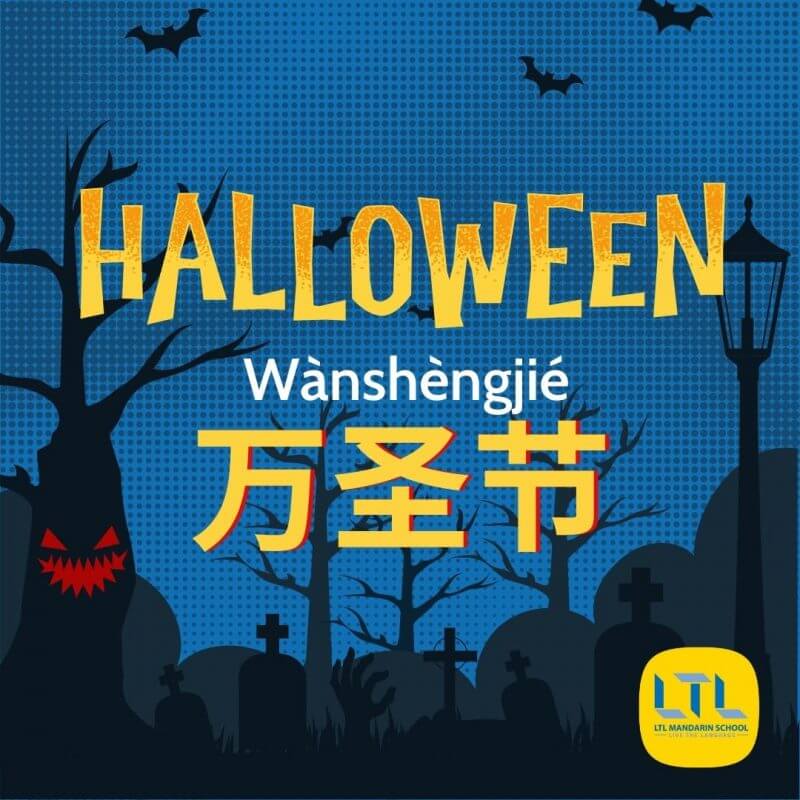
Halloween in Chinese is 万圣节 (wànshèngjié), literally “Ten Thousand Saints Festival”. To wish someone a happy Halloween, say 万圣节快乐 (wànshèngjié kuàilè).
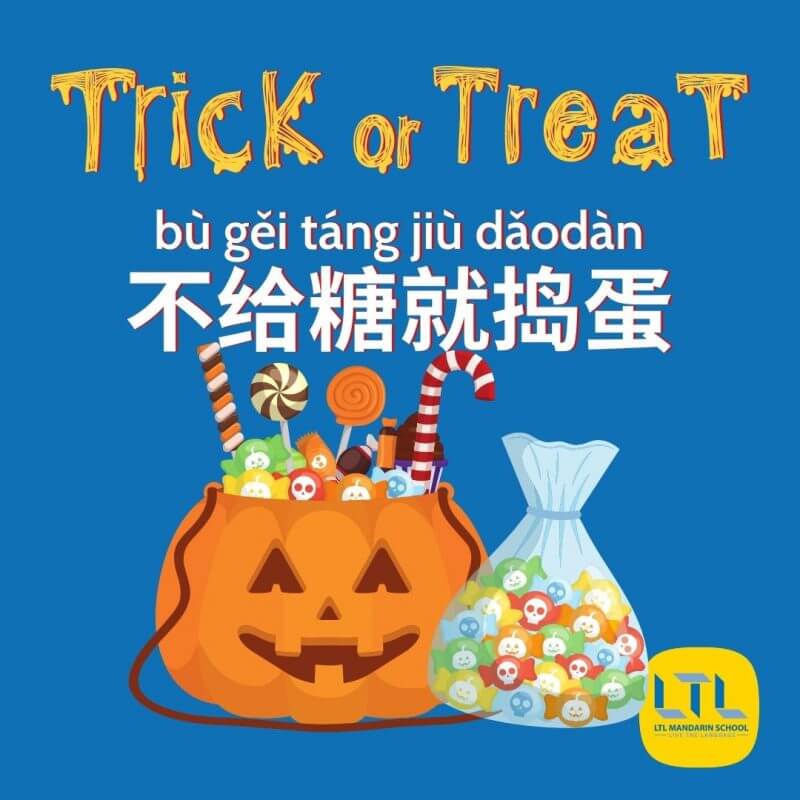
Trick or treat is 不给糖就捣蛋 (bù gěi táng jiù dǎodàn), candy is 糖果 (tángguǒ) and pumpkin is 南瓜 (nánguā). Halloween isn’t a traditional Chinese holiday, but it is a popular night out in big Chinese cities.
Halloween in Chinese || How to Say Halloween in Chinese // Key Vocab
Halloween in Chinese || Halloween Monsters and Creatures in Chinese
Halloween in Chinese || Halloween Vocabulary in Chinese // Full Recap Table
Halloween in Chinese || Is Halloween Celebrated in China?
Halloween in Chinese || Halloween in Chinese | A Scary Story
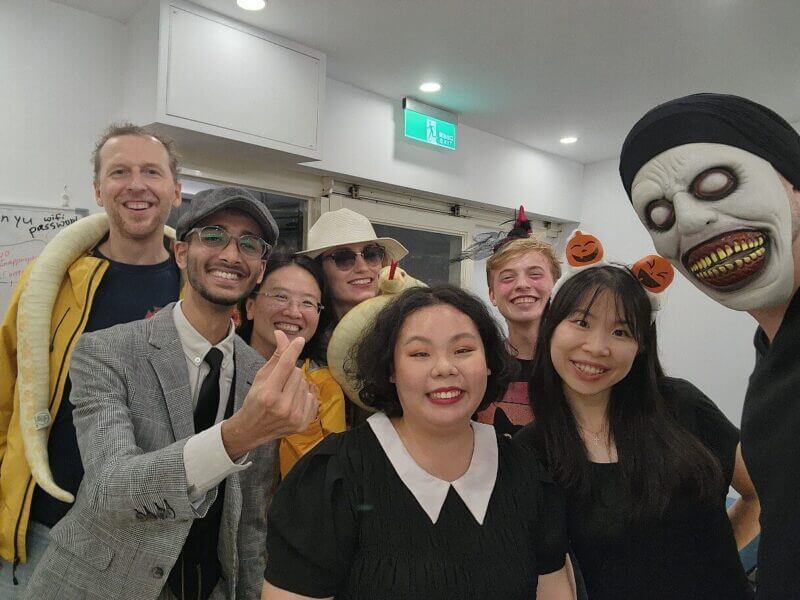
How to Say Halloween in Chinese // Key Vocab
Do you know how to say Halloween in Chinese
The Chinese word for Halloween is 万圣节 (wànshèngjié), literally “Ten Thousand Saints Festival”.
Strictly speaking, 万圣节 is All Saints’ Day on November 1st, which is where the “saints” comes from. In everyday Chinese, though, it’s the word everyone uses for Halloween as a whole.
The night of October 31st has two more precise names: 万圣夜 (wànshèngyè, “All Saints’ Night”) and the more formal 万圣节前夕 (wànshèngjié qiánxī), literally “the eve of All Saints’ Day”. That second one matches the English All Hallows’ Eve.
| Characters | Pinyin | English | When you’ll see it |
|---|---|---|---|
| 万圣节 | wànshèngjié | Halloween / All Saints’ Day | The everyday word for the whole holiday |
| 万圣夜 | wànshèngyè | Halloween night | Party posters and event invitations |
| 万圣节前夕 | wànshèngjié qiánxī | Halloween Eve (October 31st) | Dictionaries, news and formal writing |
TIP💡 The festival is much older than its name. It grew out of Samhain, the Celtic festival that marked the end of the harvest, when people believed the dead could cross into the world of the living. The church later set All Saints’ Day on November 1st, so the night before became All Hallows’ Eve, and in time, Halloween.
According to tradition, kids put on a costume 服装 (fúzhuāng), wear a Halloween mask 面具 (miànjù) and knock on doors around the neighborhood shouting “Trick or treat!” 不给糖就捣蛋! (bù gěi táng jiù dǎodàn), literally “if you don’t give me candy, I’ll play a trick on you”!
The candy they collect is 糖果 (tángguǒ), or simply 糖 (táng) in everyday speech. It’s the same 糖 you hear in 不给糖就捣蛋.
Older kids and adults usually skip the doorsteps and head to a costume party 化妆派对 (huàzhuāng pàiduì) instead. 💡 You’ll also see it written 化装派对: 化妆 means “to put on makeup” and 化装 means “to disguise yourself”. Both are pronounced huàzhuāng, so nobody will notice which one you meant when you say it.
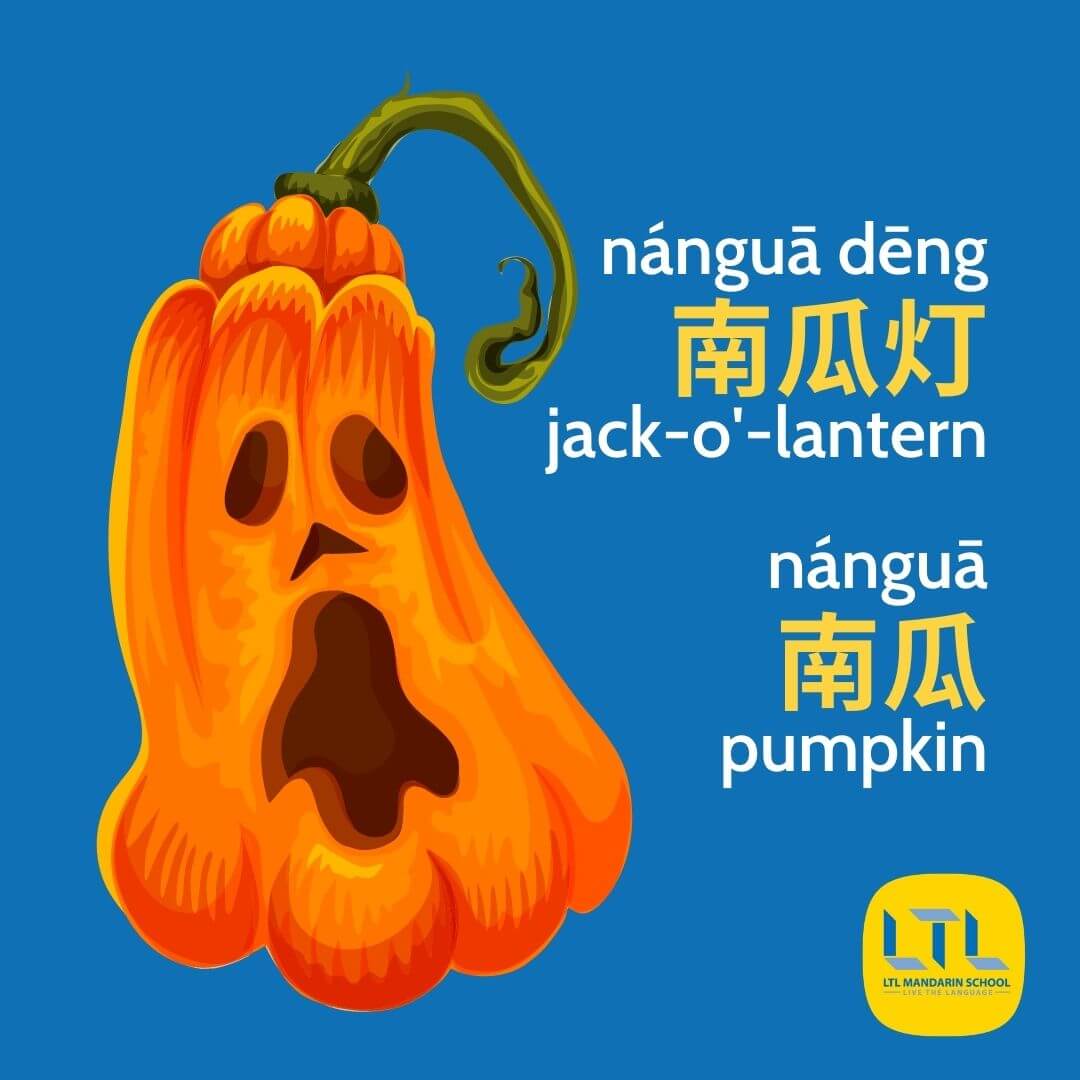
One of the most popular Halloween traditions is carving pumpkins 刻南瓜 (kè nánguā). The word for pumpkin on its own is 南瓜 (nánguā), literally “southern melon”. Look for it on autumn menus too, from 南瓜派 (nánguā pài, pumpkin pie) to 南瓜粥 (nánguā zhōu, pumpkin congee).
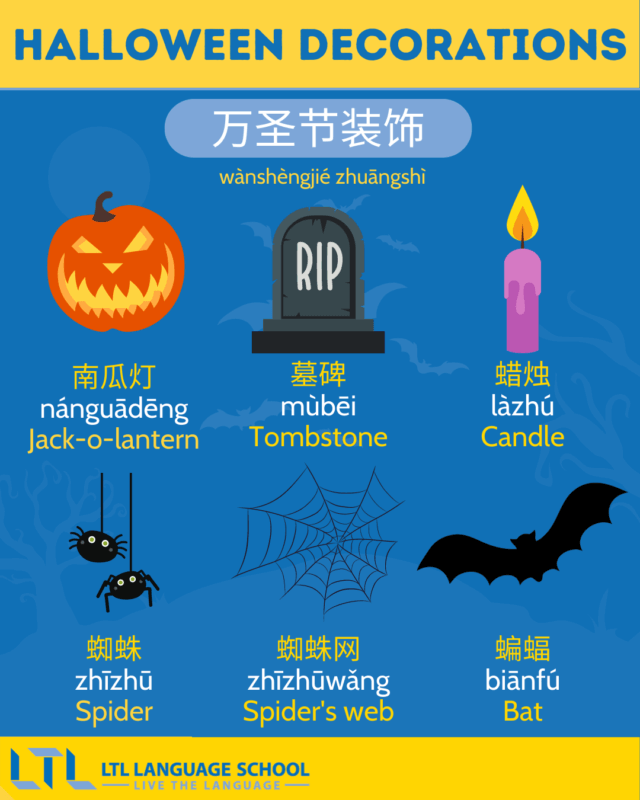
Jack-o-Lantern 南瓜灯(nánguādēng) literally “南瓜 Pumpkin + 灯 Light”, is one of the symbols of this celebration.
Halloween Monsters and Creatures in Chinese
And now, let’s learn some of the most common creatures that are associated with Halloween…
| Characters | Pinyin | English | Literal meaning |
|---|---|---|---|
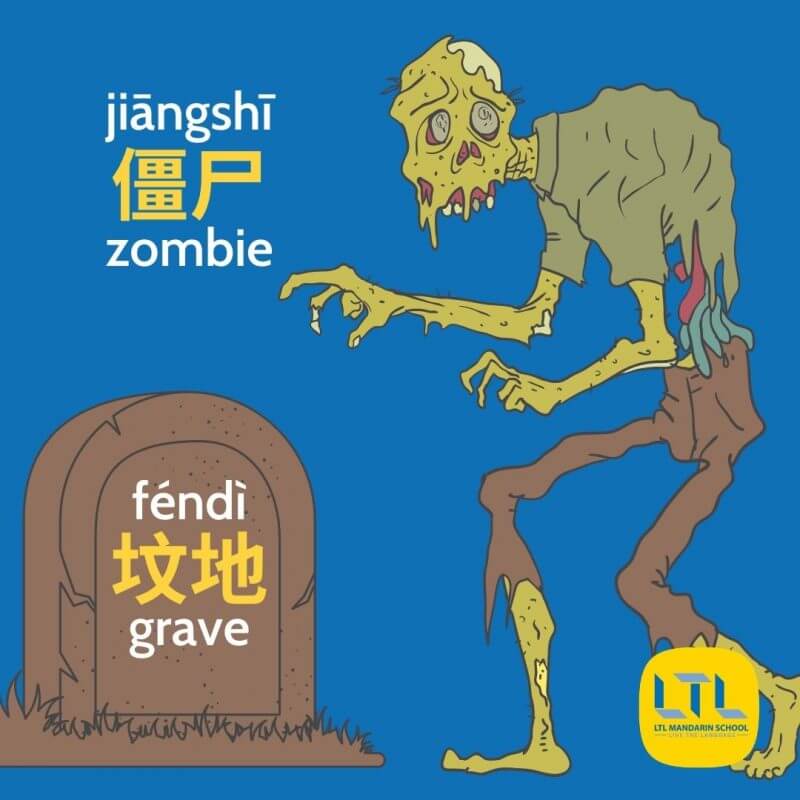
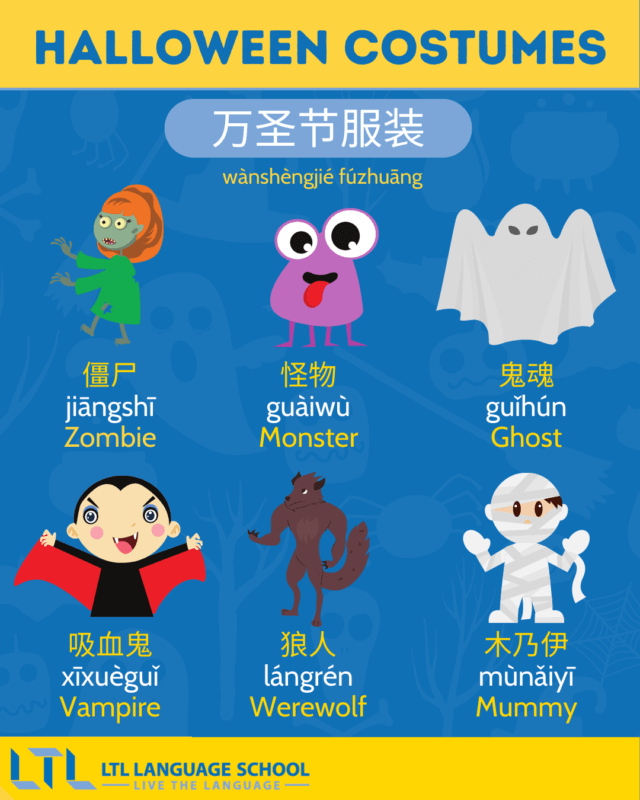
| 僵尸 | jiāngshī | Zombie | 僵 stiff + 尸 corpse |
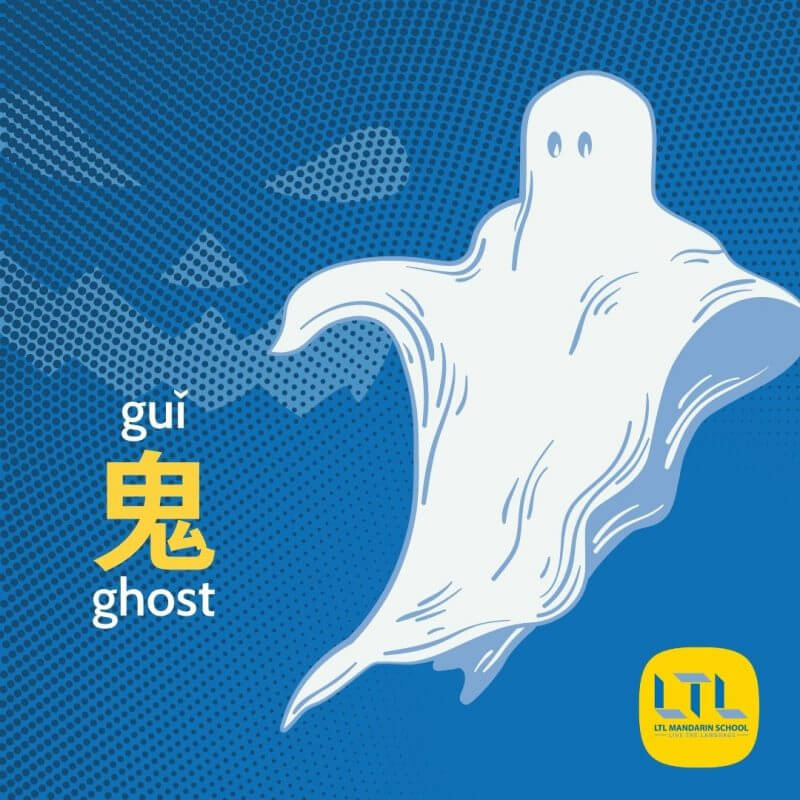
| 鬼 | guǐ | Ghost, demon | The everyday word for any ghost |
| 鬼魂 | guǐhún | Ghost, spirit | 鬼 ghost + 魂 soul |
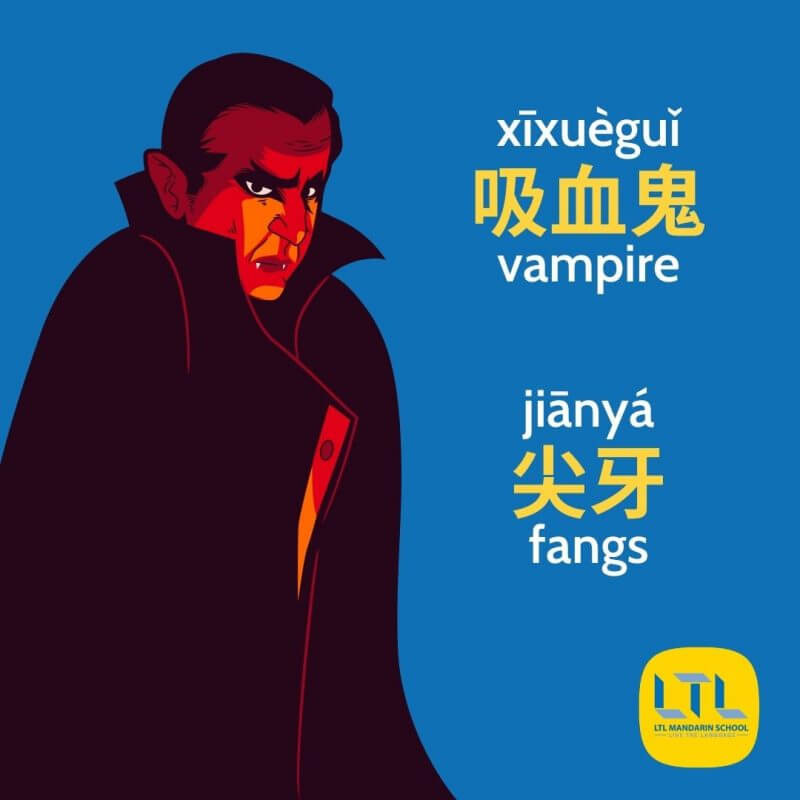
| 吸血鬼 | xīxuèguǐ | Vampire | 吸 suck + 血 blood + 鬼 demon |
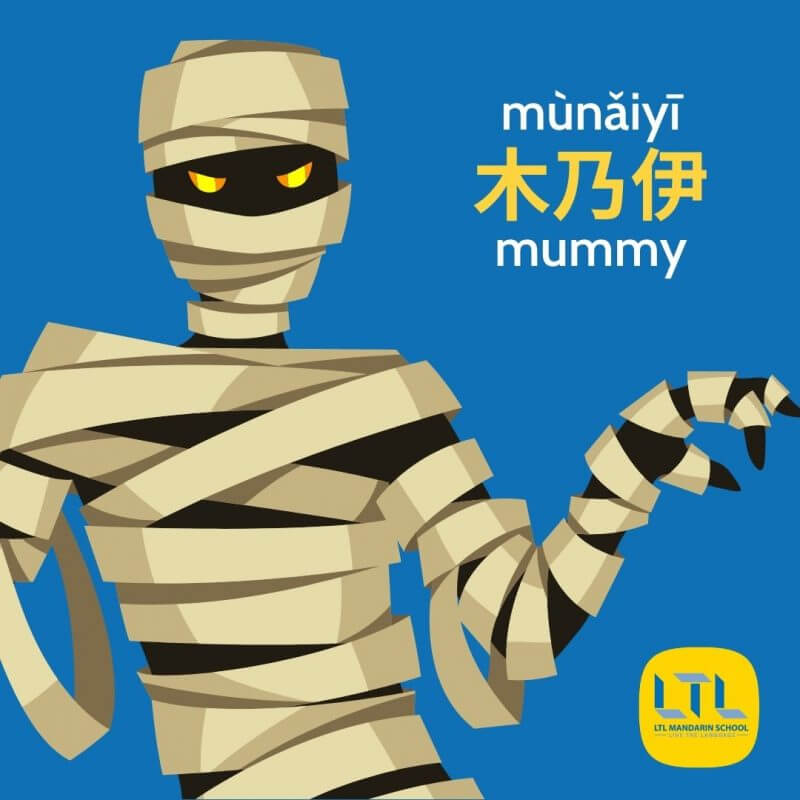
| 木乃伊 | mùnǎiyī | Mummy | A sound loanword |
💡 The 僵尸 of Chinese folklore is a stiff, hopping corpse rather than a shambling zombie. Meet more of China’s spooky beings in our guide to Chinese mythical creatures and vampires.
| Characters | Pinyin | English | Literal meaning |
|---|---|---|---|
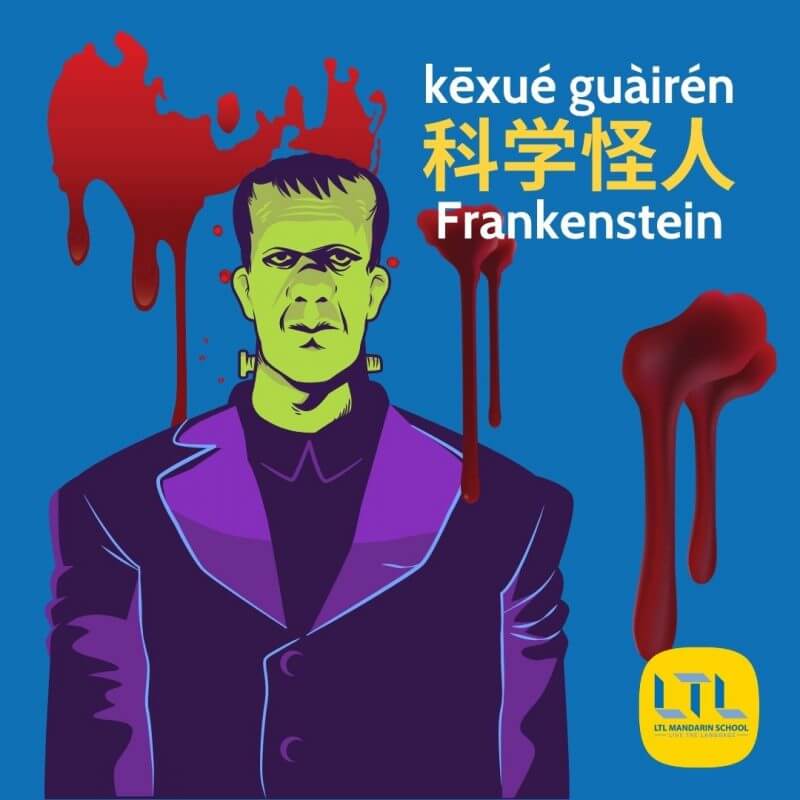
| 科学怪人 | kēxué guàirén | Frankenstein | 科学 science + 怪人 monster |
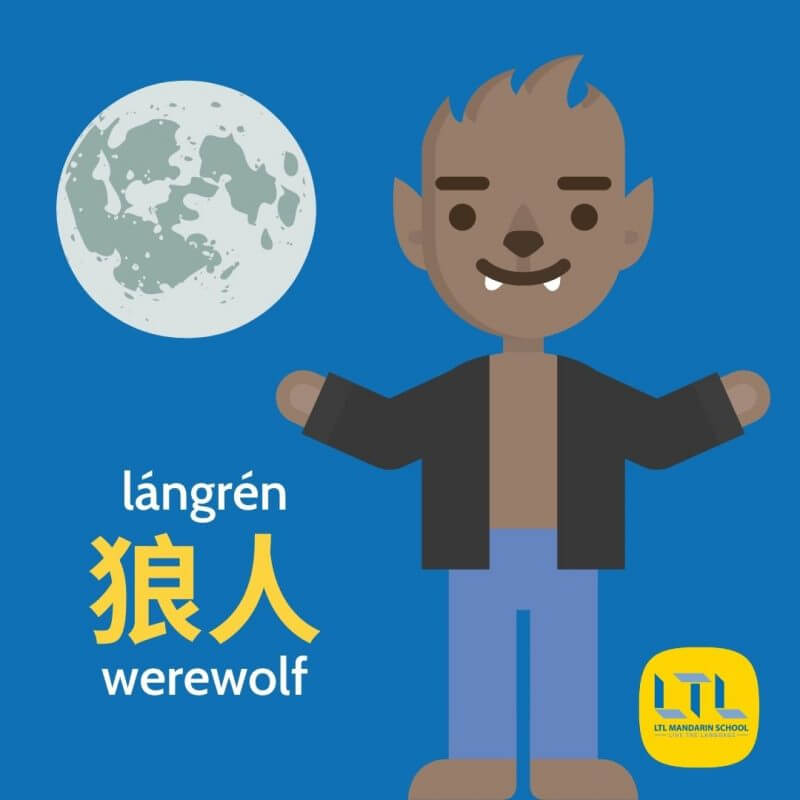
| 狼人 | lángrén | Werewolf | 狼 wolf + 人 man |
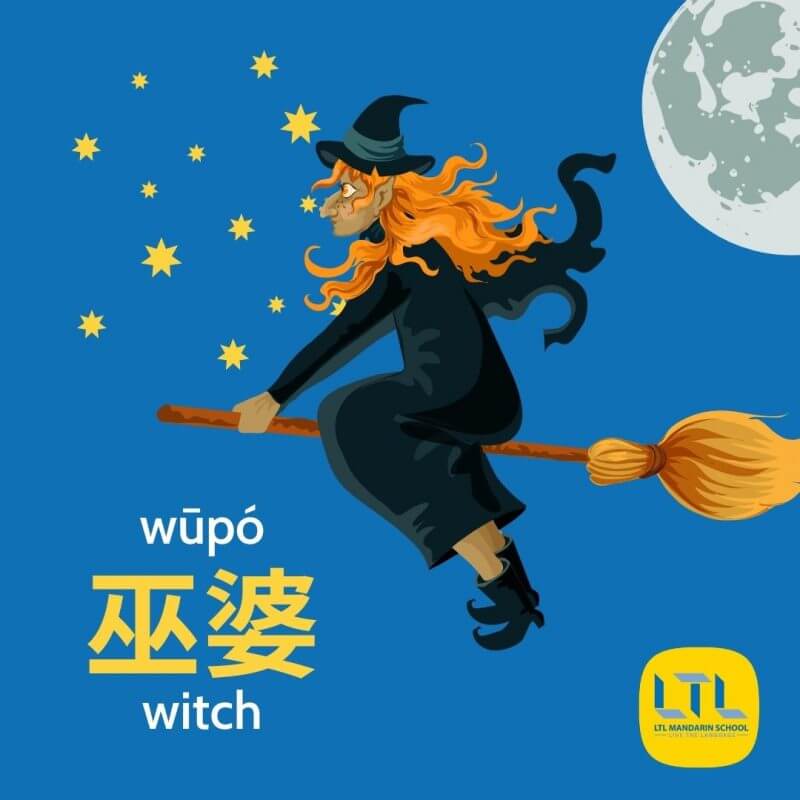
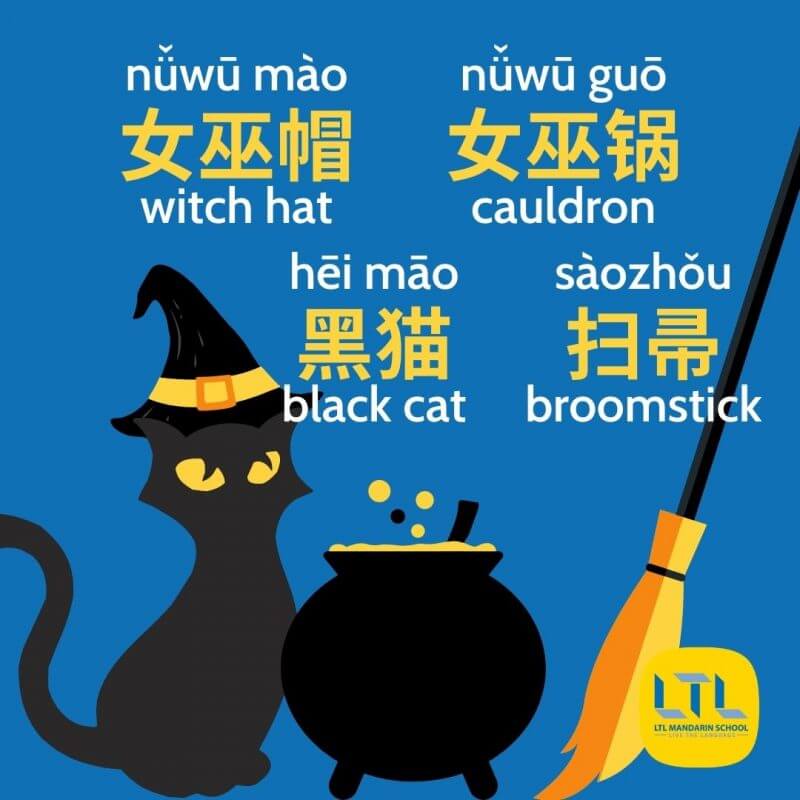
| 女巫 | nǚwū | Witch | 女 woman + 巫 sorcerer |
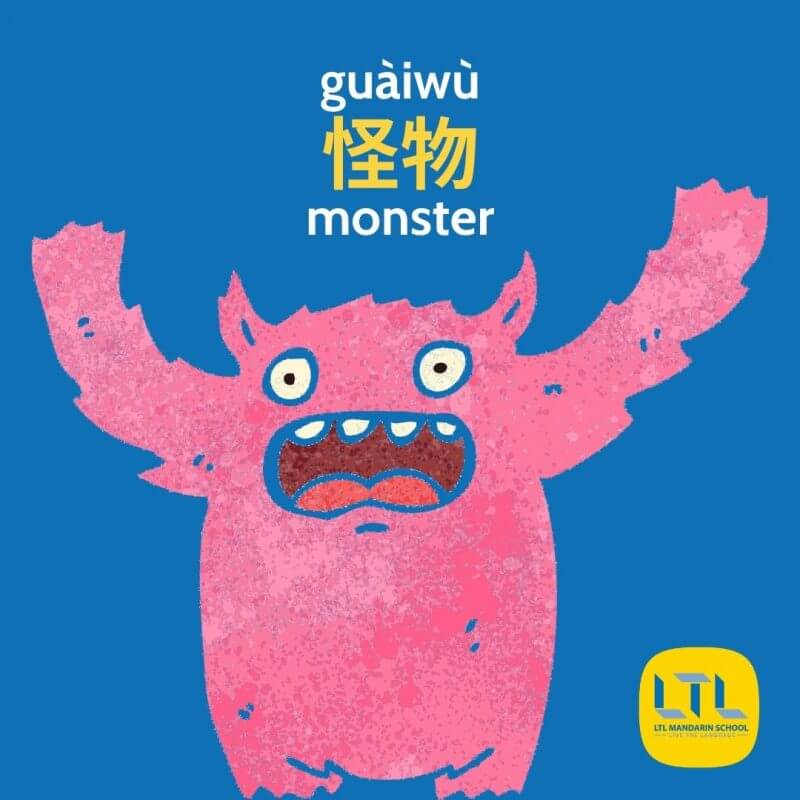
| 怪物 | guàiwù | Monster | 怪 strange + 物 thing |
| Characters | Pinyin | English | Literal meaning |
|---|---|---|---|
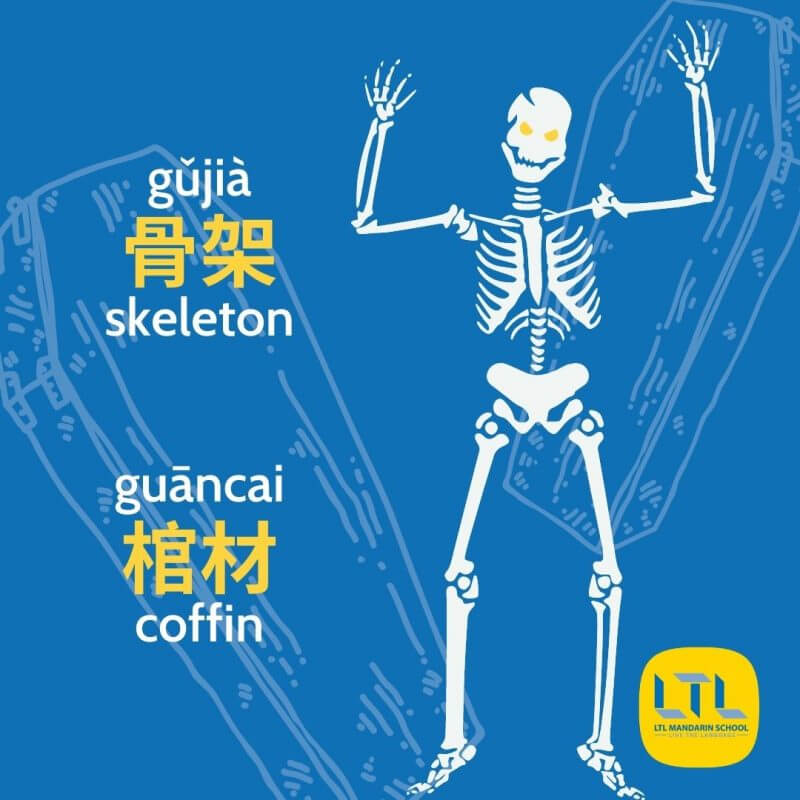
| 骷髅 | kūlóu | Skeleton | Skull, skeleton |
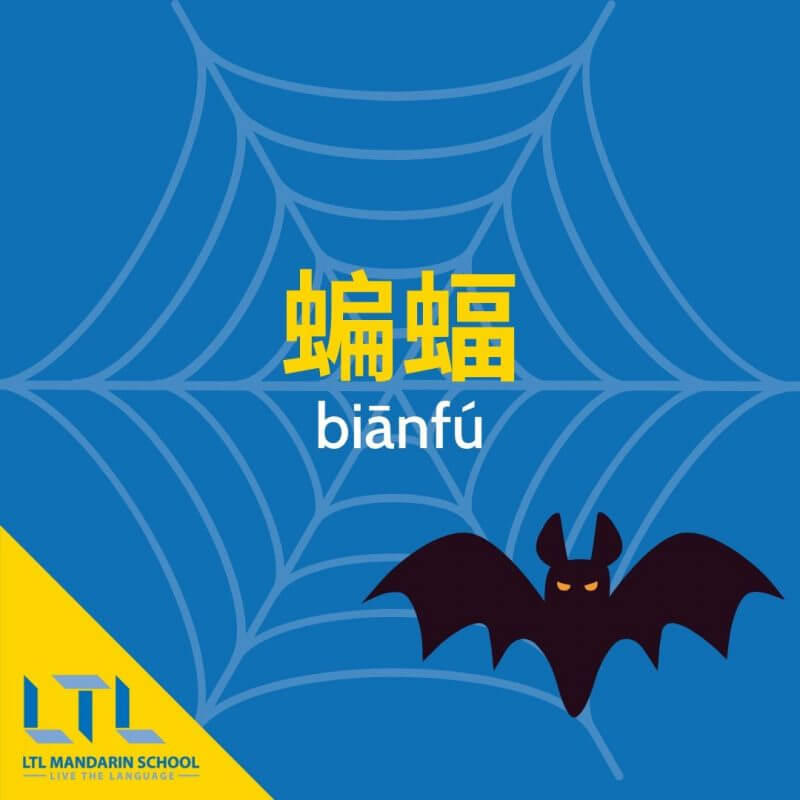
| 蝙蝠 | biānfú | Bat | |
| 黑猫 | hēimāo | Black cat | 黑 black + 猫 cat |
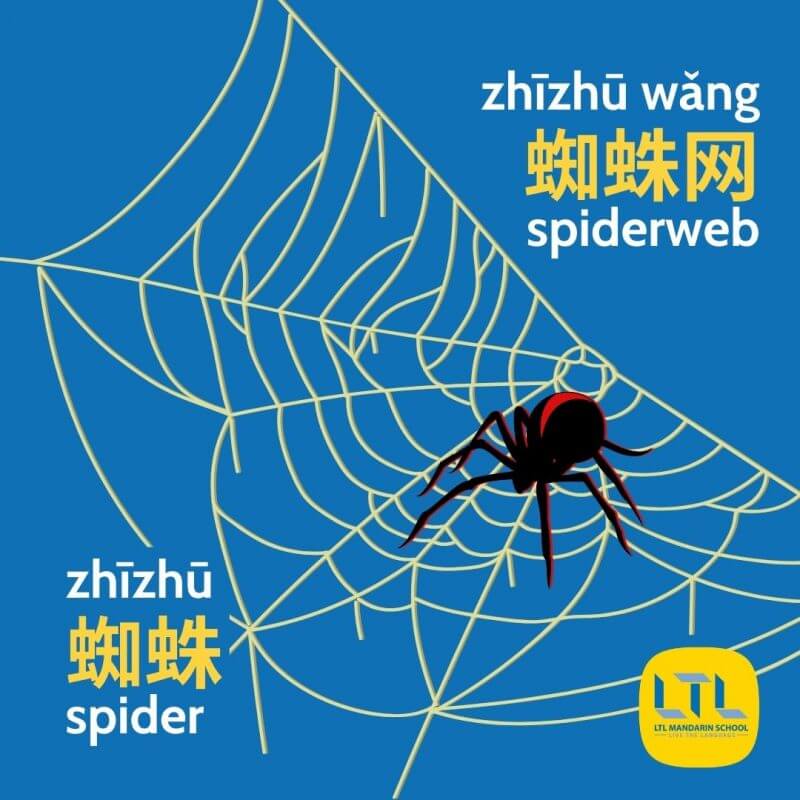
| 蜘蛛 | zhīzhū | Spider |
| Characters | Pinyin | English | Literal meaning |
|---|---|---|---|
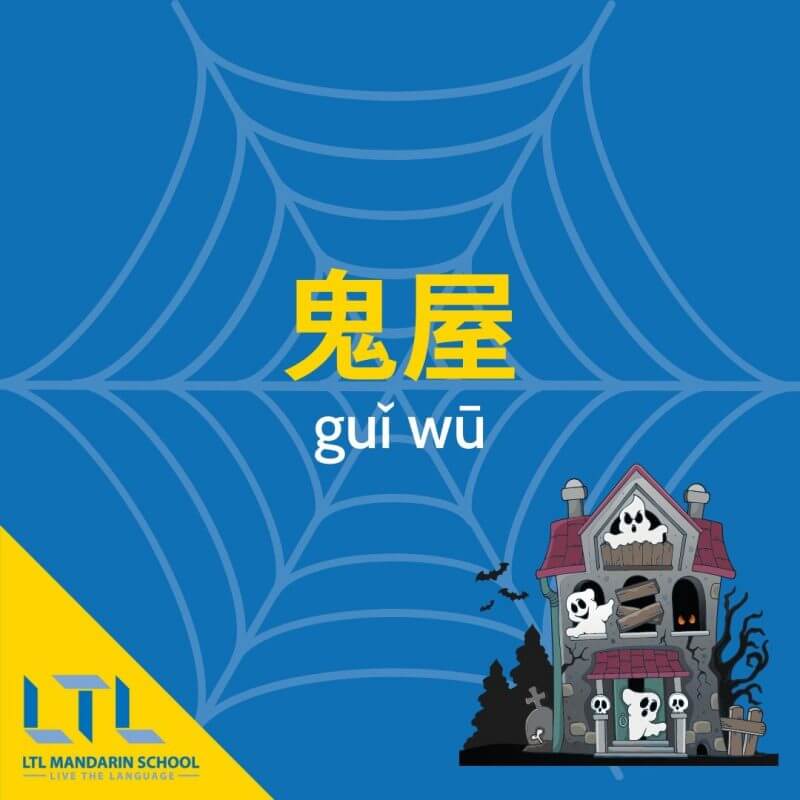
| 鬼屋 | guǐwū | Haunted house | 鬼 ghost + 屋 house |
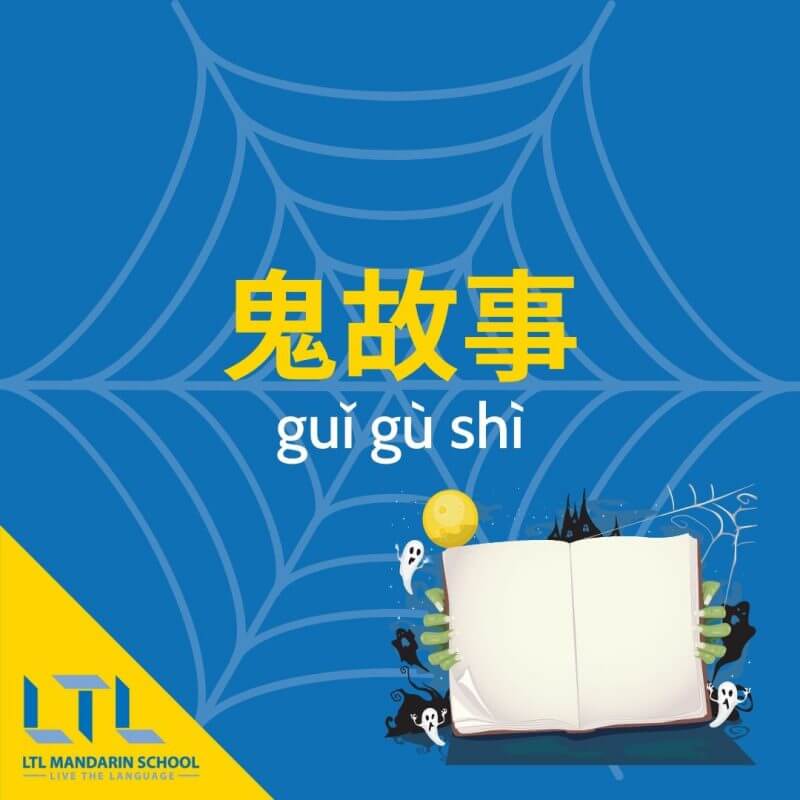
| 鬼故事 | guǐ gùshi | Ghost story | 鬼 ghost + 故事 story |
Here are some more common expressions that you might need to use to talk about your plans for your spooky night…
| Characters | Pinyin | English |
|---|---|---|
| 你会去万圣节派对吗? | nǐ huì qù wànshèngjié pàiduì ma? | Are you going to a Halloween party? |
| 你要打扮成什么? | nǐ yào dǎban chéng shénme? | What are you going to dress up as? |
| 我要打扮成…… | wǒ yào dǎban chéng…… | I’m going to dress up as… |
| 我扮的是…… | wǒ bàn de shì…… | I’m going as… |
| 我们去参加化妆派对吧! | wǒmen qù cānjiā huàzhuāng pàiduì ba! | Let’s go to a costume party! |
| 好可怕! | hǎo kěpà! | So scary! |
Halloween Vocabulary in Chinese // Full Recap Table
Here’s every word from this guide in one table. You get Simplified characters, used in Beijing, Shanghai and our other mainland schools, and Traditional characters, used in Taipei and Kaohsiung. Hungry for more festival words? Try our Easter vocabulary in Chinese next.
| Simplified | Traditional | Pinyin | English |
|---|---|---|---|
| 万圣节 | 萬聖節 | wànshèngjié | Halloween |
| 万圣夜 | 萬聖夜 | wànshèngyè | Halloween night |
| 万圣节前夕 | 萬聖節前夕 | wànshèngjié qiánxī | Halloween Eve |
| 万圣节快乐 | 萬聖節快樂 | wànshèngjié kuàilè | Happy Halloween |
| 服装 | 服裝 | fúzhuāng | Costume |
| 面具 | 面具 | miànjù | Halloween mask |
| 化妆派对 | 化妝派對 | huàzhuāng pàiduì | Costume party |
| 不给糖就捣蛋 | 不給糖就搗蛋 | bù gěi táng jiù dǎodàn | Trick or treat |
| 糖果 | 糖果 | tángguǒ | Candy |
| 南瓜 | 南瓜 | nánguā | Pumpkin |
| 刻南瓜 | 刻南瓜 | kè nánguā | Carving pumpkins |
| 南瓜灯 | 南瓜燈 | nánguādēng | Jack-o’-lantern |
| 僵尸 | 殭屍 | jiāngshī | Zombie |
| 鬼 | 鬼 | guǐ | Ghost |
| 鬼魂 | 鬼魂 | guǐhún | Ghost, spirit |
| 吸血鬼 | 吸血鬼 | xīxuèguǐ | Vampire |
| 木乃伊 | 木乃伊 | mùnǎiyī | Mummy |
| 科学怪人 | 科學怪人 | kēxué guàirén | Frankenstein |
| 狼人 | 狼人 | lángrén | Werewolf |
| 女巫 | 女巫 | nǚwū | Witch |
| 怪物 | 怪物 | guàiwù | Monster |
| 骷髅 | 骷髏 | kūlóu | Skeleton |
| 蝙蝠 | 蝙蝠 | biānfú | Bat |
| 黑猫 | 黑貓 | hēimāo | Black cat |
| 蜘蛛 | 蜘蛛 | zhīzhū | Spider |
| 鬼屋 | 鬼屋 | guǐwū | Haunted house |
| 鬼故事 | 鬼故事 | guǐ gùshi | Ghost story |
| 中元节 | 中元節 | Zhōngyuánjié | Ghost Festival |
Here are some sentence examples, you can fill in the blanks with the vocabulary above:
| Characters | Pinyin | English |
|---|---|---|
| 你会去万圣节派对吗? | nǐ huì qù wànshèngjié pàiduì ma? | Are you going to a Halloween party? |
| 你要打扮成什么? | nǐ yào dǎban chéng shénme? | What are you going to dress up as? |
| 我要打扮成…… | wǒ yào dǎban chéng…… | I’m going to dress up as… |
| 我扮的是…… | wǒ bàn de shì…… | I’m going as… |
| 我们去参加化妆派对吧! | wǒmen qù cānjiā huàzhuāng pàiduì ba! | Let’s go to a costume party! |
Is Halloween Celebrated in China?
Halloween isn’t a traditional Chinese festival or a public holiday, so don’t expect trick-or-treaters knocking on your door in a Beijing hutong. In the big cities, though, it has become a popular night out, especially with students, young professionals and the expat community.
Here’s what you’ll find around October 31st:
- Theme parks go all out. Universal Beijing Resort runs an autumn Halloween season called Scares @ Universal, with haunted mazes and scare zones. In 2026 it runs from September 4 to November 1.
- Bars and clubs in Beijing, Shanghai and Guangzhou throw 万圣夜 parties with costume contests.
- International schools and kindergartens hold costume days and pumpkin carving for kids.
- Malls and cafes put up pumpkins and bats and sell limited-edition Halloween treats.
Halloween has followed the same path as Christmas: it arrived as a fun, mostly commercial Western holiday rather than a family tradition. You can read more in our guide to Christmas vocabulary and traditions in China. Want to see it for yourself? Come and learn Chinese in China.
The Ghost Festival // China’s Own Spooky Season
China has its own festival for the spirit world, and it falls nowhere near October. The Ghost Festival 中元节 (Zhōngyuánjié) takes place on the 15th day of the 7th lunar month, usually in August or September. In 2026 it fell on August 27, and in 2027 it falls on August 16.
Folk belief holds that the gates of the underworld open for the whole seventh month, known as Ghost Month, so spirits can wander among the living. Unlike Halloween, the mood is respectful rather than playful. Families honor their ancestors and leave offerings for wandering spirits who have no one to care for them.
| Characters | Pinyin | English |
|---|---|---|
| 中元节 | Zhōngyuánjié | Ghost Festival (Zhongyuan Festival) |
| 鬼节 | guǐjié | Ghost Festival (everyday name) |
| 鬼月 | guǐyuè | Ghost Month |
| 烧纸钱 | shāo zhǐqián | To burn joss paper (spirit money) |
| 放河灯 | fàng hédēng | To float river lanterns |
TIP💡 During Ghost Month, many people avoid swimming or wandering around alone late at night. If your Chinese friends suggest you stay in, now you know why.
Halloween in Chinese | A Scary Story
Ready for more Halloween in Chinese? Let’s take a look at this scary story…
Forget about Annabelle, Chucky and IT, because now you will get to know the story of a creepy Chinese Doll called Sam…

Izzy, a lovely 8-year-old girl, got given a beautiful china doll for her birthday as a gift.
She loved her present and she decided to call her Sam.
Izzy spent the whole day playing with her pale doll until her mom called her up for bed.
Izzy reluctantly put the doll in a box in the basement and went up to bed.
In the middle of the night, she awoke with a startle to a series of strange noises that she couldn’t understand.
Then she heard a creepy lullaby saying “China doll, china doll in the basement, china doll, china doll on the stairs, china doll, china doll in your parent’s room, now they’re dead”.
Izzy fell back into a profound sleep.
When Izzy woke up in the morning, she went in her parent’s room and found them dead lying in a pool of blood.
Her brother tried to calm her down whilst to figure out how to plan their funeral.
Izzy spent her entire day home locked in her room and refused to play with Sam. At night she went to bed early, exhausted.
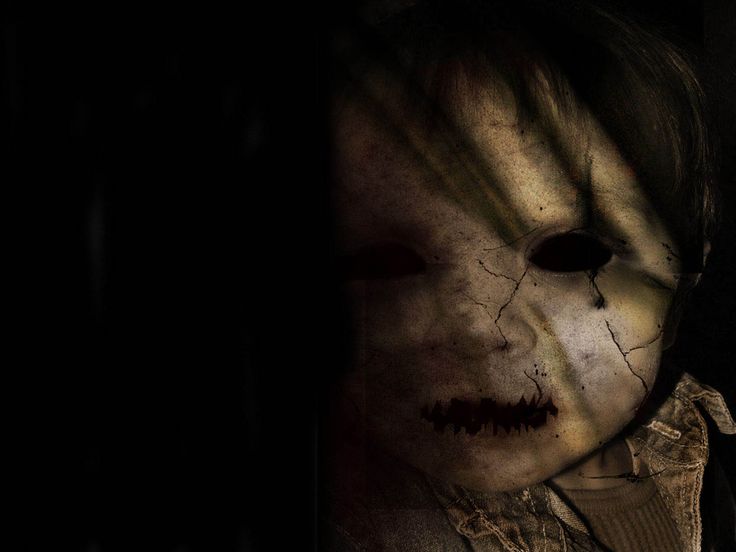
In the middle of the night the same sick chanting woke her up again. “China doll, china doll in the basement, china doll, china doll on the stairs, china doll, china doll in your parent’s room, china doll, china doll in your brother’s room now he’s dead.”
Izzy shivered and fell into another troubled sleep.
In the morning she woke up and went to her brother’s room.
When she saw he was dead too, she rushed into her room and bolted the door. She spent the day locked in there unable to come out.
Then, when the sun went down, she fell asleep again, but in the middle of the night, she heard that creepy chanting again.
“China doll, china doll in the basement, china doll, china doll on the stairs, china doll, china doll in your parent’s room, china doll, china doll in your brother’s room, china doll, china doll in your room.”
She gazed up to see the doll. “Now you’re…dead!”
Learn the scary story vocab 👻 Izzy’s doll is a pun in English: “china” means porcelain, but Chinese has two separate words.
| Characters | Pinyin | English |
|---|---|---|
| 瓷娃娃 | cí wáwa | China doll (porcelain doll) |
| 瓷器 | cíqì | China (porcelain) |
| 中国 | Zhōngguó | China (the country) |
| 地下室 | dìxiàshì | Basement |
| 楼梯 | lóutī | Stairs |
| 摇篮曲 | yáolánqǔ | Lullaby |
| 噩梦 | èmèng | Nightmare |

7 Disney Songs in Chinese 👸🏽 Learn Chinese the Fun Way
Learn 7 Disney Songs in Chinese – It doesn’t matter if it’s that magical, romantic ballad that makes us feel all warm inside or that lively tune!
Do you know any Chinese Horror stories? If so, please let us know and…
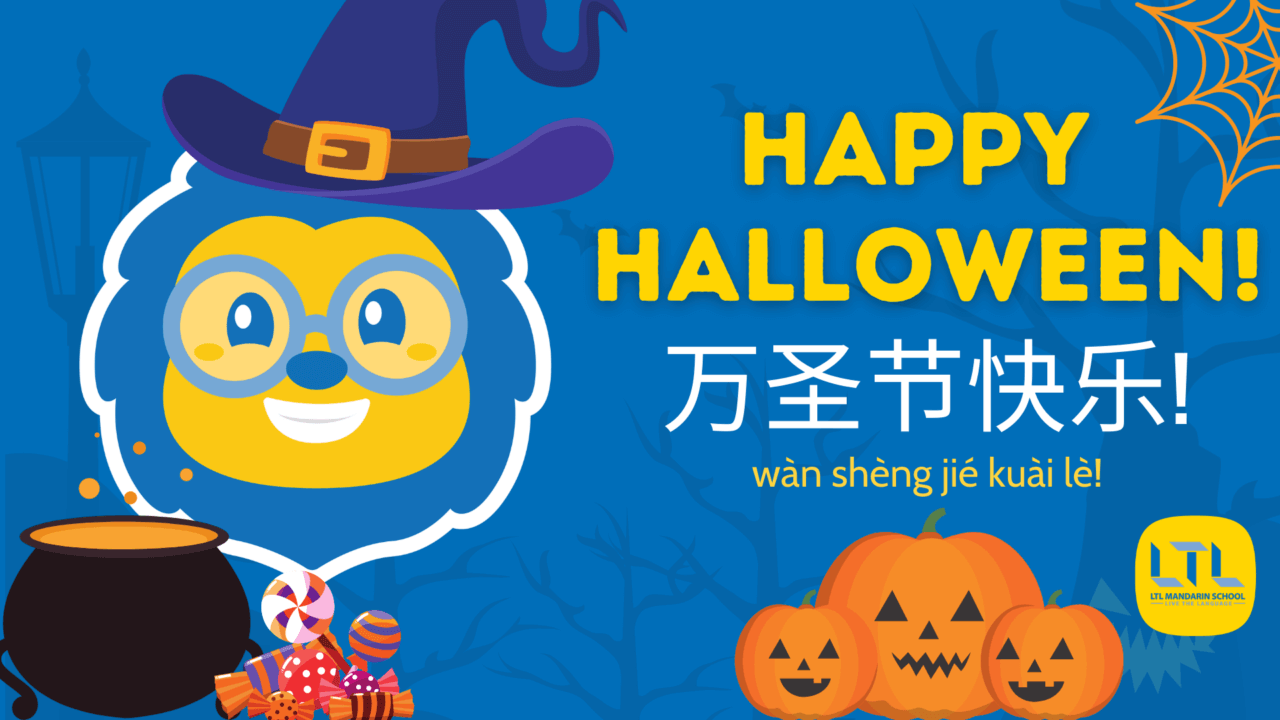
Happy Halloween! 万圣节快乐 (wàn shèng jié kuài lè)
Want to learn more Chinese like this? You can study Mandarin online with our native-speaker teachers 24/7. Start your 7-Day Free Trial on Flexi Classes.
Halloween in Chinese || FAQs
How do you say Happy Halloween in Chinese?
万圣节快乐 (wànshèngjié kuàilè) means Happy Halloween. It’s 万圣节 (Halloween) plus 快乐 (kuàilè, happy), the same pattern as 生日快乐 (shēngrì kuàilè, happy birthday).
How do you say Halloween in Chinese?
万圣节 wàn shèng jié
How do you say Witch in Chinese?
Witch = 女巫 (nǚwū)
How do you say Monster in Chinese?
Monster = 怪物 (guàiwù) “怪 Strange 物 Thing”
How do you say Skeleton in Chinese?
Skeleton = 骷髅 (kūlóu)
What is the Mandarin Chinese word for “pumpkin”?
The Mandarin word for pumpkin is 南瓜 (nánguā), literally “southern melon”.
Carving pumpkins is 刻南瓜 (kè nánguā), and a jack-o’-lantern is 南瓜灯 (nánguādēng), literally “pumpkin light”. On autumn menus you may also see 南瓜派 (nánguā pài, pumpkin pie) and 南瓜粥 (nánguā zhōu, pumpkin congee).
What is vocabulary called in Chinese?
Vocabulary in Chinese is 词汇 (cíhuì). An individual word you learn, such as 鬼 (guǐ, ghost) or 南瓜 (nánguā, pumpkin), is usually called 单词 (dāncí).
Want more from LTL?
If you wish to hear more from LTL Mandarin School why not join our mailing list? We give plenty of handy information on learning Chinese, useful apps to learn the language and everything going on at our LTL schools!
Sign up below and become part of our ever-growing community!






10 comments
[…] as the main theme for their music. According to Freddy, they aimed to emphasize the revenge of the ghosts converting from those Taiwanese who suffered from those mainlanders’ betray, robbery and […]
[…] distinguishes Zhong Yuan Festival from other festivals related to ghosts around the world. Unlike Halloween (when people use scary costumes to scare away the spirits) and Day of the Death ( when people […]
[…] and society. The relevant celebrations, festivals or customs therefore came into being. Western Halloween and Mexican Day of the Death are both famous examples. However, in addition to one-day Halloween […]
Happy halloween ltl!
You too Turan!
Nice vocab list!
🎃
Great halloween chinese vocab
Thanks Eve 万圣节快乐
You too Max!